How do I know if my GST is central or state?
Learn the difference between State GST and Central GST. Check GSTIN, CGST, SGST, and IGST explained with examples. Trusted GST help by Effizentseele.
 jasminsaine
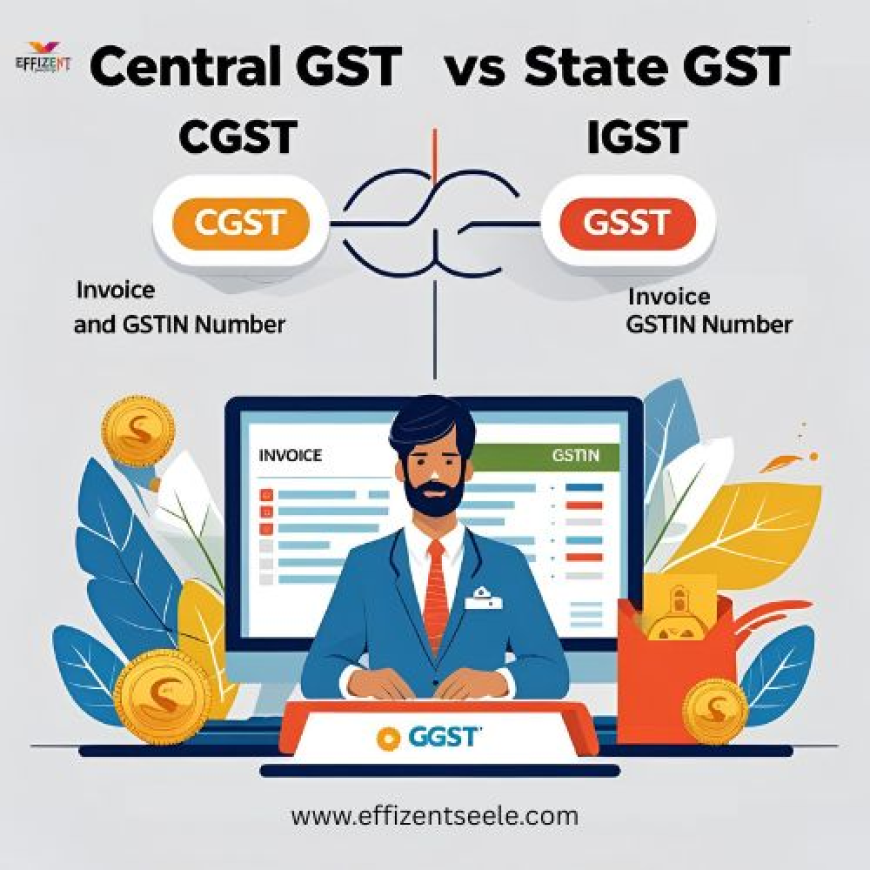
When it comes to GST in India, many business owners find it confusing to understand whether their GST is central or state. Effizentseele, a trusted name in GST services, helps simplify this process. One of the most common queries is the difference between state GST and central GST, as well as how to determine the nature of GST applicable to your business. In this article, we will explain this in detail, step by step.
Difference between State GST and Central GST
The Goods and Services Tax (GST) is divided into two major components – Central GST (CGST) and State GST (SGST).
-
Central GST (CGST): Collected by the Central Government on transactions happening within a state.
-
State GST (SGST): Collected by the State Government on the same intra-state transactions.
For example, if you are selling goods within your state, both CGST and SGST are applied simultaneously. If you sell goods outside your state, then Integrated GST (IGST) comes into play.
Thus, the difference between state GST and central GST lies in who collects the tax – the State Government or the Central Government.
How to Identify Central GST and State GST in Your GST Number
Every GST-registered business is given a 15-digit GSTIN (Goods and Services Tax Identification Number). You can check whether your GST is central or state by carefully reading your GSTIN.
-
First 2 digits: Represent your state code.
-
Example: 07 represents Delhi, and 09 represents Uttar Pradesh.
-
Next 10 digits: Represent your PAN number.
-
13th digit: Represents the registration number in a state.
-
14th digit: Default value "Z".
-
15th digit: Checksum digit for error detection.
When you file returns, both CGST and SGST are clearly mentioned for intra-state sales, whereas IGST appears for inter-state sales.
This is how you can easily differentiate between central GST vs state GST.
Practical Example of Central GST vs State GST
Suppose you are a trader in Delhi selling products worth ₹10,000 within Delhi.
-
GST Rate: 18%
-
CGST = 9% (₹900) goes to the Central Government
-
SGST = 9% (₹900) goes to the Delhi State Government
Now, if the same goods are sold from Delhi to Haryana, then IGST = 18% (₹1,800) is applied, which goes to the Central Government but is later shared with the states.
This explains the CGST and SGST difference in real terms.
Why Understanding the Difference is Important
Knowing the difference between state GST and central GST is important for:
-
Filing GST returns correctly.
-
Avoiding penalties for wrong tax classification.
-
Understanding GST liabilities for intra-state and inter-state business.
Businesses often take professional help from services like GST Suvidha Kendra to avoid mistakes.
Role of GST Suvidha Kendras
Many entrepreneurs still struggle with GST filing. This is where GST Suvidha Kendras play a role. They assist with:
-
GST registration services
-
GST return filing support
-
Clarifying doubts about CGST, SGST, and IGST
-
Helping entrepreneurs with compliance requirements
Those who want to start their own business can also explore GST franchise opportunities, which are in high demand due to increasing GST compliance needs.
FAQs on State GST and Central GST
1. What is the basic difference between state GST and central GST?
Central GST is collected by the Central Government, while State GST is collected by the State Government, both on intra-state sales.
2. How do I know if my GST is central or state?
Check your GSTIN and your tax invoice. For intra-state sales, both CGST and SGST will be mentioned. For inter-state sales, IGST will be applied.
3. Are CGST and SGST always equal?
Yes, for intra-state supplies, the GST rate is divided equally between CGST and SGST.
4. Can GST Suvidha Kendra help with filing GST returns?
Yes, they provide GST return filing support, making the process simple for business owners.
Conclusion
Understanding whether your GST is central or state is essential for every business owner. The difference between state GST and central GST mainly lies in who collects the tax – the Central or State Government. By reading your GSTIN and invoices, you can easily identify whether CGST, SGST, or IGST applies to your transactions.
For hassle-free GST compliance, Effizentseele provides trusted solutions through GST Suvidha Kendra, GST registration services, and return filing support. If you are looking for reliable assistance, reaching out to them can make GST management effortless.