Common Causes of Battery Charger Failure
Learn common causes of battery charger failure, warning signs, troubleshooting steps, and maintenance tips for dependable industrial charging and equipment.
 ecbm
ecbm
Industrial battery chargers are essential to the daily operation of forklifts, pallet trucks, floor-cleaning machines, warehouse equipment, backup power systems, and many other electrically powered applications. When a charger stops working correctly, the problem can extend beyond the charger itself. A charging failure can leave batteries undercharged, increase equipment downtime, disrupt warehouse operations, and make it difficult for operators to maintain a predictable work schedule.
For businesses that depend on reliable battery systems, understanding the common causes of charger problems is an important part of preventive maintenance. Whether you purchase equipment from a Battery Store Plano, maintain an existing industrial fleet, or rely on professional battery and charger services, identifying problems early can help prevent avoidable interruptions and unnecessary component damage.
Why Industrial Battery Chargers Fail
Battery chargers are electrical devices that convert incoming AC power into the appropriate DC charging output for a battery. Depending on the charger design, battery chemistry, voltage, capacity, and application, the charging process may involve multiple stages and carefully controlled voltage and current levels.
A charger can fail because of electrical problems, environmental conditions, incorrect charging practices, component wear, poor maintenance, or incompatibility between the charger and battery. In some cases, the charger is not actually defective—the battery, electrical supply, cables, connectors, or equipment may be responsible for the symptoms.
That is why proper troubleshooting should look at the complete charging system rather than immediately replacing the charger.
1. Incorrect Charger and Battery Compatibility
One of the most common causes of charging problems is using a charger that is not appropriate for the battery.
Industrial batteries have specific voltage and capacity requirements. For example, a charger designed for a particular voltage system should not simply be connected to a battery with a different voltage. Charging requirements can also vary according to battery chemistry and design.
Even when the voltage appears correct, the charger's charging profile may not be appropriate for the battery. A charging profile determines how the charger manages current, voltage, charging stages, and termination.
Using the wrong charger can result in incomplete charging, excessive charging, poor battery performance, or equipment downtime. Before replacing a charger, verify the battery voltage, amp-hour capacity, chemistry, charger output, connector configuration, and manufacturer's specifications.
2. Overheating and Poor Ventilation
Industrial chargers generate heat during operation. If a charger is installed in a location with inadequate airflow, heat can accumulate around internal components.
Excessive operating temperatures can place additional stress on electronic components such as capacitors, cooling fans, power semiconductors, and control circuitry. Dust and debris can make the situation worse by restricting ventilation openings or coating internal surfaces.
Chargers used in busy warehouses, workshops, manufacturing facilities, and charging rooms may be exposed to considerable dust and airborne contaminants. Keeping ventilation areas clear and following the manufacturer's installation requirements can help maintain suitable operating conditions.
If a charger repeatedly shuts down because of temperature-related protection, the underlying cause should be investigated rather than simply resetting the unit.
3. Damaged or Loose Cables and Connectors
Charging cables and connectors experience frequent handling in industrial environments. Operators may connect and disconnect chargers many times throughout the working week, and cables can be exposed to pulling, bending, abrasion, impact, and chemical contamination.
A damaged cable can create resistance or interrupt the charging circuit. Loose connections may also cause inconsistent charging or excessive heat at the connection point.
Before assuming that the charger's internal electronics have failed, inspect the charging cable, plug, connector, and battery terminals for visible damage, looseness, corrosion, or signs of overheating.
Electrical connections should be inspected and repaired by qualified personnel when damage or unsafe conditions are present.
4. Problems With the Incoming Power Supply
Sometimes a charger appears to be faulty when the real issue is the electrical supply feeding it.
Voltage fluctuations, an improperly configured circuit, damaged wiring, tripped breakers, blown fuses, or insufficient electrical capacity can prevent a charger from operating correctly. Industrial facilities may also experience power interruptions or fluctuations caused by other heavy electrical equipment.
If a charger does not turn on, checking the incoming power supply is an important part of troubleshooting. However, electrical testing should be performed by appropriately qualified personnel using suitable procedures and equipment.
A charger that repeatedly trips a circuit should not simply be connected to another outlet without investigating why the protection device is activating.
5. Worn or Failed Internal Components
Like other electrical equipment, battery chargers contain components that can deteriorate with age and operating stress.
Depending on the charger design, internal components may include cooling fans, capacitors, rectifiers, transformers, contactors, fuses, circuit boards, sensors, switches, and power-control components. Failure of any critical component can affect the charger's ability to deliver the required charging output.
Older chargers may also contain components that are no longer readily available or economical to replace. In such cases, professional charger repair can determine whether repairing the existing unit makes practical sense or whether replacement is the better option.
The correct decision depends on the charger's age, condition, availability of parts, repair cost, application requirements, and expected future use.
6. Excessive Dust, Dirt, and Contamination
Industrial environments can be hard on electrical equipment. Dust, dirt, metal particles, moisture, and other contaminants can accumulate around chargers and interfere with cooling or electrical operation.
A dirty cooling system may reduce airflow, while contamination around electrical connections can contribute to poor contact or corrosion.
Routine visual inspection and appropriate cleaning can help identify problems before they become serious. Cleaning procedures should always follow the charger's manufacturer's recommendations. Electrical equipment should never be cleaned in a way that introduces moisture or creates an electrical hazard.
7. Moisture and Corrosion
Chargers installed in damp or unsuitable environments may be exposed to moisture that can affect electrical connections and internal components.
Corrosion can increase electrical resistance and interfere with reliable connections. In severe cases, moisture exposure can damage circuit boards or other electronic components.
Industrial charging areas should therefore be selected and maintained according to the equipment's environmental requirements. If a charger has been exposed to water, flooding, condensation, or significant moisture, it should be professionally inspected before being returned to service.
8. Incorrect Charging Practices
Charging practices can also contribute to charger problems.
Repeatedly interrupting charging cycles, using damaged connectors, operating equipment with unsuitable charging settings, or failing to follow the battery manufacturer's charging requirements can create problems over time.
Operators should understand the correct charging procedure for the equipment they use. Training is particularly important in facilities where multiple types of batteries, chargers, forklifts, pallet trucks, or cleaning machines are operated.
A consistent charging routine can also make it easier to identify unusual behavior, such as longer charging times, unexpected shutdowns, or repeated charging errors.
9. A Battery Problem Can Look Like a Charger Problem
Not every charging issue originates in the charger.
An aging, damaged, sulfated, deeply discharged, or otherwise deteriorated battery may not accept charge normally. Battery cells can also become unbalanced or develop internal problems that affect charging behavior.
For example, a charger may appear to shut down too early when the battery has an abnormal voltage response. Conversely, a battery may appear to be undercharging when the actual issue is insufficient charger output.
This is why professional troubleshooting often involves testing both the battery and charger. Battery voltage, capacity, condition, connections, charging current, and charger output may all need to be evaluated before a repair decision is made.
10. Poor Preventive Maintenance
Waiting until a charger completely stops working can increase operational disruption.
Preventive maintenance provides an opportunity to identify worn cables, damaged connectors, blocked ventilation, abnormal noises, overheating, loose connections, and other warning signs before they become major failures.
The appropriate inspection frequency depends on the equipment, operating environment, manufacturer recommendations, and intensity of use. High-use warehouse equipment may require closer attention than equipment that operates only occasionally.
Maintenance records can also be valuable. Recording charger inspections, repairs, recurring fault codes, battery issues, and unusual charging behavior can help identify patterns and support better maintenance decisions.
Warning Signs of a Failing Battery Charger
A charger may require inspection when it shows unusual behavior such as failing to start, repeatedly shutting down, producing unexpected fault codes, overheating, taking unusually long to complete a charging cycle, or failing to deliver the expected charging output.
Other warning signs include damaged charging cables, burned or discolored connectors, unusual sounds, intermittent operation, or repeated circuit trips.
These symptoms should not automatically be treated as proof that the charger needs replacement. Proper diagnosis is important because the underlying cause may be the battery, electrical supply, connection system, or another part of the charging setup.
How to Troubleshoot a Battery Charger Safely
Basic visual checks can help identify obvious issues, but industrial chargers contain electrical components that can present serious hazards.
Start by following the manufacturer's operating and troubleshooting instructions. Check for visible cable or connector damage, confirm that the charger is receiving power, and review any displayed fault codes or indicators.
If the basic checks do not identify the problem, professional testing may be necessary. A qualified technician can evaluate charger output, electrical connections, internal components, battery condition, and compatibility.
Do not open energized electrical equipment or attempt internal repairs without the appropriate training, tools, procedures, and authorization. Electrical safety should take priority over attempting to restore a charger quickly.
Repair, Rebuild, or Replace: Which Option Makes Sense?
When a charger fails, replacing it immediately is not always the only solution. Depending on the problem, a professional technician may be able to repair the charger or replace specific failed components.
At the same time, repair is not automatically the most economical choice. An older charger with obsolete components, extensive internal damage, or poor compatibility with the current battery fleet may be better replaced with a newer unit.
The same principle applies to batteries. A battery may be a candidate for rebuilding when its condition and construction make rebuilding practical, while another battery may be better replaced with a new unit.
The best approach is to evaluate the battery and charger as a complete system, considering condition, specifications, application, repair requirements, downtime, and long-term operating needs.
Preventive Steps to Reduce Charger Failures
A practical maintenance program should include regular inspection of chargers, cables, connectors, ventilation areas, and surrounding conditions. Operators should report unusual charging behavior rather than continuing to use equipment that shows signs of electrical or mechanical problems.
Facilities should also ensure that chargers are matched correctly to the batteries they serve and that employees understand proper charging procedures.
Battery testing is equally important. Monitoring battery condition can help distinguish battery-related charging problems from genuine charger faults.
For larger industrial fleets, maintaining records of battery and charger inspections can provide useful information for scheduling service and identifying recurring failures.
Final Takeaway
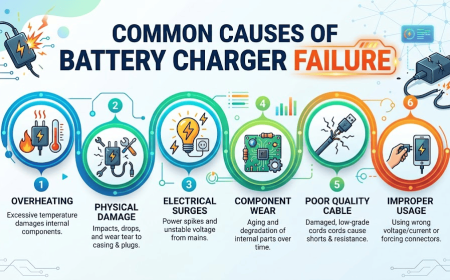
Battery charger failure can result from many different causes, including incompatible equipment, overheating, damaged cables, electrical supply problems, failed internal components, contamination, moisture, poor charging practices, and battery-related faults. Because these issues can produce similar symptoms, accurate troubleshooting is more useful than simply replacing components based on assumptions.
Regular inspection, proper charging practices, battery testing, and preventive charger maintenance can help businesses identify developing problems and make informed repair or replacement decisions. When specialized troubleshooting or servicing is required, working with an experienced provider such as Battery Rescue LLC can help ensure that the battery and charger are evaluated as part of the same industrial power system. The goal is not simply to get a charger running again, but to maintain a safe, compatible, and dependable charging setup for the equipment that keeps daily operations moving.