Why Acupuncture for Fertility May Be the Missing Piece in Your Fertility Journey
Discover how acupuncture for fertility can improve hormonal balance, egg quality, and IVF outcomes. Learn what the science says and why it may be the key to your fertility success.
 roopa
roopa
When Conventional Fertility Treatments Aren't Enough
The path to parenthood is one of the most emotional and physically demanding journeys a person can take. For millions of couples struggling with infertility, conventional medicine provides answers — but not always complete ones. If you've tried timed cycles, medications, or even assisted reproductive technologies and still feel like something is missing, you're not alone.
That's where acupuncture for fertility is stepping into the spotlight — not as a replacement for medical treatment, but as a powerful, evidence-informed complement to it. More fertility specialists and reproductive endocrinologists are now recommending this ancient practice alongside modern protocols, and the reasons why are rooted in both science and real patient outcomes.
What Is Fertility Acupuncture and How Does It Work?
Acupuncture is a key component of Traditional Chinese Medicine (TCM) that involves inserting ultra-thin, sterile needles into specific points on the body to stimulate energy flow, or "Qi." In Western medical terms, this stimulation activates the nervous system, promotes blood circulation, regulates hormones, and reduces inflammation — all of which play a direct role in reproductive health.
When applied specifically to fertility, acupuncture targets points that influence the hypothalamic-pituitary-ovarian (HPO) axis — the hormonal feedback system responsible for ovulation, menstrual regulation, and reproductive hormone production. By modulating this axis, practitioners aim to create the optimal internal environment for conception.
The Science Behind Acupuncture for Fertility
This isn't just ancient wisdom. A growing body of peer-reviewed research is validating what practitioners have observed clinically for decades.
Key Research Highlights:
-
A 2002 study published in Fertility and Sterility found that acupuncture performed on the day of embryo transfer significantly improved IVF success rates compared to no acupuncture — with clinical pregnancy rates of 42.5% in the acupuncture group versus 26.3% in the control group.
-
A systematic review published in the Archives of Gynecology and Obstetrics (2019) concluded that acupuncture may positively influence follicular development, hormonal balance, and endometrial receptivity in women undergoing IVF.
-
Research from the Journal of Integrative Medicine confirms that acupuncture can reduce cortisol levels and regulate sympathetic nervous system activity, both of which are critical in reducing stress-related fertility disruption.
-
According to the American Society for Reproductive Medicine (ASRM), stress is a known contributing factor to menstrual irregularities and anovulation, making stress reduction therapies like acupuncture clinically relevant.
These findings are compelling, and they explain why so many fertility clinics across the United States are integrating acupuncture into their recommended treatment plans.
How Acupuncture for Fertility Addresses Specific Conditions
One of the most powerful aspects of this therapy is its ability to address a wide range of fertility-related conditions in both men and women.
For Women:
Polycystic Ovarian Syndrome (PCOS)
PCOS is one of the most common causes of female infertility, affecting roughly 8-13% of women of reproductive age globally (WHO, 2023). Acupuncture has been shown to reduce androgen levels, regulate menstrual cycles, and improve insulin sensitivity in women with PCOS — all essential for restoring ovulatory function.
Diminished Ovarian Reserve
Low AMH levels and poor egg quality can feel like a dead end. Acupuncture improves ovarian blood flow, which may enhance the quality of follicles and support healthier egg development.
Endometriosis
Chronic inflammation and pain from endometriosis can make conception extremely difficult. Acupuncture's anti-inflammatory properties and ability to regulate immune function have shown promise in managing endometriosis-related infertility.
Unexplained Infertility
Perhaps most significantly, acupuncture for fertility offers a holistic lens for couples who receive no clear diagnosis — helping to identify and address subtle imbalances in sleep, stress, digestion, and hormonal function that standard testing may miss.
For Men:
Male factor infertility accounts for approximately 40-50% of all infertility cases (NIH). Acupuncture has demonstrated improvements in sperm count, motility, and morphology in multiple studies. A 2005 study in Fertility and Sterility found that acupuncture significantly improved total functional sperm fraction and reduced structural abnormalities in male participants.
Acupuncture and IVF: A Powerful Partnership
One of the most common clinical applications of fertility acupuncture is its use alongside IVF. The protocol typically involves treatments before egg retrieval to improve follicular development, on the day of embryo transfer to reduce uterine contractions and improve receptivity, and in the weeks following transfer to support implantation and early pregnancy hormones.
At Swissacu Acupuncture Specialists in Redmond, WA, this integrative approach is tailored to each patient's specific fertility diagnosis, cycle timing, and emotional needs — ensuring that acupuncture complements rather than conflicts with your reproductive medicine team's protocol.
What to Expect During Your Fertility Acupuncture Sessions
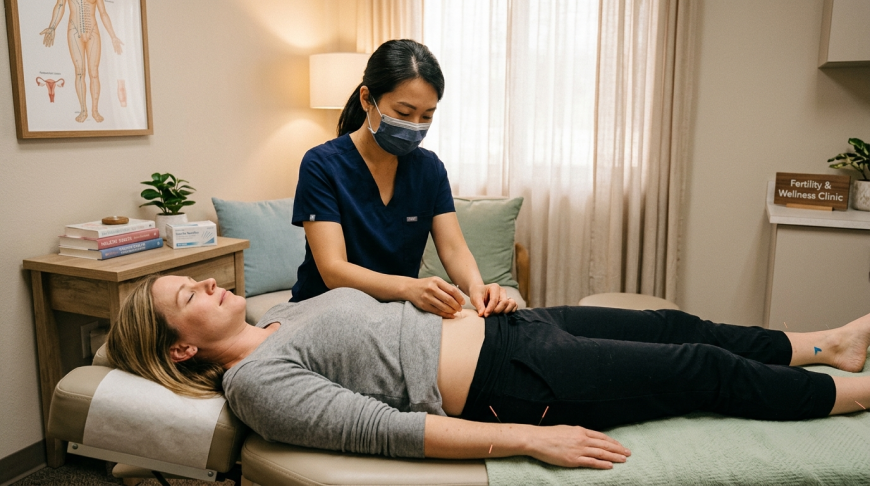
Many first-time patients arrive nervous and leave pleasantly surprised. Sessions are generally relaxing. You'll lie comfortably while hair-thin needles are placed at specific points — often on the lower abdomen, legs, ears, and wrists. Most people report feeling deeply calm, sometimes even falling asleep during treatment.
For fertility support, practitioners typically recommend:
-
At least 3 months of treatment prior to IVF or timed conception attempts, as this aligns with the 90-day maturation cycle of eggs and sperm
-
Weekly sessions during the stimulation phase of IVF
-
Pre- and post-transfer treatments on the day of embryo transfer
Consistency is key. Like exercise or nutrition, the benefits of acupuncture accumulate over time and are best experienced as part of an ongoing wellness strategy.
Is Acupuncture for Fertility Safe?
When performed by a licensed, trained acupuncturist, fertility acupuncture is considered very safe. The needles used are sterile, single-use, and regulated. Side effects are minimal and may include mild bruising or temporary soreness at needle sites.
Always ensure your acupuncturist is licensed by a recognized body such as the National Certification Commission for Acupuncture and Oriental Medicine (NCCAOM) and has specific experience in reproductive health.
Conclusion: The Missing Piece May Already Exist
Infertility is rarely a single-cause problem, which is exactly why a single-solution approach often falls short. Acupuncture for fertility offers something unique: a whole-person framework that addresses hormonal balance, blood flow, stress, immune function, and emotional resilience simultaneously.
Whether you're just beginning your fertility journey or navigating the emotional complexity of multiple failed IVF cycles, acupuncture for fertility may be the integrative missing piece that shifts your outcome. The science supports it, practitioners swear by it, and thousands of parents worldwide credit it as part of their success story.
Don't wait for another failed cycle to consider your options. Speak to a qualified fertility acupuncturist and explore what this ancient, evidence-backed practice can offer your modern fertility plan.