How to Build an Effective ABA Therapy Schedule: A Complete Guide for BCBA Practitioners
Struggling with ABA scheduling? Learn how to build effective therapy schedules that improve consistency, reduce cancellations, and optimize therapist utilization.
 Gowtham Krishna
Introduction
Building a reliable ABA therapy schedule sits at the intersection of clinical planning, family logistics, therapist availability, and insurance compliance. When any one of those variables shifts, the entire schedule shifts with it.
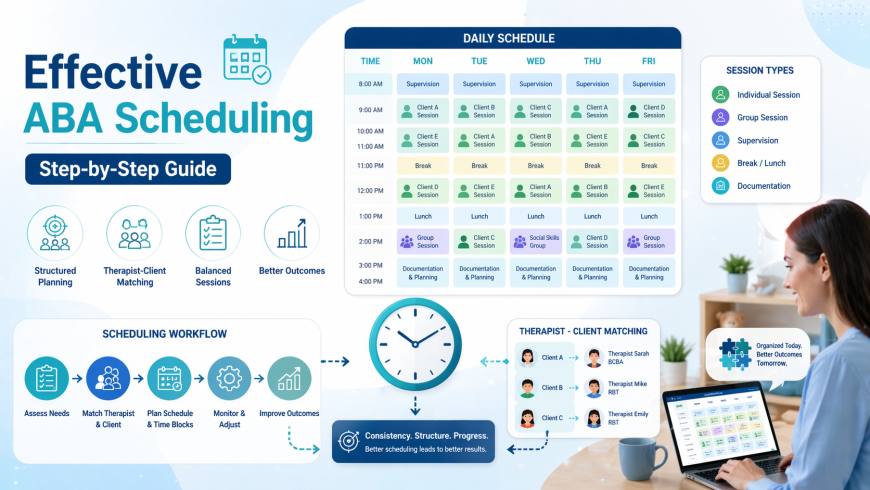
An effective ABA therapy schedule balances clinical intensity, therapist availability, and operational efficiency to ensure consistent treatment outcomes. Getting this balance right requires a deliberate approach to planning, a clear understanding of the factors that influence each client's schedule, and systems that support coordination across a growing team. Purpose-built ABA scheduling software gives practices the operational structure to manage these variables without depending on manual processes that break down under pressure.
ABA Therapy Schedule Fundamentals
- What Defines an Effective Schedule: - An effective ABA therapy schedule delivers the right hours, at the right times, with the right therapist, within the boundaries of what the client's authorization allows. It accounts for clinical goals, session timing, therapist caseload, and family availability simultaneously. A schedule that satisfies only some of these criteria produces gaps in service, billing complications, or staff strain.
- Balancing Clinical Goals with Logistics: - Clinical goals define what needs to happen in each session. Logistics define when and where it can happen. The tension between these two dimensions is where scheduling complexity lives. A client may require 30 hours of therapy per week, but family availability, therapist caseload, and geographic constraints may make that target difficult to reach without careful planning.
- Why Consistency Matters in Therapy Delivery: - Behavioral skill acquisition depends on repetition within a predictable environment. Inconsistent scheduling, where sessions happen at irregular times with different therapists, disrupts the learning pattern and slows progress. Consistency in scheduling is a clinical requirement, not an administrative preference.
Determining Therapy Intensity and Frequency
- Recommended Weekly Hours for ABA Therapy: - The number of weekly therapy hours is determined during the initial BCBA assessment. Focused ABA treatment typically involves 10 to 25 hours per week. Comprehensive plans addressing broader developmental areas generally involve 26 to 40 hours weekly. These benchmarks guide scheduling decisions but must be adjusted based on each client's tolerance, learning patterns, and family capacity.
- Session Frequency and Duration Planning: - Most ABA sessions run between two and seven hours depending on the setting and the client's age and stamina. Scheduling multiple shorter sessions across the week often produces better engagement than fewer longer ones, particularly for younger children. Session timing should align with the child's peak alertness windows and avoid periods when fatigue is likely to interfere with learning.
- Key Factors Influencing Therapy Intensity: - Factors shaping recommended intensity include severity of presenting behaviors, current skill level, pace of progress, payer authorization limits, and family capacity to support home programming. BCBAs should revisit intensity decisions at regular intervals rather than treating initial recommendations as fixed.
Factors That Influence Scheduling Decisions
- Child Readiness and Learning Patterns: - Every child has times of day when they are more alert and receptive to learning. Scheduling demanding skill acquisition targets during low-energy periods produces less efficient sessions. Observing and documenting each client's daily patterns allows schedulers to build sessions around peak learning windows rather than logistical convenience alone.
- Coordination With Other Therapies: - Many ABA clients receive speech therapy, occupational therapy, or school-based services concurrently. Coordinating ABA sessions around these commitments prevents conflicts and avoids placing excessive daily demand on the child. It also creates opportunities to align goals across service providers, which strengthens generalization of skills across settings.
- Family Availability and Routines: - Sessions that conflict with family routines will produce higher cancellation rates over time. Building schedules that fit realistically into the family's week increases attendance and reduces the administrative burden of constant rescheduling.
Operational Scheduling Strategies
- Moving Beyond Manual Scheduling Methods: - Spreadsheets and paper-based systems create scheduling visibility for one person at a time. When information needs to be updated quickly, manual systems produce double bookings and missed authorization windows. Practices that have moved to structured scheduling systems report fewer coordination errors and faster response times when changes occur.
- Reducing Administrative Workload: - A significant portion of scheduling-related administrative work comes from reactive coordination: responding to cancellations, reassigning therapists, and manually updating records. Reducing this reactive workload requires building scheduling processes that surface conflicts proactively rather than after commitments have already been made.
- Improving Scheduling Coordination and Visibility: - When scheduling information is centralized and accessible to the full team, decisions are made on accurate, current data. Therapists know their assignments. Families receive timely confirmations. Billing teams can verify session delivery against authorization records without chasing documentation.
Building Predictable Therapy Schedules
- Using Recurring Session Blocks: - Recurring session blocks establish a stable weekly rhythm for clients, families, and therapists. When the same sessions happen at the same times each week, cancellation rates decrease and therapist preparation improves. Recurring blocks also simplify authorization tracking because expected session hours align predictably with approved limits.
- Reducing Last-Minute Schedule Disruptions: - Last-minute disruptions are reduced when schedules are built with realistic buffers and known family constraints are accounted for upfront. Practices that have structured their weekly planning around these principles find that managing an ABA therapy schedule consistently becomes significantly less reactive over time, even as caseloads grow.

Managing Cancellations and Gaps
- Using Float Staff Effectively: - Float staff are therapists available to cover open sessions when primary therapists cancel. Building float capacity into the staffing model reduces the revenue impact of cancellations and maintains session consistency for clients who would otherwise go without service.
- Recovering Lost Therapy Hours: - When a session is cancelled, the opportunity to recover that hour exists only within the client's current authorization period. Practices with proactive cancellation recovery workflows consistently deliver more authorized hours than those that treat cancellations as unrecoverable losses.
- Maintaining Schedule Stability: - Schedule stability is a measurable outcome. Practices that track cancellation rates and actively manage gaps in coverage maintain higher utilization and more consistent clinical outcomes. Clinics that have addressed this structurally also tend to see a natural reduction in their waitlists, since recovered hours and better fill rates create capacity that an optimized ABA scheduling approach can surface and allocate more efficiently.
Structuring ABA Therapy Sessions
- Using Activity Schedules for Clarity: - Within each session, an activity schedule gives the client a visual or structured sequence of what will happen and in what order. Activity schedules reduce transition resistance, increase predictability, and help clients develop independence by following a sequence without requiring continuous therapist prompting.
- Sequencing Tasks for Better Engagement: - Sequencing tasks strategically, beginning with preferred or mastered activities to build momentum, moving into more demanding targets, and closing with preferred activities, maintains engagement and reduces end-of-session behavioral challenges.
ABA Scheduling vs Manual Systems
- Benefits of Structured Scheduling Systems: - Structured scheduling systems give practices better organization across therapist assignments, improved visibility into authorization status, and reduced manual errors in client-therapist matching. When scheduling decisions are supported by accurate, centralized data, the quality and consistency of those decisions improves across the team.
- Challenges With Manual Planning: - Manual planning is time-consuming to maintain and prone to version conflicts and communication gaps that produce scheduling errors. As caseloads grow, the volume of manual updates required each week exceeds what a single scheduler can manage accurately.
- Impact on Efficiency and Outcomes: - The operational difference between structured and manual scheduling shows up in utilization rates, cancellation recovery speed, and consistency of session delivery. Practices that have moved to structured systems spend less time managing scheduling logistics and more time on clinical and growth priorities.
Preventing Burnout Through Scheduling
- Time Blocking for Non-Clinical Work: - Therapist schedules packed exclusively with direct client hours leave no time for documentation or supervision. Building time blocks for non-clinical work into the weekly schedule reduces after-hours documentation pressure and supports sustainable workloads that reduce turnover.
- Setting Sustainable Work Boundaries: - Schedules that consistently push therapists beyond sustainable hours produce burnout faster than almost any other factor. Tracking weekly direct hours per therapist and adjusting assignments when those hours approach established thresholds protects staff retention and the consistency of care delivered to clients.
Consequences of Poor Scheduling
- Inconsistent Therapy Delivery: - When scheduling breaks down, clients receive inconsistent service. Different therapists, irregular session times, and gaps in coverage disrupt the learning environment that ABA therapy depends on, producing slower skill acquisition and harder-to-evaluate treatment outcomes.
- Therapist Burnout and Reduced Care Quality: - Scheduling that ignores therapist workload, travel burden, and documentation time produces burnout faster than high caseloads alone. The clinical and financial cost of therapist turnover driven by poor scheduling is one of the most avoidable losses in ABA practice management.
Conclusion
An effective ABA therapy schedule is the structural foundation that clinical outcomes, staff retention, and financial performance all rest on. When schedules are built around clinical intensity, family constraints, therapist capacity, and authorization requirements, the entire practice operates with less friction and more consistency.
The practices that deliver the strongest outcomes treat scheduling as a clinical and operational priority rather than an administrative afterthought. ABA scheduling software built specifically for the complexity of ABA therapy gives practitioners the coordination and visibility needed to build schedules that hold up in practice, not just on paper.