Why Every Industrial Unit Needs Tarpaulin Applications
Tarpaulin sheets are used in home and garden you can use any type of tarpaulin such as Heavy Duty Tarpaulins & Canvas Tarpaulins. Tarps are totally waterproof.
 buytarpaulinsuk
In any industrial area, having anything from factories to warehouses, there are many activities occurring simultaneously. Workers use tools, raw materials, and heavy equipment daily. These would need protection from dust, direct sunlight, rain, and damage. Tarpaulin comes into play here. While it may look like nothing more than a piece of sheet, it has multiple uses that make it a very handy item to have in any industrial setting.
1. Weather Cover
One of the biggest challenges of dealing with an industrial area is dealing with changing weather conditions. Equipment or materials may be damaged due to rain, hot sunlight, or wind. A tarpaulin surface helps to mitigate these damaging elements. Tarpaulin will keep machinery dry during rain or shield materials from the sun's UV rays. During stormy weather, a good quality tarpaulin cover or shield will help keep out water or dust from the shed or building where materials are stored.
There is a good chance that many of these industrial units are located in an outdoor space where not everything is housed in a building. In this case, a tarpaulin is a good solution for a cover in an outside space. Tarpaulin is easy to unroll and spread out or fold and remove in situations where a cover is no longer needed, making tarpaulin an easy and reliable weather shield.
2. Protects Raw Materials
Every manufacturing process begins with raw materials. If those materials get wasted, it can halt the entire process. Tarpaulin sheets protect raw materials such as cement, sand, wood, metal parts, etc., by protecting them from moisture, dust, and sunlight that could destroy or alter the quality.
For instance, in a construction-related factory, there are items like steel rods or bags of cement that can be damaged in the rain. If those materials are tarped, they will remain in good condition. Tarpaulin also provides extra protection for industries like textiles or food, by covering fabric rolls, grains, or small parts in order to keep dust and insects away.
3. Aids in Temporary Storage Solutions
Many industries run into storage issues. Sometimes the industry does not have enough room to store finished goods or to store extra materials. Building a new storage facility can take time and money. Tarpaulin can help solve that.
By simply using strong poles and tarpaulin sheets, companies can erect temporary sheds or storage facilities. Those can be used fothe r storage of goods or even a short section for work. This is a way to create extra space without having to make a permanent addition.
4. Useful for Sectioning Work Areas
Different forms of work occur within a factory, all happening at the same time. An example may be a welding section, packaging area, or repair area. To maintain a level of organization, many industries utilize tarpaulin to section off work areas. For simple separation from work area to work area, a simple wall of tarpaulin is all that is needed.
It keeps workers safe from opponents, keeps noise to a minimum, and keeps dust under control when clearly defined work areas are present. Workers can concentrate on their job better when their workspace is sectioned off from others. It also helps maintain a cleaner, safer environment amongst all groups of workers.
5. Easy to Clean and Maintain
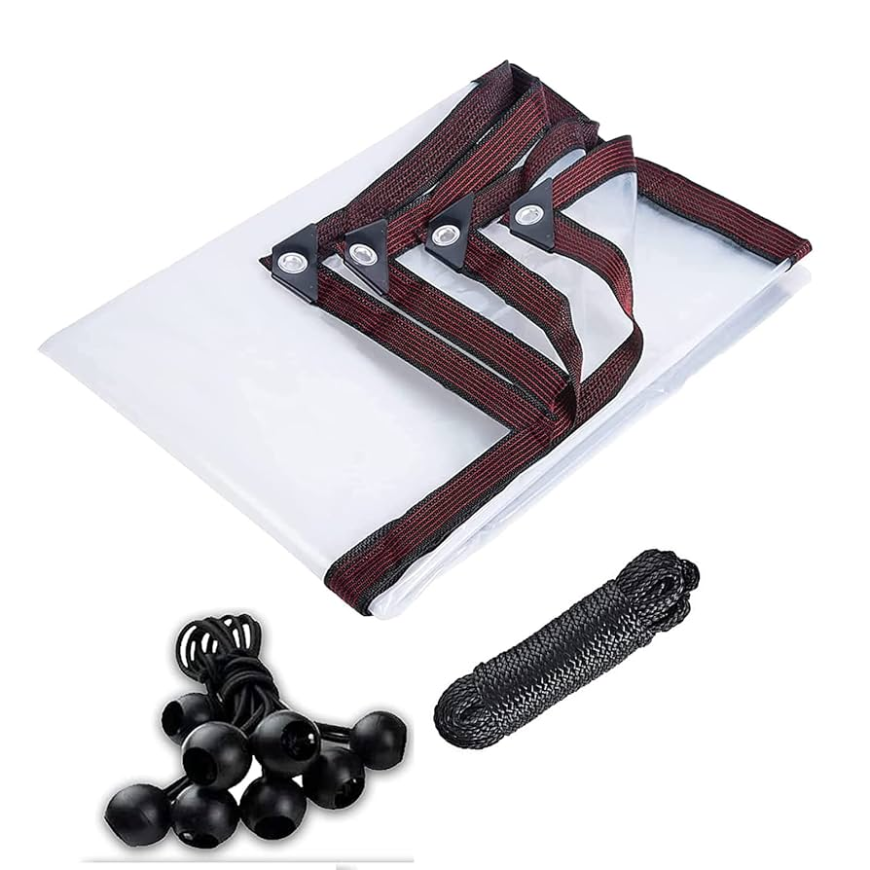
Many factories deal with oil, dust, and grease. When comparing all materials, Clear Tarpaulin is by far easier to clean, maintaining it is simple, as it can simply be washed or wiped down to look 'like new'. This is especially helpful in places where cleanliness is a priority. It is also durable; once purchased, it can be used for months or even years with limited maintenance. This is the driving force behind many industries that choose to use tarpaulin for daily use.
6. Economical and Reusable
Industrial jobs have many costs: equipment, workers, and maintenance. It is crucial, therefore, to source inexpensive solutions. Tarpaulin is an inexpensive choice that provides multiple benefits. It can be reused in multiple ways: covering, partitioning, or creating a shelter space. Its reuse lowers waste and saves money over time. Even if it has an impact on it, basic repairs can make the territory usable again. This ultimately provides practical and economical benefits.
7. Improves Safety Consciousness
Safety is a top concern in almost every industry. Tarpaulin provides a way to make the work area safer in many aspects. First, you can use it to cover sharp tools, keep water off electric machines, or cover anything with dust that is being dispersed in the air.
Second, tarpaulin provides shade coverage to outdoor workers when the direct sun is present. In factories that deal with chemicals or paints, tarpaulin sheets will help limit the dispersion of fumes and particles. So, it indirectly safeguards the health and safety of workers.
8. Aiding in Transport and Loading Process
Many companies transfer goods from one location to another. When transporting goods, goods are susceptible to rain, sunshine, and road dust. Tarpaulin covers are used on trucks and lorries to protect goods during transport. The tarpaulin ensures that goods can be shipped without spoiling or getting wet. In outside loading and unloading areas, tarpaulin sheets are used to cover goods temporarily until they can be brought inside.
9. Versatile and Adaptable for all Industries
The best part about tarpaulin is that it can fit almost every type of industry. Sewing factories, food, construction, automotive, and other industries use it for different applications. Tarpaulin has great flexibility and can be cut or shaped at will. From small covers for tools to large sheets for equipment or roofs, it is very easy to adapt. It is probably one of the most practical materials used in settings in industry.
10. Environmentally-Friendly Alternative
Recently, many industries have sought to decrease waste and select sustainable alternatives. Tarpaulin supports this initiative because it can be reused multiple times and lasts for longer periods. Tarpaulin can assist with reducing environmental impact rather than using single-use plastic covers or paper covers. Some types of tarpaulin are made from recyclable materials, which is better for sustainable practices in factories and potentially when choosing raw materials to produce tarpaulin.
Final Thought
Every industrial unit, regardless of size, needs an affordable, reliable material to protect its goods, equipment, and workers. Tarpaulin has demonstrated protective attributes in many ways climatic elements and maximizing spatial efficiency but it is simple, reusable, and versatile for every type of industrial need. While a tarpaulin could seem like an ordinary sheet, its role in essential and operational functions for industries is significant and pertinent.
Many operations would suffer damages, delays, and heightened expense if not for the applications of tarpaulin. Therefore, we can say, every industrial unit literally needs tarpaulin applications to function safely, efficiently, and smartly.