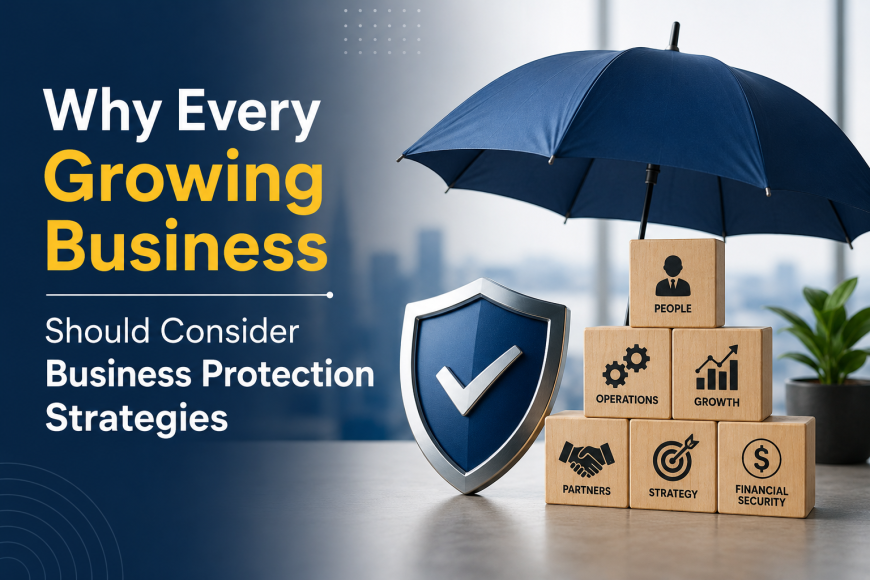
Why Every Growing Business Should Consider Business Protection Strategies
Every successful business is built on the dedication, expertise, and leadership of individuals who contribute significantly to its growth.
 Ajithasundar
Introduction
Every successful business is built on the dedication, expertise, and leadership of individuals who contribute significantly to its growth. While companies invest in infrastructure, technology, and marketing to ensure long-term success, many overlook the importance of protecting the people who drive business performance. Unexpected events such as illness, disability, or the loss of a key executive can disrupt operations, reduce profitability, and create uncertainty among employees, investors, and clients.
Business protection planning helps organizations prepare for unforeseen circumstances while ensuring financial stability. By identifying potential risks and implementing suitable protection measures, businesses can safeguard their operations and maintain continuity even during challenging times. Whether it is a startup, a growing enterprise, or an established corporation, having a risk management strategy is essential for long-term sustainability.
The Importance of Protecting Key Employees
Every organization has individuals whose knowledge, leadership, technical expertise, or customer relationships are difficult to replace. These employees often play a vital role in strategic decision-making, revenue generation, and maintaining client confidence.
If such a person becomes unavailable unexpectedly, the business may experience operational disruptions, recruitment challenges, delayed projects, and financial losses. Planning ahead allows companies to reduce these risks while providing confidence to stakeholders and ensuring business continuity.
Business owners should regularly evaluate the roles that have the greatest impact on organizational success. Once these positions are identified, appropriate financial protection measures can be implemented to minimize future uncertainties.
Financial Security During Unexpected Situations
Unexpected events can affect a company's cash flow and overall financial health. Recruitment costs, employee training, temporary productivity losses, and maintaining customer relationships all require substantial investment. Without proper planning, these expenses may place additional pressure on the organization during an already difficult period.
A comprehensive business protection strategy enables companies to manage these financial challenges more effectively. It ensures that adequate funds are available to stabilize operations, support business continuity, and provide the flexibility needed to recruit and train suitable replacements.
Businesses that proactively prepare for unforeseen situations demonstrate resilience and responsible management, enhancing their reputation among clients, investors, and financial institutions.
Why Businesses Choose Key Person Insurance
One of the most effective financial protection tools available for organizations is Key Person Insurance. This solution helps businesses reduce the financial impact that may arise from the unexpected loss or long-term absence of an employee whose contribution is critical to the company's success.
The financial benefits received can be utilized in several ways, including covering temporary operational expenses, hiring and training replacements, repaying outstanding business loans, maintaining investor confidence, and ensuring uninterrupted business operations.
Companies across various industries—including manufacturing, healthcare, technology, retail, finance, and professional services—often rely on this type of protection because the success of their business may depend heavily on a few experienced professionals.
Rather than reacting to an unexpected crisis, businesses that implement such financial safeguards are better prepared to recover quickly and continue pursuing their long-term objectives.
Factors to Consider Before Choosing Business Protection
Selecting the right business protection solution requires careful planning and evaluation. Business owners should consider several important factors before making a decision.
First, identify the employees whose absence would significantly affect business performance. Next, evaluate the financial impact their loss could have on revenue, operations, and client relationships. Businesses should also estimate recruitment costs, training expenses, and potential income loss during the transition period.
It is equally important to review the company's financial obligations, including business loans, investor commitments, and contractual responsibilities. Understanding these factors helps determine the appropriate level of financial protection required.
Consulting experienced financial advisors or insurance professionals can help businesses choose coverage that aligns with their organizational goals and future growth plans.
Long-Term Benefits for Business Stability
Business continuity planning extends beyond managing immediate financial risks. It contributes to stronger organizational resilience, increased investor confidence, and improved strategic planning.
Companies with well-defined protection strategies often find it easier to secure financing because lenders appreciate businesses that proactively manage risks. Investors also view risk management positively, recognizing that the organization has prepared for unexpected challenges.
Additionally, customers and business partners gain confidence knowing the company has contingency plans in place, strengthening long-term professional relationships and enhancing corporate credibility.
Understanding the Value of a Key Person Insurance Policy
Before finalizing a business protection strategy, organizations should carefully evaluate the benefits offered by a Key Person Insurance Policy. Choosing suitable coverage ensures that financial resources remain available when they are needed most, allowing businesses to continue operations with minimal disruption.
The right policy should reflect the organization's size, financial commitments, business objectives, and the overall value contributed by key employees. Periodic reviews are equally important because business growth, expansion, and changing responsibilities may require adjustments to the level of coverage over time.
A well-planned policy forms an important part of a comprehensive business continuity strategy, helping organizations remain financially secure while preparing for future uncertainties.
Conclusion
Business success depends not only on products, services, and technology but also on the people who lead innovation and growth. Protecting these valuable individuals is an essential component of responsible business management. By incorporating effective financial protection into their overall risk management strategy, businesses can minimize operational disruptions, safeguard stakeholder confidence, and ensure long-term stability.
Planning today provides businesses with the confidence to face tomorrow's uncertainties. Organizations that invest in comprehensive protection strategies are better positioned to overcome unexpected challenges while continuing their journey toward sustainable growth and lasting success.