How Rising US Debt Could Affect Gold Prices in 2026: A Guide for First-Time Investors
Learn how rising U.S. debt may impact gold prices in 2026 and what first-time investors should know before investing.
 joedenly
If you have been scrolling through the latest finance gossips on social media or catching the hushed conversations at the water cooler lately, you’ve likely noticed a recurring theme: the staggering height of the US national debt. As we move through the midpoint of 2026, the economic landscape feels more like a tightrope walk than ever before. For the first-time investor, the noise can be deafening. Is the dollar safe? Is a recession looming? And most importantly, where should you put your hard-earned money to ensure it doesn’t lose its value?
One asset has dominated these discussions for centuries: Gold. However, in 2026, the conversation isn't just about gold as a shiny metal; it’s about the Impact of US debt on gold market dynamics. Understanding this relationship is the key to navigating the current financial climate.
The Current State of Affairs: Why Everyone is Talking
As of June 2026, the US national debt has hit levels that many economists once thought impossible. While "debt" sounds like a boring accounting term, in the world of high-stakes investing, it is the primary engine driving market sentiment. When the government spends more than it collects, it issues Treasury bonds. As the pile of debt grows, the cost of servicing that debt (paying the interest) begins to eat away at the national budget.
This is where the finance gossips turn into hard reality. Investors start to wonder: Can the US continue to pay its bills without devaluing its currency? When faith in the "Greenback" wavers, investors instinctively reach for the "Yellow Metal."
Understanding the Impact of US Debt on Gold Market
To understand why gold prices are sensitive to US debt, we have to look at the mechanics of the global economy. Gold is globally priced in US Dollars. Therefore, there is an inherent inverse relationship between the strength of the dollar and the price of gold.
-
Currency Devaluation: As the US debt climbs, the Federal Reserve is often faced with a difficult choice: keep interest rates high to fight inflation or lower them to make the debt easier to manage. If the market perceives that the government is "printing money" to cover its obligations, the dollar loses purchasing power. Gold, which has a finite supply, naturally rises in price as the dollar weakens.
-
The Safe Haven Effect: In 2026, geopolitical tensions and economic uncertainty are at the forefront of every news cycle. Gold is a "safe haven" asset. Unlike a bond or a bank deposit, gold is no one else’s liability. It doesn't rely on a government’s promise to pay. When the US debt reaches a tipping point that threatens economic stability, institutional investors move billions into gold, driving the price upward for everyone.
-
Interest Rate Calculations: Historically, gold struggles when interest rates are very high because gold pays no dividend or interest. However, in the 2026 landscape, the Impact of US debt on gold market has shifted. The debt is now so large that the government cannot afford excessively high interest rates for long without risking a default. This "ceiling" on interest rates provides a safety net for gold prices.
Why 2026 is Different for First-Time Investors
If you are just starting your investment journey, you might feel like you’ve arrived late to the party. Gold prices have already seen significant growth over the last two years. However, the current cycle is unique.
We are seeing a trend called "de-dollarization." Central banks around the world—from Asia to the Middle East—are reducing their holdings of US Treasuries and replacing them with physical gold bullion. They are doing this specifically because of the rising US debt levels. When the world’s biggest banks are buying gold, it creates a "floor" for the price, reducing the risk for individual investors who are just getting started.
How to Start Investing in Gold Today
For a beginner, the gold market can seem intimidating. You don't need to buy a literal gold bar and hide it under your mattress (though some people do!). Here are the common paths:
-
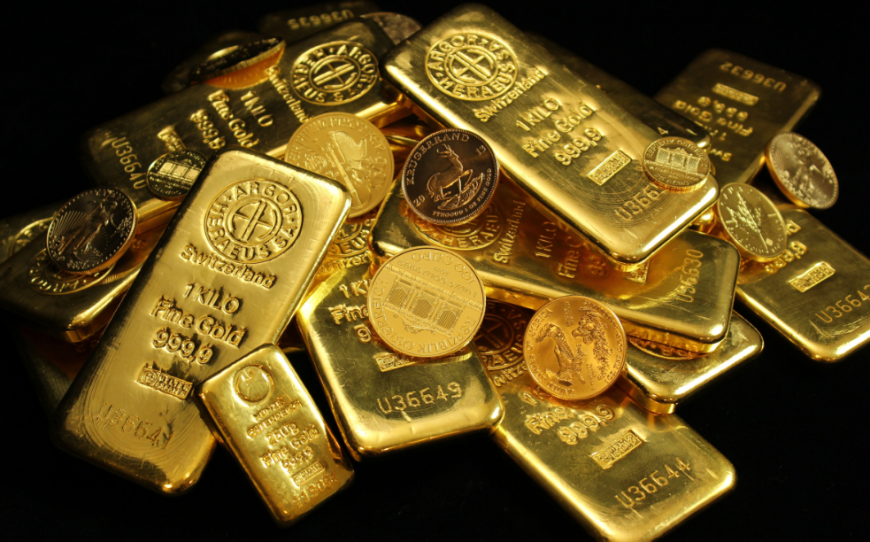
Physical Gold: Coins and bars. This gives you total control but requires a secure place to store it.
-
Gold ETFs (Exchange Traded Funds): These trade like stocks and track the price of gold. It’s the easiest way to get exposure without worrying about storage.
-
Gold Mining Stocks: These are companies that dig the gold. They are riskier but can offer higher returns if the company is well-managed.
The Bottom Line
The finance gossips will always find something new to whisper about, but the fundamental truth of 2026 remains: debt is a powerful catalyst. The Impact of US debt on gold market is not just a theory; it is a visible force driving the portfolio decisions of the world's wealthiest individuals and nations. As a first-time investor, your goal isn't necessarily to "get rich quick," but to protect your wealth from the eroding effects of debt-driven inflation.
Frequently Asked Questions
1. Why does gold price go up when US debt increases?
When debt increases, the perceived risk of the US Dollar increases. Investors fear inflation or currency devaluation, so they move their money into gold, which is seen as a stable store of value. This increased demand drives the price up.
2. Is 2026 a good year to buy gold for the first time?
While no one can predict the future with 100% certainty, the high levels of US debt and global economic uncertainty in 2026 make gold a popular choice for diversifying a portfolio and hedging against risk.
3. Does gold pay interest?
No, gold does not pay interest or dividends. Its value comes solely from its price appreciation. This is why some investors prefer bonds when interest rates are very high.
4. How much of my portfolio should be in gold?
Most financial advisors suggest that a balanced portfolio for a beginner should contain between 5% and 10% in gold or precious metals to act as an "insurance policy" against market crashes.
5. What is the "Spot Price" of gold?
The spot price is the current market price at which gold can be bought or sold for immediate delivery. This price fluctuates throughout the day based on global trading.
6. Is it better to buy gold coins or gold stocks?
Physical coins are better for long-term security and "off-grid" wealth. Gold stocks are better for investors looking for liquidity (ease of selling) and potential growth, though they carry more risk if the mining company is poorly managed.
7. How does the Federal Reserve affect gold prices?
The Fed affects gold primarily through interest rates. Generally, when the Fed raises rates, gold prices may dip as investors chase interest-bearing assets. However, if the Fed keeps rates low to manage US debt, gold typically thrives.
8. Can the government "confiscate" gold?
While the US government did this in 1933 (Executive Order 6102), most experts believe this is highly unlikely in the modern, globalized financial era. However, many investors keep some gold in private storage as a precaution.
9. What happens to gold if the US pays off its debt?
If the US significantly reduced its debt and the dollar became incredibly strong and stable, the price of gold would likely decrease as the need for a "safe haven" would diminish. In 2026, however, this scenario is considered highly improbable.
10. Where is the safest place to buy gold?
First-time investors should only buy from reputable, minted dealers or through established brokerage accounts for ETFs. Avoid "too good to be true" offers on social media, as these are often the subject of negative finance gossips and scams.