How Do Biology Models and Science Kits Improve Practical Learning?
 sonamkuamri
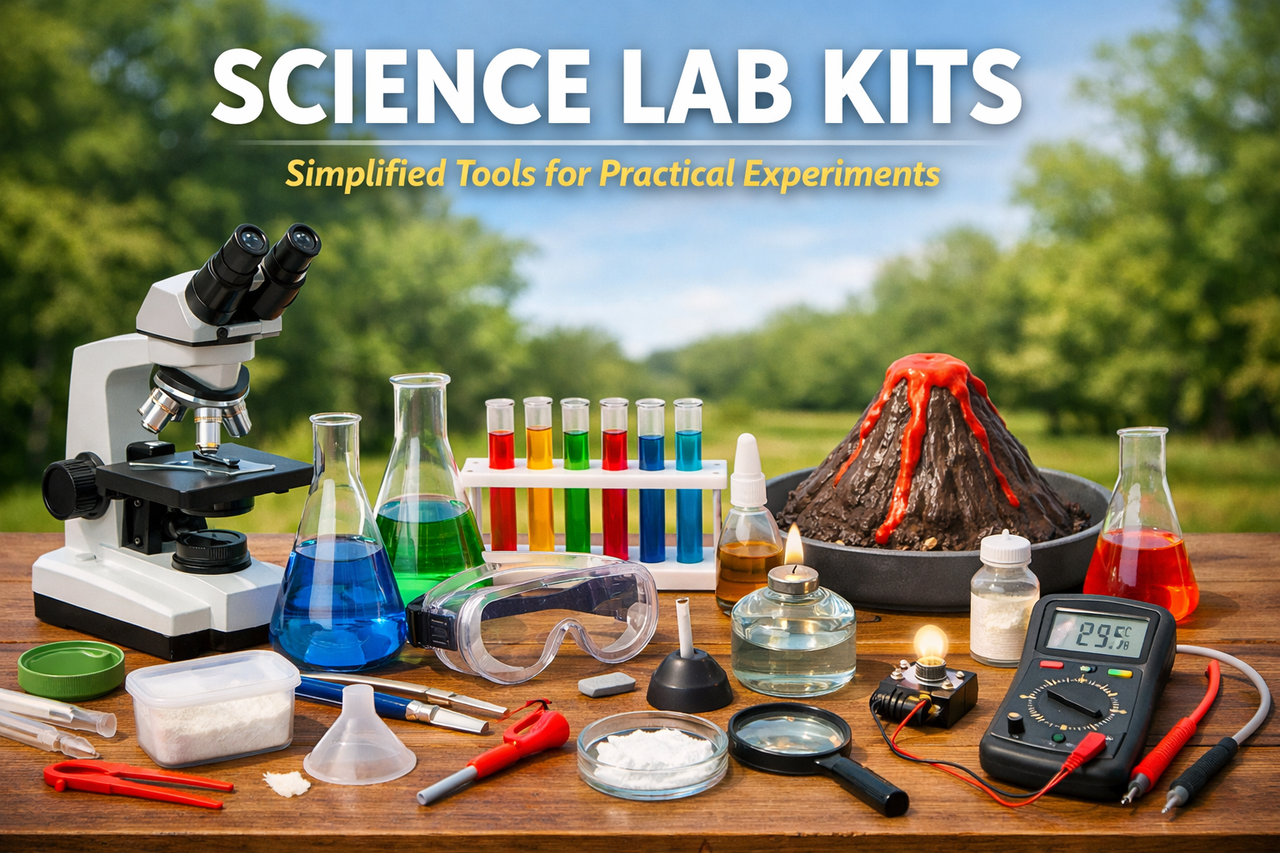
Experiences related to practical learning considerably help students understand Science. Reading materials makes students passive learners and understanding text can also be abstract. Incorporation of Biology Models and Biology Science kits creates a new avenue for students to visualize a concept by simplifying an abstract coverage of a lesson. Students learn about the functioning of an entire system, organs and processes.
Simplifying an Abstract Information
Biology refers to the study of life and systems that can be quite abstract to students, for example, anatomy, morphology, reproduction, cells, tissues and ecology. A Biology model can make these ideas observable through a visual elaboration of each individual concept. System structures can be better articulated through a model of the heart or a model of the eye or a model of a skeleton or of a cell. Students are able to build the structure of a concept instead of passively memorizing and recalling information. The student’s confidence and understanding improves through the connection of an anatomical model and the theory of system functionality.
Fostering Participation through Practical Learning
The major benefit of a Biology Science kit is the user participation it encourages. Through the kit, students are not spectators of a lecture, but are conducting experiments and drawing their own conclusions. This type of learning enhances critical thinking and creativity in learners. A practical activity facilitates students participation and engagement thus they begin to think like young scientists. This way, lessons are easier to remember and are impactful.
Enhancing Observation and Analytical Skills
Understanding science includes more than knowing facts; it requires the ability to analyze facts and draw conclusions from observations and questions. Science kits and biology models provide opportunities for students to develop these skills. A student observing a biology model is able to recognize and understand each part's function and how the parts of the model relate to each other. A student using biology science kits is able to record observations, identify patterns, and describe the outcomes of an experiment. The skills mentioned above assist students in the development of their science skills and their academic success.
Addressing Varying Styles of Learning
Each student has a different style of learning. Also, each student may have different styles of learning at various stages of his or her educational development. For some students, reading is an effective tool; for others, reading is not a useful tool, and learning by doing may be. The use of Science Kits and Biology Models integrates diverse styles of learning. The Kinesthetic learner benefits from the science kit, and the visual learner benefits from the biology model. An auditory learner benefits from the teachers' description of the science model during the demonstration. This variety of learning styles increases students' learning and understanding of Science.
Developing Science Confidence and Interest
The use of models and science kits increases the enjoyment of learning science. The successful completion of an experiment and the use of science kits reinstate the learning and increase the interest to learn. An engaging biology model may stimulate an interest to learn about anatomy or the life sciences; the use of biology kits may stimulate an excitement for learning about experimental science or the sciences of discovery. The stimulation of interest to learn science and helpful learning skills leave a positive impact upon the students.
Conclusions
Practical learning is essential, and Science Kits and Biology Models are vital in this area. Making the learning process visual, interactive, and memorable helps students understand even the most difficult concepts. It helps them develop good observation skills, and, with the aid of Science Kits and Biology Models, students can gain the confidence and benefit that comes from engaging in an active role in the learning process. Thus, a better environment is created for the students, and practical learning is improved.