Your Smile Awaits Things to Know Before Visiting an Expert Implant Dentist
Implants are artificial tooth roots made of biocompatible materials, surgically implanted into the jawbone to support crowns, bridges, or dentures.
 dianeadsmith
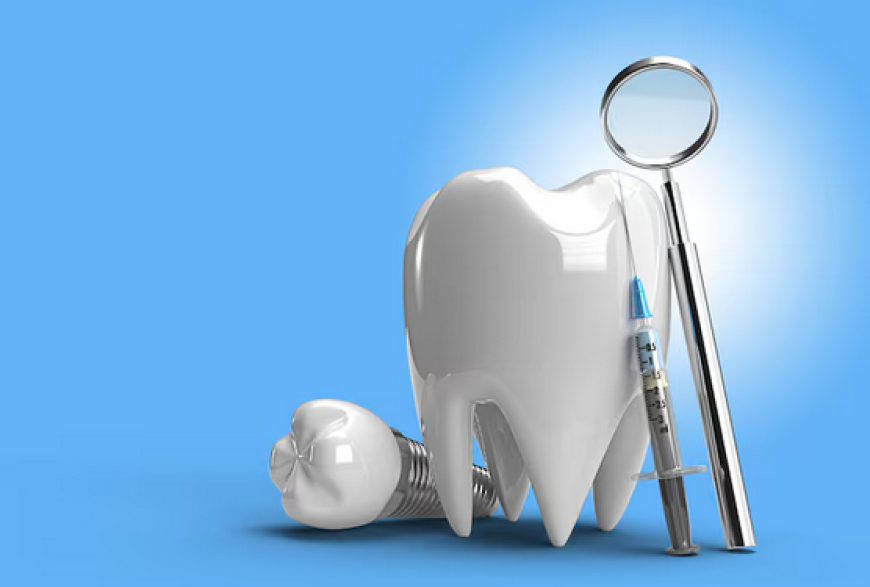
A dental specialist who focuses primarily on the placement and management of dental implants is an implant dentist Jackson TN. These implants are artificial tooth roots made of biocompatible materials, surgically implanted into the jawbone to support crowns, bridges, or dentures. This advanced procedure restores both the function and aesthetics of your smile for individuals who have lost teeth as a result of injury, decay, or periodontal disease.
The qualifications and expertise of a dentist specializing in dental implants.
A dentist must complete additional training after dental school to become an implant dentist Jackson TN. The program includes special courses and practical experience in surgical techniques, implant materials, and patient care. Dentists who specialize in implants possess the necessary skills to manage intricate cases, encompassing bone grafting and sinus lifts, thereby guaranteeing a high success rate for implant procedures.
Skills of Implant Dentist
Skills in Surgical and Hard Tissue Procedures.
- Masterful drilling and angling are used to precisely place the titanium post (fixture) in optimal alignment with the future crown.
- Proficiency in ridge augmentation, socket preservation, and sinus lifts enables the creation of a stable foundation for the implant through bone grafting and regeneration.
- Extractions of compromised teeth are performed without damaging the surrounding alveolar bone in order to preserve the site for either immediate or delayed dental implant placement.
Skills in Restorative and Prosthetic Care
- A deep understanding of bite forces and stress distribution is essential to ensure the final crown or bridge functions without overloading the implant.
- Digital Smile Design and CAD/CAM technology involves using intraoral scanners and design software to create custom abutments and visually appealing final restorations.
- Interpreting 3D Cone Beam Computed Tomography scans to safely identify and map out critical anatomical structures such as the mandibular nerve and maxillary sinus.
- Assessment of Tissue and Site: Evaluating bone density, periodontal health, and soft-tissue biotype to determine the risk of complications.
Management of Soft Tissues
- Designing tissue flaps with precise tension to guarantee sufficient blood supply and aesthetically pleasing closure.
- Specialized suturing patterns, such as vertical mattress and continuous suturing, are executed to securely stabilize tissues around the implant site or grafts.
Patient Care and Practice Management
- Presenting complex treatment plans in a clear and understandable manner to patients.
- Effective management of complications involves anticipating and handling surgical, biological (e.g., peri-implantitis), or mechanical complications.
Specialized training is essential for dentists seeking to build these proficiencies. You can explore structured, hands-on clinical training via the American Academy of Implant Dentistry, or investigate advanced fellowship pathways on the NYU Dentistry Continuing Education portal.
Training
University Programs for Long-Term Study
Universities and dental colleges provide comprehensive, full-time or extended part-time postgraduate (PG) certificates and master's degrees for a solid foundation.
- The duration is typically between one and three years.
- The focus is on in-depth biology, implant prosthetics, complex bone grafting, and managing surgical complications.
Modular and Fellowship Courses
These programs are designed for general dentists who are already in private practice and require a balance between learning and patient care responsibilities.
- The program is structured into multiple short modules, comprising 6 two-day sessions over a period of 6 months, enabling you to apply your learnings between sessions.
- The curriculum includes patient selection, osteotomy protocols, flap designs, and live surgical demonstrations.
- Many programs award fellowships through international bodies such as the ICOI or European associations.
Specialized and Advanced Workshops
Once you are familiar with basic placement techniques, you can take advanced courses for complex, full-mouth or minimally invasive restorative solutions.
- The All-on-4 / Full Arch procedure focuses on tilted implant concepts and immediate loading protocols.
- Basal/Strategic Implantology teaches cortical implant placement and immediate functional loading in its courses.
Online and Theoretical Learning
Suitable for beginners or those seeking to refresh their knowledge of evidence-based treatment planning before attending wet-lab courses.
- Online courses and webinar series, including MOOCs (Massive Open Online Courses).
- The Implant Dentistry program on Coursera offers a 5-week, evidence-based foundational review.