Your Complete Guide to Dental Crowns: Restoring Your Smile with Confidence
 ryandigital
You know what happens when your tooth is half chipped, and they cannot do the filling, nor can the tooth be extracted, as it is still healthy.
That's where a dental crown comes into play. It's like a custom-made cap that fits perfectly over your damaged tooth, bringing back both function and the natural appearance of your tooth.
What exactly is a Dental Crown?
It is a tooth-shaped covering that completely covers the visible portion of your tooth from your gum line. When your dentist places a crown, it becomes your tooth's new outer surface, protecting what's left of your chipped/broken natural tooth structure underneath.
Crowns can also strengthen the weakened teeth, restore proper chewing function, and prevent further damage down the road.
When Do You Need a Dental Crown?
Several situations might lead to your dentist recommending this procedure. Large cavities that have compromised too much of the tooth structure, or after a root canal procedure, or if accidentally broken or chipped off, are some of the most common reasons to get a dental crown.
Sometimes, severely worn teeth from grinding or clenching need crowns to restore their proper height and function. Even teeth with old fillings that are failing might need the coverage that only a crown can provide.
People also get dental crown for discolored teeth or for aesthetic purposes.
Different Types of Dental Crowns
Your dentist will help you choose the best option, depending on your situation, as they are all made of different materials. Some are more expensive than the others. Porcelain crowns are incredibly popular because they can blend perfectly with your natural teeth. They're ideal for front teeth.
Metal crowns, typically made from gold alloys or other metals, are incredibly durable and long-lasting. While they're not tooth-colored, they're excellent choices for back molars where strength matters, and they won’t be visible to everyone.
There are porcelain-mixed-metal crowns as well, but you would need to ask your dentist before you look into them.
What to Expect During the Procedure
Getting a dental crown typically involves two appointments that are a few weeks apart.
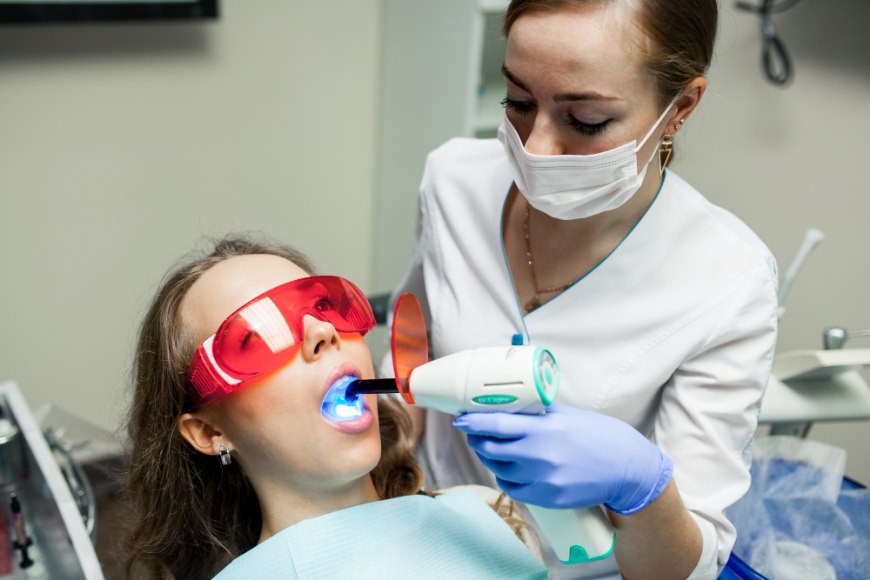
On your first visit, your tooth will be prepared by first removing any decay and shaping it to the desired form for the crown to rest on. This process is performed under local anesthesia, so you won’t feel any pain.
After preparation, your dentist will take detailed impressions of your teeth. Then the impressions are sent to a laboratory where your custom crown is crafted. Till then, you'll receive a temporary crown to protect your prepared tooth.
At the next appointment, your temporary crown is removed and a new permanent dental crown is carefully fitted. They'll check the fit, bite, and appearance before permanently securing it in place.
Caring for Your New Crown
Once you have your dental crown, taking care of it is similar to caring for your natural teeth. Brushing twice a day and flossing once is required. The area where the dental crown meets your natural tooth needs more attention, as this junction can be vulnerable to plaque buildup. Cleaning it is really important.
Avoid chewing on hard food, which could damage your crown. While crowns are strong, they are not as strong as your natural ones and can be damaged. If you grind your teeth at night, your dentist might recommend a night guard to protect both your crown and natural teeth.
Dental checkups and cleanings should be conducted regularly to monitor, maintain, and improve your overall oral health. A qualified dentist in gaylord or your local area can provide ongoing care and address any concerns that arise.
The Investment in Your Oral Health
While dental crowns are becoming really common, they might be a little expensive, but they are the best way to save a damaged tooth. The alternative might be tooth extraction followed by more expensive replacement options like dental implants or bridges, but they are not worth the pain or the money if you can get away with a dental crown.
A significant portion of crown costs is covered under dental insurance, especially when they're medically necessary rather than purely cosmetic.
Making the Right Choice
If you're experiencing tooth pain and sensitivity, and there is visible damage to your tooth, you should contact a dentist immediately before it becomes a bigger problem.
Addressing dental problems early often leads to treatments that are less painful and less expensive. A crown that could save your tooth today will prevent the need for extraction and replacement later on.