Why Fertility Specialists Recommend Hysteroscopy Before IVF
Preparing for IVF, you may be told your specialist wants a hysteroscopy surgery in Delhi done before the cycle starts, and wondering what an extra procedure is buying you is a fair question to ask.
 adminadmin1
Preparing for IVF, you may be told your specialist wants a hysteroscopy surgery in Delhi done before the cycle starts, and wondering what an extra procedure is buying you is a fair question to ask. Put simply, hysteroscopy lets a doctor look directly inside the uterus and find the problems a scan will miss, then treat them. The uterus is where an embryo has to implant and grow. Making certain it is healthy first moves your chances in a way that is worth the appointment.
What Is a Hysteroscopy, and Why Does the Uterus Matter So Much?
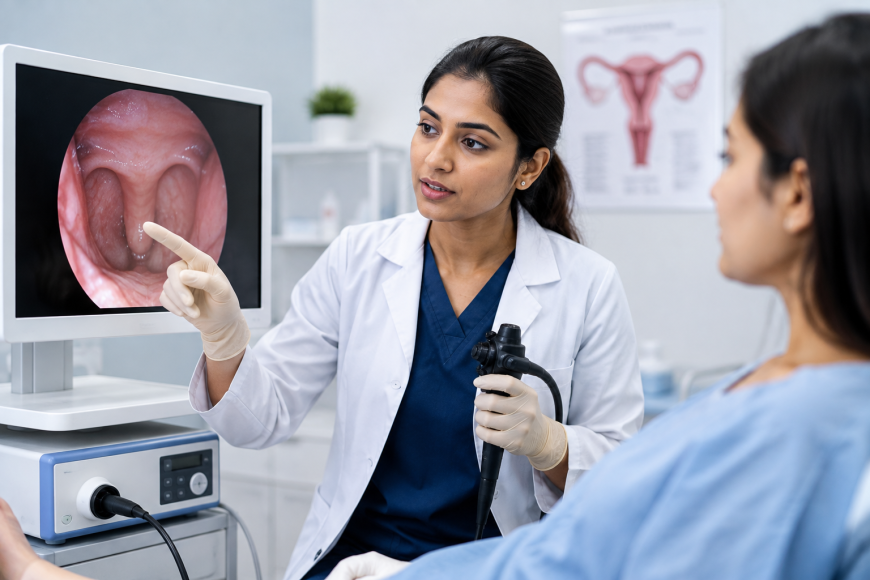
A hysteroscopy is minimally invasive. A thin lighted telescope, the hysteroscope, passes gently through the cervix and into the uterus, and saline expands the cavity so the lining can be seen clearly on a monitor. No incisions are made. It is usually a day-care or outpatient procedure.
The uterus is the final stop on the IVF journey and arguably the one that counts most. You can produce excellent eggs, you can build high-quality embryos in the laboratory, and if something is hiding in that cavity the embryo may still struggle to implant. Embryo quality is widely held to be the single most important factor in implantation. What a receptive, healthy uterine environment does is give that embryo somewhere to take hold.
What Can Hysteroscopy Detect That Ultrasound and HSG Cannot?
Transvaginal ultrasound and hysterosalpingography are useful tests. They do not always reveal everything. What hysteroscopy gives you is a direct view, and that is why subtle abnormalities imaging skims past get picked up on it. One study of women whose ultrasound came back normal after a failed IVF cycle found abnormal endometrial changes in about 30% of those who went on to have hysteroscopy.
Common findings, most of which can be treated in the same sitting:
-
Endometrial polyps: small growths on the lining, and they interfere with implantation
-
Uterine fibroids: the submucosal ones particularly, which push into the cavity itself
-
Intrauterine adhesions: meaning scar tissue, bands of it distorting the cavity, usually left behind by earlier surgery or an infection
-
Uterine septum: a congenital wall of tissue dividing the cavity in two
-
Chronic endometritis: low-grade inflammation of the lining, and it is linked to implantation failure
That last one matters especially where there have been repeated setbacks. It turns up across a wide range of patients with recurrent implantation failure, which is why we take it as seriously as we do.
Does Hysteroscopy Actually Improve IVF Success Rates?
This is the question that matters most, and the evidence is encouraging while still moving. Several reviews point to a real benefit, clinical pregnancy rates particularly.
|
Patient group |
What the evidence suggests |
|
Before a first IVF cycle |
A meta-analysis found routine hysteroscopy improved clinical pregnancy rates, though live birth rates were unchanged |
|
After recurrent implantation failure |
Pooled data showed significant improvement in clinical pregnancy rates, with a number-needed-to-treat sitting at about 7 |
|
When a treatable abnormality is found |
Correct the polyp, the adhesions, the septum, and a mechanical barrier to implantation is gone |
Being honest about it, the research is not unanimous. Some randomised trials, the well-known TROPHY trial among them, found no improvement in live birth rates in women with previously failed cycles where the cavity already looked normal. Which is exactly why specialists individualise this recommendation rather than applying it across everybody as a rule.
Who Benefits Most From a Pre-IVF Hysteroscopy?
Your specialist weighs your history before recommending it at all. You are likelier to be advised toward one where you:
-
Have had a failed IVF or embryo transfer behind you, or more than one
-
Show something suspicious on ultrasound, a possible polyp, a fibroid
-
Carry a history of miscarriage, or previous uterine surgery, or infection
-
Have unexplained infertility and nobody has yet looked at the uterus directly
For a great many women with a genuinely normal cavity and no failures behind them, IVF proceeds perfectly well without it. Where the value of hysteroscopy sits is in finding and fixing what would otherwise quietly cost you odds you never knew you had lost.
What Should You Expect From the Procedure?
Most diagnostic hysteroscopies run ten to twenty minutes, and they are performed in the first half of the menstrual cycle, when the lining is thin and easiest to assess. Where something is found, an operative hysteroscopy often corrects it inside the same appointment. Recovery tends to be quick. Mild cramping, light spotting for a day or two, both normal, and most women are back to ordinary activity almost immediately.
Is the Timing Before IVF Important?
It is. What we generally prefer is hysteroscopy in the cycle before ovarian stimulation starts, or shortly before it, since that leaves the uterus time to heal after any treatment and puts the cavity in the best condition it can be in by the time your embryo is ready to transfer. Coordinating that timing is part of building a plan around you rather than around a protocol.
Choosing a hysteroscopy surgery in Delhi ahead of IVF comes down to giving your embryo the healthiest home available to it. We do not see the step as an added hurdle at our clinic. We see it as clearing obstacles out of the way before they cost you a cycle, so that you go forward with more confidence and a clearer path toward pregnancy.
This article is for general educational purposes and is not a substitute for personalised medical advice from your fertility specialist or embryologist.