Why BIM Clash Detection Services Are Essential Before Construction Begins
Why BIM Clash Detection Services are essential before construction begins: detect design conflicts early, reduce rework, lower costs, and keep projects on schedule.
 chudasama
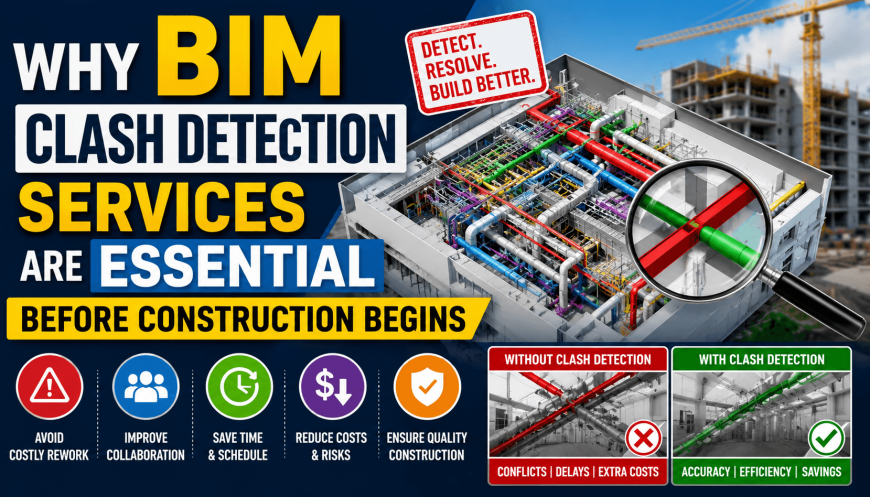
Every construction project looks perfect on paper until the different trades try to fit their work into the same physical space. A duct runs straight through a structural beam. A sprinkler pipe crosses a light fixture. An electrical conduit sits exactly where a plumbing line needs to pass. These problems used to show up on site, halfway through construction, when fixing them meant tearing out finished work and losing weeks on the schedule.
This is exactly the problem BIM clash detection services were built to solve. By checking every model against every other model before anyone picks up a tool on site, teams can catch these conflicts on a screen instead of in a wall that's already been built.
What Clash Detection in BIM Actually Means
Clash detection in BIM is the process of overlaying architectural, structural, and MEP models together in one shared space and checking where elements overlap or conflict. A software tool scans the combined model and flags every point where two things try to occupy the same space, or where clearances aren't enough for maintenance and access later on.
There are generally three types of clashes teams look for:
-
Hard clashes – two physical elements occupying the same space, like a beam running through a duct
-
Soft clashes – not enough clearance around an element, such as insufficient space to access a valve or panel
-
Workflow clashes – sequencing issues, where one trade's work depends on another being finished first, but the schedule doesn't account for that
Catching all three types before construction starts is what makes a project run smoothly instead of turning into a series of on-site fire drills.
Why MEP Clash Detection Services Matter So Much
Out of all the disciplines, mechanical, electrical, and plumbing systems cause the most conflicts. These systems are packed into ceilings, walls, and shafts alongside structural elements, and there's rarely enough room for everyone. That's why MEP clash detection services are usually the biggest part of any coordination effort.
A single ceiling space might have ductwork, sprinkler piping, electrical conduit, cable trays, and structural framing all competing for the same few inches of height. Without proper coordination, one trade installs first and the next trade shows up to find there's no room left. MEP clash detection services catch these conflicts early, so ductwork, piping, and wiring routes are planned around each other instead of fighting for space after installation has already started.
Chudasama Outsourcing handles this kind of coordination regularly, running detailed MEP clash detection services across mechanical, electrical, and plumbing models so contractors get a buildable set of drawings, not just a technically complete one.
The Real Cost of Skipping Clash Detection
Some project teams still treat clash detection as optional, something to do if there's time and budget left. This almost always backfires. Here's what typically happens when clashes aren't caught early:
-
Rework on site - Crews install pipe or duct, then have to cut it out and reroute it once a physical clash is discovered.
-
Schedule delays - Every rework cycle pushes the schedule back, and delays on one trade often hold up every trade that follows.
-
Budget overruns - Materials get wasted, labor hours increase, and change orders pile up.
-
Safety risks - Rushed on-site fixes, especially involving structural or electrical work, can create real safety hazards.
-
Damaged relationships - Owners and contractors lose trust in a design team when the same coordination problems keep showing up project after project.
Compare that to the cost of catching the same clash in a 3D model before construction begins — a few minutes of review and a quick model update. The math isn't close.
How BIM Clash Detection Services Fit Into a Project
Good BIM clash detection services aren't a one-time check right before construction. They should run throughout the design and pre-construction phase, at each stage the models are updated:
-
Early design stage – catching major conflicts between structural and architectural systems before MEP design even begins
-
Design development – running full model coordination once MEP systems are laid out
-
Construction documents – a final, detailed pass to confirm every system fits together cleanly
-
Pre-construction coordination meetings – walking through flagged clashes with all trades present, so everyone agrees on the fix before it's built
Running clash checks at each of these stages, instead of just once at the end, means smaller and easier-to-fix conflicts get resolved before they turn into bigger ones.
Why Firms Choose to Outsource BIM Clash Detection Services
Running proper clash detection takes skilled staff, the right software, and time that in-house teams don't always have to spare, especially on top of their regular design workload. This is why many architecture, engineering, and construction firms choose to outsource BIM clash detection services rather than handle it internally.
When you outsource BIM clash detection services, you get a dedicated team focused only on finding and resolving conflicts, without pulling your designers away from their main work. It also means faster turnaround, since outsourced teams are set up to run large coordination models efficiently.
Chudasama Outsourcing works with US-based AEC firms to provide exactly this kind of support, running clash detection across full building models and delivering clear, organized reports that show every conflict along with suggested fixes. Instead of a long list of technical flags nobody has time to sort through, project teams get a practical roadmap for cleaning up the model before it goes to site.
Conclusion
Clash detection isn't an extra step you add if there's budget left over. It's one of the main reasons BIM exists in the first place. Catching a conflict on screen costs a few minutes. Catching the same conflict on site can cost weeks and thousands of dollars.
Whether it's structural clashes, MEP clash detection services, or full building coordination, running these checks before construction begins protects your schedule, your budget, and your reputation. And if your team doesn't have the bandwidth to run this process properly, choosing to outsource BIM clash detection services to a partner like Chudasama Outsourcing is often the simplest way to make sure nothing slips through before the first crew shows up on site.