Which ABB Voltage Monitoring Relay Fits Your Panel?
 jackzkr317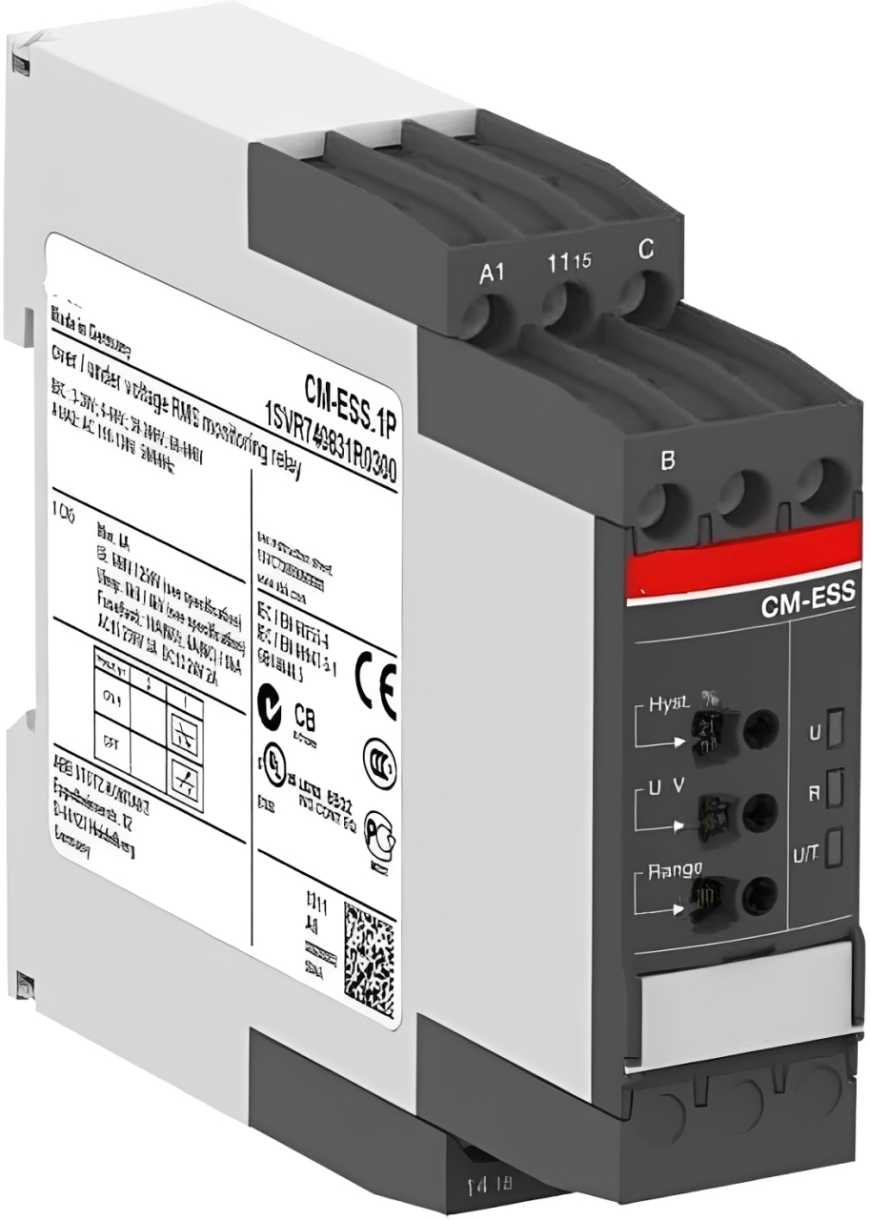
ABB Voltage Monitoring Relay Selection and Setup Guide
An ABB Voltage Monitoring Relay is a practical way to keep electrical systems stable when the supply becomes risky. It watches key voltage conditions and then switches an output to protect loads, such as motors, contactors, and sensitive electronics. Because modern panels often power controllers, sensors, and connected equipment, quick and accurate monitoring helps prevent nuisance trips, overheating, and costly downtime.
In many facilities, voltage quality changes due to long cable runs, heavy starting currents, or shifting loads on shared feeders. As a result, a monitoring relay becomes a simple, reliable layer of safety that supports both equipment life and operator confidence.
What an ABB Voltage Monitoring Relay does in real systems
Voltage monitoring relays are designed to detect supply faults that standard protection may not catch fast enough or clearly enough. Instead of waiting for a motor to overheat or a drive to throw a fault, the relay evaluates the supply and signals the control circuit to react.
Typical use cases include:
-
Motor feeders using contactors and overloads
-
Control panels powering PLC controllers and I O modules
-
Machines using microcontrollers, microprocessors, and electronics that dislike dips or surges
-
Building services with pumps, compressors, and fans
When paired with proper fuses, switches, and contactors, the relay supports coordinated protection. It does not replace short circuit or overload protection, but it helps ensure the supply itself is acceptable before the load is allowed to run.
Key voltage faults the relay monitors
Undervoltage and overvoltage protection
Undervoltage can cause motors to draw higher current, heat up, and stall under load. Overvoltage can stress insulation, damage capacitor banks, and shorten the life of LEDs and control electronics. An ABB Voltage Monitoring Relay lets you set thresholds so the system disconnects before damage builds.
Phase loss and phase sequence
In three phase applications, a single missing phase can quickly overheat a motor. Incorrect phase sequence can reverse rotation, which is dangerous for pumps, conveyors, and tools. Monitoring these conditions improves safety and reduces mechanical risk.
Phase imbalance
Even when all phases are present, imbalance can cause extra heating and vibration in motors. This becomes more common in plants where loads are uneven or where cables and connectors have ageing or high resistance joints. Detecting imbalance early helps maintenance teams act before a breakdown.
How to choose the right ABB Voltage Monitoring Relay
Selecting the correct relay is easier when you match it to the supply, control method, and the level of adjustability you need.
Define your supply and measurement type
Start with the basics:
-
Single phase or three phase supply
-
Nominal voltage level
-
Frequency requirements if your site varies
In three phase systems, decide whether you need monitoring of phase sequence, phase loss, and imbalance. If you only need simple over and undervoltage, a simpler model may fit.
Decide what you need to control
Most panels use the relay output to drive a contactor coil. That contactor then connects or disconnects the motor or the protected circuit. If your design uses control relays, interposing relays, or input signals to controllers, make sure the output type and ratings match.
Common integration options include:
-
Output wired in series with contactor coil circuit
-
Output used as an alarm input to PLC controllers
-
Output used to stop a drive enable circuit for safety
Check adjustability and reset style
For stable processes, adjustable time delays help avoid nuisance trips during brief dips. For critical loads, faster reaction may be preferred.
Important settings to look for:
-
Adjustable undervoltage and overvoltage thresholds
-
Trip delay and restart delay
-
Manual reset or automatic reset behavior
Manual reset can be useful where you want an operator check before restarting, especially when rotating machinery is involved.
Installation and wiring best practices
Good installation reduces false trips and improves measurement accuracy.
Keep wiring tidy and noise resistant
Route sensing wires away from high current paths where possible. In busy panels, use good segregation between power cables and control wiring. Neat routing also reduces stress on connectors and terminals over time.
Practical tips:
-
Use correctly sized cables for the sensing and control circuits
-
Tighten terminals to the recommended torque
-
Inspect connectors for heat discolouration or looseness
-
Label wires so troubleshooting is faster
Coordinate with upstream protection
Voltage monitoring works best as part of a coordinated system. Upstream fuses, protective devices, and switches should match the fault levels and isolation needs. If you use thermal protection for motors, confirm the relay logic works with the overload trip circuit.
In some panels, thermal sensors or thermal pads may be used for temperature management. While these do not affect voltage measurement directly, they support reliability by reducing heat stress on electronics and control modules.
Setting thresholds for dependable protection
Correct settings depend on your load sensitivity and supply stability. A good approach is to start with conservative limits, then refine based on real operating data.
Practical starting points
Consider these guidelines:
-
Set undervoltage to protect motors from stalling and overheating
-
Set overvoltage to protect insulation, capacitor components, and control electronics
-
Add a short trip delay to ignore very brief disturbances
-
Add a restart delay to prevent rapid cycling of contactors
If your system includes laptops or diagnostic tools connected during commissioning, stable supply protection reduces the risk of communication drops with controllers and field devices.
Balance protection and uptime
If thresholds are too tight, you may see nuisance trips during normal switching events. If thresholds are too wide, you may not prevent long term damage. Therefore, tune the relay with maintenance logs and, if available, power quality measurements.
Where ABB voltage monitoring adds the most value
An ABB Voltage Monitoring Relay is especially valuable where downtime is expensive or where loads are sensitive.
High impact applications include:
-
Motor driven pumps and compressors controlled via contactors
-
Automation panels with sensors, electronics, and I O modules
-
Production lines where unstable supply causes controller faults
-
Remote installations with long cable runs and voltage drop risk
Even in smaller machines, adding voltage monitoring can protect microcontrollers and microprocessors that manage sequencing, interlocks, and safety conditions.
Maintenance checklist for long term reliability
Voltage monitoring relays are low maintenance, but the panel environment matters. Heat, vibration, and loose connections are common causes of trouble.
Keep a simple routine:
-
Inspect terminals, connectors, and cable entries for looseness
-
Look for signs of overheating near contactors and fuses
-
Confirm the relay trips correctly during planned tests
-
Check panel ventilation and keep oils and dust from building up
-
Verify indicator LEDs and relay status during periodic checks
When a trip occurs, record the condition and time. Over time, this helps you spot patterns such as repeated undervoltage during peak loads or imbalance that points to a failing connection.
Final thoughts
Choosing an ABB Voltage Monitoring Relay is a straightforward way to protect motors, control circuits, and sensitive electronics from poor supply conditions. When you match the relay functions to your system, wire it cleanly, and set sensible thresholds, you get better uptime, safer operation, and longer equipment life across real industrial environments.