Where to Start When You've Inherited a Box of Slides, Cassettes, and Other Old Media
 adamjoe342
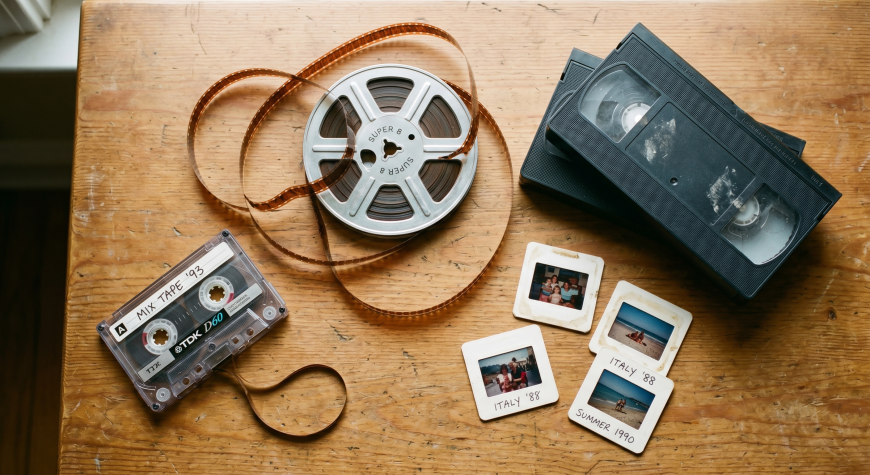
You did not choose to become the keeper of your family's history. A relative passed away, downsized, or moved into assisted living, and suddenly, you have a box of slides, cassettes, photo albums, and reels sitting on your kitchen table. You know it matters. You also have no idea what to do with it.
This guide is for anyone in that exact spot.
Take a Slow Inventory
Before making any decisions, spend an hour or two simply looking at what you have. Sort the contents into rough piles by format:
● Photos (loose prints, albums, scrapbooks)
● Slides and negatives
● Film reels (typically 8mm, Super 8, or 16mm)
● Video tapes (VHS, Hi8, MiniDV, and others)
● Audio cassettes and reel-to-reel tapes
● Discs (DVDs, CDs)
Make a rough count for each pile. You do not need exact numbers yet, just a sense of scale. Ten slides is a different project than four hundred.
Check the Condition
Some formats degrade faster than others. While you inventory, watch for warning signs:
● Slides with mold, color shift, or warped mounts
● Photos that stick together or to album pages
● Cassettes with visible mold, broken shells, or tangled tape
● Film reels with a vinegar smell, brittleness, or shrinkage
● VHS tapes with squealing playback or visible damage
Tapes and film deteriorate fastest. If you find vinegar syndrome on film reels or mold on cassettes, those items should move to the top of your priority list.
Decide What Matters Most
A box of inherited media often contains a mix of priceless and forgettable items. The first wedding recording is irreplaceable. A copy of a commercial VHS movie from 1996 probably is not. Sorting between the two helps you allocate budget and time wisely.
Ask yourself:
● Which items show people no one else has photos or footage of?
● Which recordings are voices of relatives who have passed?
● Which items document family events, weddings, holidays, milestones?
● Which items are commercially available elsewhere?
The first three categories deserve careful preservation. The last category is usually skippable.
Choose Between Slides and Cassettes First (and Other Format Priorities)
If your collection includes both slides and audio cassettes, both deserve attention, but for different reasons.
Slides: Color slides fade over decades, especially Ektachrome and Fujichrome. Kodachrome lasts longer but is not immune. When you convert slides to digital, you stop the fading process by creating a file that will not change. The original slides still exist, but the digital version is now permanent.
Cassettes: Magnetic tape degrades through oxide shedding and binder breakdown, which is sometimes called sticky shed syndrome. Converting cassette to digital captures the audio while the tape is still playable. A cassette that sounds fine today may be unreadable in five years.
Both formats benefit from professional handling. Slides need careful loading into scanning equipment that captures the full color range. Cassettes need calibrated tape decks that handle each unique tape correctly.
Get Quotes
Once you know what you have and what you want to prioritize, reach out to a professional digitizing service for a quote. A good service will inspect your items, send a written itemized estimate, and let you decide whether to proceed with no pressure.
Be honest with the service about your budget and goals. You can often digitize the most important items now and save the rest for a later project. No rule says everything has to be done at once.
Plan for Storage After Digitization
Digital files need a home, too. Before your project even begins, think about where the finished files will live:
● Cloud storage for easy access and sharing
● External hard drive for local backups
● USB thumb drives for sharing with family members
● DVDs for traditional viewing
Most services provide free cloud download with every project. From there, copies on additional devices give you redundancy in case of a hard drive failure or accidental deletion.
Share What You Save
The point of preserving family history is sharing it. Once your files are digitized, send copies to siblings, cousins, and family members who would value them. Consider a family group chat, a shared cloud folder, or a private online album everyone can access.
Some inheritances are meant to be divided. Digital memories can be shared without splitting them up.
A Final Word
Inheriting a box of old media is overwhelming at first. Taking it one format at a time, prioritizing what matters most, and getting a professional quote before deciding anything makes it manageable. The memories inside that box are worth the effort, and you do not have to figure out everything alone.