What Makes the Best Penetration Testing Companies in India? Certifications, Skills, and Expertise
Explore how penetration testing companies in India build trust through industry certifications, technical expertise, and proven cybersecurity methodologies.
 misanjay
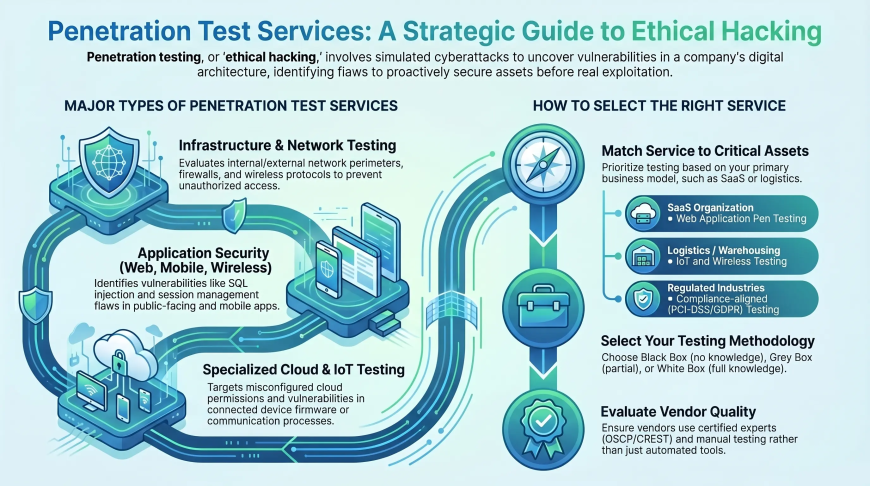
Best Penetration Testing Companies in India Certifications
Cybersecurity has become a strategic priority for organisations of every size. As cyber threats continue to evolve, businesses need security partners that can identify vulnerabilities, validate existing controls, and provide practical recommendations to strengthen their security posture. However, with numerous providers offering similar services, selecting the right partner requires more than comparing prices or service portfolios.
Leading penetration testing companies in india distinguish themselves through technical excellence, recognised pen testing certification, industry experience, and a structured approach to security assessments. These qualities not only improve the effectiveness of penetration testing engagements but also help organisations build confidence in their long-term cybersecurity strategies.
Why Expertise Matters in Penetration Testing
Penetration testing is not simply about running automated vulnerability scanners. It requires experienced ethical hackers who understand how attackers think, how modern applications operate, and how multiple vulnerabilities can be combined into realistic attack scenarios.
Experienced professionals evaluate applications, networks, cloud environments, APIs, and business workflows to determine whether security weaknesses can actually be exploited. Their findings help organisations prioritise remediation efforts based on business impact rather than theoretical risk.
Without skilled professionals leading the assessment, important vulnerabilities may remain undetected despite extensive automated scanning.
The Importance of Professional Certifications
Cybersecurity certifications provide evidence that security professionals have acquired specialised knowledge and practical skills within recognised industry frameworks.
While certifications alone do not guarantee expertise, they demonstrate a commitment to continuous learning and adherence to established testing methodologies.
Security professionals holding recognised certifications are generally familiar with:
- Vulnerability assessment methodologies
- Penetration testing techniques
- Secure coding principles
- Risk assessment frameworks
- Security reporting standards
- Compliance requirements
- Ethical hacking practices
These competencies contribute to more reliable and comprehensive security assessments.
Skills That Differentiate Leading Providers
Technical certifications represent only one aspect of a successful penetration testing team. The best providers combine formal qualifications with practical experience gained through real-world engagements.
Advanced Technical Knowledge
Security consultants should possess expertise across multiple technology domains, including:
- Web applications
- Mobile applications
- Enterprise networks
- Cloud infrastructure
- APIs
- Wireless environments
- Identity and access management
A broad technical foundation enables testers to assess complex business environments effectively.
Manual Testing Expertise
Automated scanners are valuable for identifying known vulnerabilities, but manual testing remains essential for uncovering business logic flaws, authentication weaknesses, privilege escalation opportunities, and complex attack paths.
Experienced ethical hackers adapt their techniques based on each organisation's unique environment rather than relying solely on predefined scanning tools.
Analytical Thinking
Successful penetration testers continuously analyse system behaviour, investigate unexpected findings, and evaluate how multiple weaknesses interact.
This analytical mindset enables them to discover vulnerabilities that automated tools frequently overlook.
Industry Experience Makes a Difference
Every industry faces unique cybersecurity challenges.
Financial institutions prioritise transaction security and regulatory compliance. Healthcare organisations focus on protecting patient information. Manufacturing companies secure operational technology, while retail businesses emphasise payment security and customer data protection.
Providers with relevant industry experience understand:
- Sector-specific attack techniques
- Common technology architectures
- Regulatory expectations
- Business-critical assets
- Operational risks
This knowledge enables security assessments to focus on vulnerabilities most likely to affect the organisation.
Comprehensive Testing Methodologies
Leading penetration testing providers follow structured methodologies that ensure consistent, repeatable, and thorough assessments.
A typical engagement includes:
Planning and Scoping
Defining objectives, identifying assets, establishing communication procedures, and determining testing boundaries.
Information Gathering
Collecting publicly available intelligence and technical information that may assist attackers.
Vulnerability Assessment
Using automated scanning alongside manual analysis to identify potential weaknesses.
Exploitation
Validating whether vulnerabilities can actually be exploited while assessing potential business impact.
Reporting
Providing executive summaries, technical findings, remediation guidance, and prioritised recommendations.
Following a structured methodology ensures organisations receive consistent results and actionable security insights.
The Value of Clear Reporting
A penetration testing report should provide far more than a list of technical vulnerabilities.
Effective reports include:
- Executive summaries for management
- Technical explanations for security teams
- Risk severity ratings
- Business impact assessments
- Evidence supporting findings
- Practical remediation recommendations
- Retesting results following remediation
Well-written reports enable executives, developers, infrastructure teams, and auditors to collaborate efficiently throughout the remediation process.
Continuous Learning in Cybersecurity
Cyber threats evolve constantly. New attack techniques, software vulnerabilities, cloud technologies, and application architectures emerge every year.
The best penetration testing professionals invest continuously in expanding their knowledge through:
- Ongoing professional training
- Technical research
- Security conferences
- Capture-the-flag competitions
- Threat intelligence analysis
- Hands-on laboratory environments
Continuous learning enables security consultants to remain effective against emerging cyber threats while providing organisations with current, relevant security guidance.
Choosing the Right Security Partner
When evaluating penetration testing providers, organisations should consider several important factors beyond certifications alone.
Look for providers that demonstrate:
Proven Technical Experience
Review previous project experience across technologies and industries relevant to your organisation.
Qualified Security Teams
Assess whether consultants possess recognised certifications alongside practical penetration testing experience.
Transparent Methodology
Understand how assessments are planned, executed, validated, and reported.
Ongoing Support
Effective providers assist organisations throughout remediation, validation, and continuous security improvement rather than ending the engagement after report delivery.
Selecting a provider that combines technical expertise with collaborative support results in stronger long-term cybersecurity outcomes.
Business Benefits of Working with Skilled Professionals
Organisations partnering with experienced penetration testing specialists gain more than vulnerability reports.
They benefit from:
- More accurate risk identification
- Reduced false positives
- Better remediation prioritisation
- Improved compliance readiness
- Stronger executive reporting
- Increased customer confidence
- Enhanced cybersecurity maturity
These advantages contribute directly to stronger operational resilience and more effective risk management.
Final Thoughts
Technical expertise, recognised certifications, structured methodologies, and real-world experience collectively define the quality of a penetration testing provider. While certifications demonstrate professional knowledge, true value comes from applying that knowledge to identify vulnerabilities, simulate realistic attacks, and provide practical recommendations that strengthen organisational security.
By choosing experienced cybersecurity professionals committed to continuous learning and proven testing practices, organisations can improve their security posture, reduce cyber risks, and build greater confidence in their ability to defend against today's rapidly evolving threat landscape.