What latest technologies and innovations are incorporated into IVF Laboratory Design?
Explore the latest technologies in IVF Laboratory Design, including AI, time-lapse imaging, smart incubators, HEPA filtration, environmental monitoring, automation, and digital traceability.
 altusoffpage3
INTRODUCTION
Modern IVF Laboratory Design is increasingly focused on combining advanced embryology technology with precise environmental control, contamination prevention, automation, digital monitoring, and efficient laboratory workflows. IVF laboratories must maintain highly stable conditions because reproductive cells and embryos can be sensitive to temperature, humidity, air quality, volatile organic compounds (VOCs), and handling conditions. Current laboratory planning therefore goes beyond conventional cleanroom construction and incorporates technologies such as advanced HVAC systems, HEPA filtration, intelligent environmental monitoring, time-lapse embryo imaging, advanced incubators, digital traceability, and automation. The latest ESHRE good-practice recommendations published in 2026 also emphasize optimized workflow, aseptic handling, suitable materials, controlled temperature and humidity, restricted access, and appropriate qualification of critical equipment.
Why Technology Is Important in Modern IVF Laboratories
An IVF laboratory is a highly specialized environment where laboratory infrastructure and embryology procedures must work together.
The laboratory may handle:
- Oocytes
- Sperm
- Embryos
- Culture media
- Cryopreserved reproductive material
- Biopsy samples
- Laboratory reagents
Even small environmental variations can affect laboratory processes. For this reason, modern IVF facilities increasingly use integrated technologies to monitor and control the laboratory environment.
The objective is not simply to install advanced equipment but to create a controlled ecosystem in which facility design, HVAC, laboratory equipment, workflow, monitoring, and quality management operate together.
1. Advanced HVAC Systems
Modern IVF laboratories require carefully engineered HVAC systems capable of maintaining stable environmental conditions.
Advanced HVAC design can help regulate:
- Temperature
- Relative humidity
- Air changes
- Pressure relationships
- Fresh-air supply
- Air distribution
- Filtration
- Recirculation
Environmental stability is particularly important because embryos and reproductive cells are sensitive to their surroundings.
Current ESHRE recommendations specifically advise controlled humidity and temperature and emphasize laboratory design that minimizes damaging effects on reproductive cells and tissues.
2. High-Efficiency HEPA Filtration
HEPA filtration is an important component of controlled IVF laboratory environments.
A properly engineered filtration system can help reduce airborne particulate contamination and support a cleaner working environment.
Modern systems can include:
- HEPA filter modules
- Filter housings
- Air handling units
- Pressure monitoring
- Differential pressure sensors
- Filter integrity testing
- Airflow balancing
The filtration system should be integrated into the overall HVAC design rather than treated as an isolated component.
3. VOC and Air-Quality Management
Volatile organic compounds are receiving increased attention in IVF laboratory planning.
Potential sources include:
- Construction materials
- Paints
- Adhesives
- Flooring
- Furniture
- Cleaning products
- Building materials
- Laboratory chemicals
The latest ESHRE recommendations state that materials used in laboratory construction, painting, flooring, and furniture should be appropriate for cleanroom standards and should minimize VOC release and potential embryo toxicity.
Modern IVF laboratory projects may therefore incorporate:
- Low-VOC materials
- Controlled material selection
- Air-quality monitoring
- Appropriate ventilation
- Construction off-gassing periods
- Dedicated chemical-handling areas
4. Continuous Environmental Monitoring
Instead of relying only on periodic manual measurements, modern laboratories can use continuous environmental monitoring.
Sensors can monitor parameters such as:
- Temperature
- Humidity
- Differential pressure
- Carbon dioxide
- Oxygen
- Air-quality indicators
- Equipment conditions
Data can be displayed through centralized monitoring platforms.
If a parameter moves outside its predefined range, the system can generate an alert for laboratory personnel.
This can help reduce the time between an environmental deviation and corrective action.
5. Smart Incubators
Incubators are among the most important pieces of equipment in an IVF laboratory.
Modern incubators are designed to provide stable conditions for embryo culture.
Advanced features may include:
- Precise temperature control
- CO₂ regulation
- O₂ regulation
- Humidity control
- Rapid recovery after door opening
- Independent chamber control
- Digital monitoring
- Alarm systems
- Data logging
Some modern systems use smaller independent chambers rather than a single large chamber. This can reduce environmental disturbance when one culture compartment is accessed.
6. Time-Lapse Embryo Monitoring
Time-lapse imaging is one of the most recognizable technological developments in modern embryology.
Traditional embryo assessment may require embryos to be removed from controlled incubator conditions for periodic microscopic examination.
Time-lapse systems can capture images continuously while embryos remain inside controlled incubation conditions.
This allows embryologists to observe:
- Cell division
- Cleavage patterns
- Developmental timing
- Morphokinetic characteristics
- Blastocyst development
ESHRE lists time-lapse technology among its current guideline areas, reflecting its continuing relevance in reproductive medicine.
7. Artificial Intelligence for Embryo Assessment
Artificial intelligence is increasingly being explored as a decision-support technology in embryology.
AI systems can analyze large amounts of embryo imaging data and identify patterns associated with embryo development.
Potential applications include:
- Embryo image analysis
- Morphology assessment
- Morphokinetic analysis
- Embryo ranking
- Decision support
- Standardization of assessments
Research has demonstrated the potential of AI models trained on time-lapse embryo sequences, although performance can vary between datasets and clinics. Therefore, AI should be considered a support tool rather than an automatic replacement for experienced embryologists.
8. Automated ICSI Technologies
Automation is also emerging in procedures traditionally performed manually.
Intracytoplasmic sperm injection requires highly precise manipulation of sperm and oocytes.
New robotic and AI-assisted systems are being developed to automate or assist parts of the process.
Emerging systems have demonstrated the possibility of automating multiple IVF laboratory steps, including sperm selection and microinjection. However, these technologies remain an evolving area, and wider clinical adoption requires appropriate validation and evidence.
For laboratory designers, this trend means future facilities may need:
- Additional automation space
- Specialized electrical connections
- Data connections
- Equipment access
- Robotics-compatible workstations
- Flexible layouts
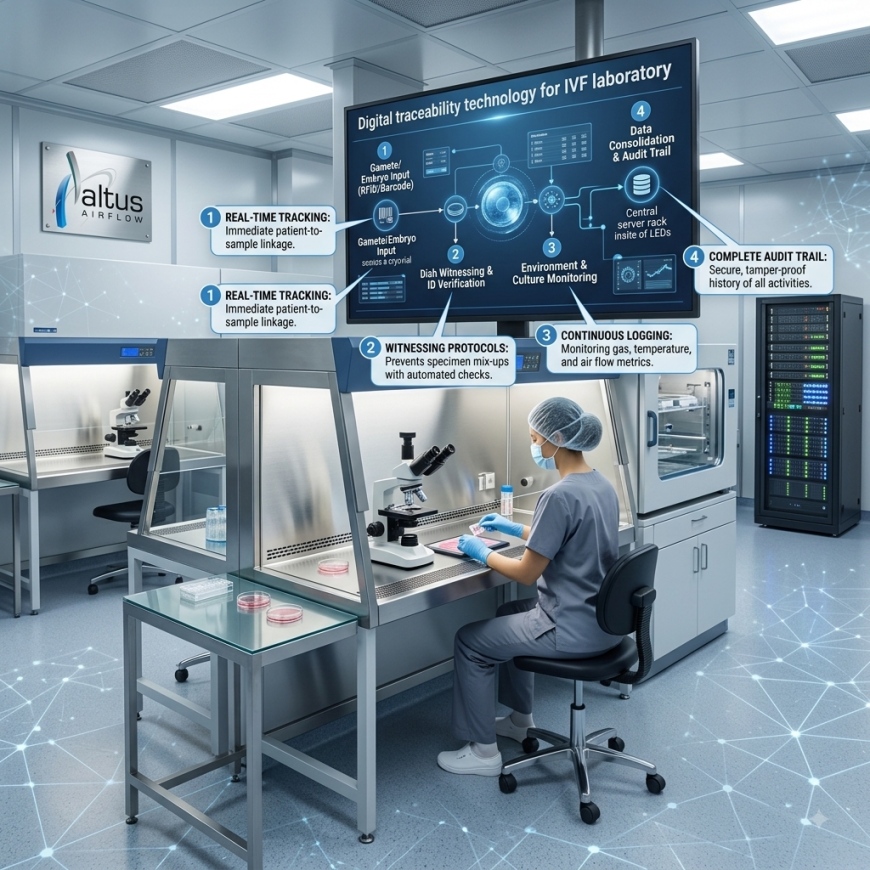
9. Digital Traceability Systems
Patient and specimen identification is a critical part of IVF laboratory operations.
Modern laboratories can use electronic traceability systems to track:
- Patient identification
- Oocytes
- Sperm samples
- Embryos
- Culture dishes
- Cryopreserved material
- Biopsy samples
- Storage locations
Systems may incorporate:
- Barcode identification
- RFID technology
- Electronic witnessing
- Laboratory information systems
- Digital audit trails
These technologies can reduce manual identification errors and improve traceability.
The 2026 ESHRE recommendations specifically address patient identification and traceability of reproductive cells, consumables, and other materials.
10. Advanced Cryopreservation Infrastructure
Vitrification has become an important technology in modern reproductive medicine.
IVF laboratory design must therefore account for appropriate cryopreservation infrastructure.
This may include:
- Liquid nitrogen storage systems
- Cryogenic tanks
- Monitoring systems
- Temperature alarms
- Access controls
- Backup arrangements
- Emergency procedures
Cryopreservation facilities should be carefully located and managed.
The updated ESHRE recommendations state that cryopreservation storage facilities require special precautionary measures and should be safely located outside but close to the main laboratory.
11. Smart Cryogenic Monitoring
Modern cryostorage systems can incorporate continuous monitoring.
Digital monitoring may track:
- Nitrogen levels
- Temperature
- Tank status
- Alarm conditions
- Storage locations
- Access events
Automated alerts can notify designated personnel when predefined conditions occur.
This is particularly important because cryogenic storage may contain irreplaceable reproductive material.
12. Modular Cleanroom Construction
Modern IVF facilities increasingly use modular construction techniques to achieve controlled laboratory environments.
Modular systems can provide:
- Smooth surfaces
- Sealed joints
- Hygienic finishes
- Controlled ceiling systems
- Integrated services
- Easier maintenance
- Flexible configuration
Modular construction can also simplify future modifications when laboratory requirements change.
13. Low-Particle Interior Materials
The choice of interior materials is becoming increasingly important.
Modern IVF laboratory design can use materials selected for:
- Low particle generation
- Low VOC emissions
- Easy cleaning
- Chemical resistance
- Smooth surfaces
- Durability
- Compatibility with cleanroom requirements
Material selection should be considered during the design stage rather than after construction.
14. Controlled Access Systems
Access control technology can help maintain laboratory security and reduce unnecessary traffic.
Possible systems include:
- Electronic access cards
- Biometric access
- Restricted doors
- Visitor logs
- Digital access records
The updated ESHRE recommendations recommend restricted access and documentation of entry by non-specialist personnel.
15. Pass-Through Systems
Pass-through cabinets and controlled transfer systems can improve material movement between different laboratory zones.
They can be used to transfer selected materials while reducing unnecessary movement through critical areas.
Designers may consider:
- Pass boxes
- Material transfer areas
- Clean access routes
- Separate personnel and material flows
This supports efficient laboratory zoning.
16. Advanced Laboratory Zoning
Modern IVF laboratories are increasingly designed around workflow rather than simply room dimensions.
An effective layout can separate areas for:
- Oocyte handling
- Embryo culture
- Sperm preparation
- ICSI
- Embryo biopsy
- Cryopreservation
- Media preparation
- Washing
- Storage
- Equipment
- Staff support
The 2026 ESHRE recommendations emphasize optimal workflow over minimal distances and recommend physical separation of technical and staff facilities from areas dedicated to procurement, processing, and release of human cells and tissues.
17. Digital Laboratory Management
Laboratory information systems are becoming increasingly important.
Digital platforms can support:
- Sample tracking
- Equipment records
- Quality management
- Maintenance schedules
- Environmental data
- Incident records
- Inventory
- Audit trails
Integrating laboratory management with environmental monitoring can provide a more complete picture of laboratory performance.
18. Remote Monitoring and Alerts
Remote monitoring technology allows authorized personnel to receive notifications when critical systems experience deviations.
Alerts can relate to:
- Incubator temperature
- Gas levels
- Cryostorage conditions
- HVAC conditions
- Room pressure
- Environmental parameters
- Equipment failures
This can support faster intervention, particularly outside normal laboratory hours.
19. Energy-Efficient Building Systems
Technology innovation in IVF laboratories is not limited to embryology equipment.
Energy efficiency is also becoming increasingly important.
Modern laboratory designs may incorporate:
- High-efficiency HVAC equipment
- Variable-speed drives
- Intelligent controls
- Energy-efficient lighting
- Automated scheduling
- Heat recovery where appropriate
- Optimized air distribution
Energy-saving measures should be implemented without compromising environmental stability or laboratory requirements.
20. Ergonomic Laboratory Design
Technology must also support laboratory staff.
Modern IVF laboratory planning can incorporate:
- Adjustable workstations
- Ergonomic seating
- Proper microscope height
- Appropriate bench dimensions
- Efficient equipment placement
- Reduced unnecessary movement
- Controlled lighting
The updated ESHRE recommendations specifically highlight ergonomics, operator comfort, workspace, microscope eye height, lighting, and efficient use of space.
21. Integrated Alarm Management
Critical equipment should have reliable alarm systems.
A centralized alarm platform can potentially combine alerts from:
- Incubators
- Cryogenic storage
- HVAC
- Environmental monitoring
- Gas systems
- Access control
- Power systems
This creates a more coordinated response system.
22. Backup Power and Resilience
IVF laboratories depend on equipment that may need uninterrupted operation.
Modern designs can incorporate:
- UPS systems
- Emergency generators
- Dedicated circuits
- Electrical redundancy
- Backup monitoring
- Emergency procedures
Critical equipment should be assessed individually to determine its power and backup requirements.
23. Future-Ready Laboratory Design
Technology changes rapidly, so IVF laboratories should avoid designs that become obsolete quickly.
Future-ready planning can provide:
- Flexible service points
- Additional electrical capacity
- Data connectivity
- Modular walls
- Equipment replacement routes
- Expandable HVAC capacity
- Space for future automation
This allows the facility to adopt new technologies without major reconstruction.
24. Integration of Technology and Facility Design
The most important innovation is not necessarily a single piece of equipment.
The real advantage comes from integrating:
HVAC + filtration + monitoring + incubators + traceability + workflow + automation + quality management.
When these systems are coordinated during the design stage, the laboratory can operate more efficiently and consistently.
25. Importance of Validation and Qualification
Advanced technology should not be installed simply because it is new.
Every critical system should be evaluated for:
- Suitability
- Performance
- Reliability
- Qualification
- Maintenance
- User training
- Backup requirements
- Regulatory considerations
The 2026 ESHRE recommendations emphasize that critical equipment should be appropriately qualified, adequate in number, and fit for purpose.
26. What Does the Future of IVF Laboratory Design Look Like?
The future is likely to involve greater integration between physical laboratory infrastructure and digital technologies.
Important trends include:
- AI-assisted embryo assessment
- Automated laboratory procedures
- Advanced time-lapse monitoring
- Smart incubators
- Digital traceability
- Remote environmental monitoring
- Intelligent HVAC controls
- Advanced cryostorage monitoring
- Flexible modular construction
- Data-driven quality management
However, technology should always serve laboratory quality and patient care rather than replace sound laboratory practices.
27. Choosing the Right Technology for a New IVF Laboratory
Not every clinic requires every available technology.
Technology selection should consider:
- Clinical services
- Laboratory workload
- Available space
- Budget
- Staff expertise
- Future expansion
- Maintenance requirements
- Validation requirements
- Regulatory expectations
A technology roadmap can help fertility clinics prioritize investments according to actual operational needs.
Conclusion
The latest innovations in IVF Laboratory Design combine environmental control, advanced HVAC and filtration, smart monitoring, specialized incubators, time-lapse embryo imaging, AI-assisted analysis, digital traceability, cryogenic monitoring, automation, modular construction, and future-ready infrastructure. The 2026 ESHRE recommendations reinforce the importance of optimized workflow, controlled environmental conditions, appropriate materials, restricted access, qualified equipment, and safe laboratory design. A successful laboratory should therefore balance emerging technology with validated processes, experienced personnel, maintainability, and appropriate quality management. Altus Airflow provides specialized healthcare infrastructure solutions focused on controlled laboratory environments, HVAC integration, cleanroom principles, and technically coordinated IVF laboratory projects.
Frequently Asked Questions
1. What are the latest technologies used in IVF Laboratory Design?
Modern IVF Laboratory Design can incorporate advanced HVAC systems, HEPA filtration, environmental monitoring, smart incubators, time-lapse embryo monitoring, AI-assisted embryo assessment, digital traceability, cryogenic monitoring, automation, and modular cleanroom construction.
2. How does AI influence IVF laboratory technology?
AI can assist with embryo image analysis, morphokinetic assessment, embryo ranking, and laboratory decision support. In IVF Laboratory Design, AI-enabled equipment may require suitable space, data connectivity, electrical infrastructure, and environmental conditions.
3. Why is time-lapse imaging important in IVF laboratories?
Time-lapse systems allow embryos to be monitored continuously while remaining in controlled incubation conditions. Modern IVF Laboratory Design can provide appropriate space and environmental infrastructure for time-lapse incubator systems.
4. How does HVAC technology improve IVF laboratory environments?
HVAC systems in IVF Laboratory Design help control temperature, humidity, air movement, filtration, pressure relationships, and air quality, supporting a stable environment for sensitive laboratory procedures.
5. What role does HEPA filtration play?
HEPA filtration can help reduce airborne particulate contamination. In IVF Laboratory Design, HEPA filtration is generally integrated with the HVAC and environmental-control strategy rather than installed as an independent feature.
Read Our Previous Blog------>How can hospitals choose the best Modular Ophthalmic OT Manufacturers?