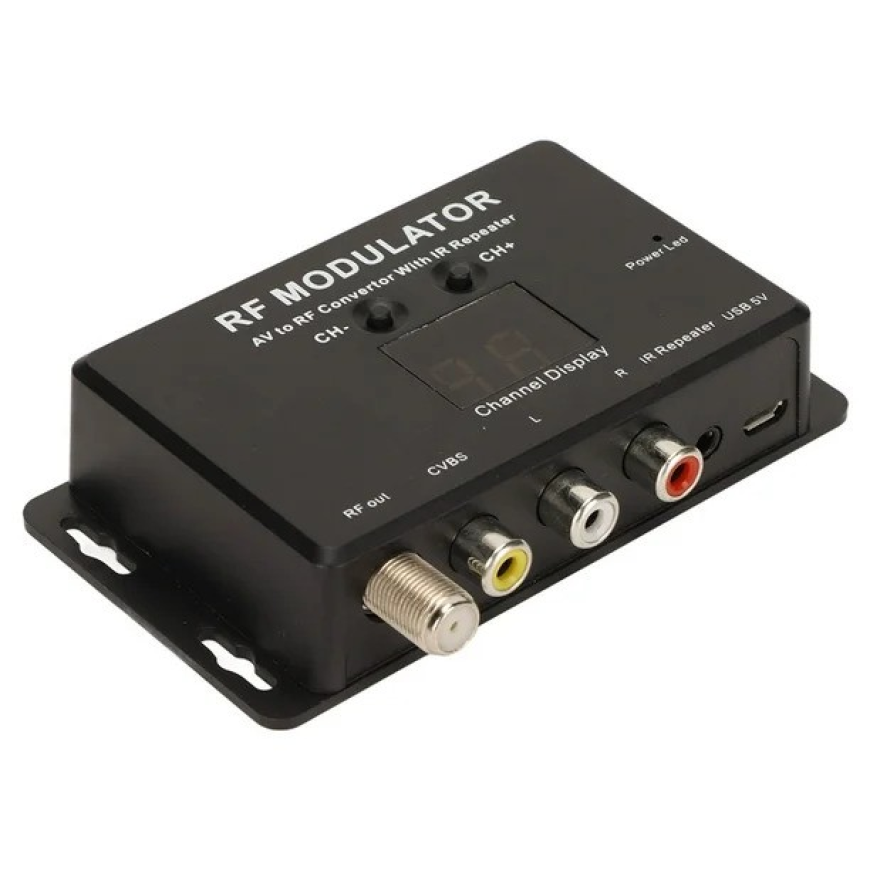
In the world of signal transmission and audiovisual technology, device compatibility is often a challenge. This is where RF modulators provide a practical solution. These compact electronic devices convert baseband video and audio signals into modulated radio-frequency (RF) signals, enabling content to be broadcast over standard coaxial cables to devices that receive RF input.
RF modulators are commonly used in both consumer and commercial environments. Despite the rise of digital media interfaces, they are especially valuable for connecting modern media sources to older televisions or for distributing a signal across large areas using existing infrastructure.
How Do RF Modulators Translate Signals for Broader Compatibility?
At their core, RF modulators act as signal translators. They take inputs such as composite video or HDMI and embed them in a radio-frequency signal. This process enables the signal to be received by televisions or monitors that accept only coaxial RF inputs.
Here’s a step-by-step overview:
- Signal Input: A media source like a DVD player or HDMI device sends video and audio signals to the modulator.
- Frequency Modulation: The modulator selects an unused TV channel frequency to carry the signal.
- Output Transmission: The RF signal travels through coaxial cable to connected TVs or RF receivers.
- Tuning: The receiving device is tuned to the specific channel to display the content.
This straightforward approach enables long-distance distribution while maintaining signal clarity across multiple receivers.
Where Are RF Modulators Used in Real-World Settings?
RF modulators are highly adaptable and are used in a wide variety of environments, including:
- Healthcare facilities delivering content from a central source to patient rooms.
- Shopping malls that use ceiling-mounted TVs for promotions or announcements.
- Schools and universities broadcasting educational content to classroom monitors.
- Factories and warehouses with legacy control room setups and analogue displays.
- Apartment complexes distributing satellite or camera feeds to all units.
These applications show how RF modulators simplify AV integration without requiring extensive rewiring or costly upgrades.
What Types of RF Modulators Are Available Today?
The market offers a range of RF modulators to support various signal formats and transmission requirements. These include:
Standard Analogue Modulators
- Accept RCA or composite inputs.
- Output signals on preset VHF/UHF channels.
- Ideal for connecting analogue sources to traditional TVs.
HDMI-to-RF Modulators
- Take digital video signals from modern sources.
- Convert to HD or SD RF output for coaxial distribution.
- Frequently used in commercial AV and signage systems.
Multi-Input Commercial Modulators
- Support multiple sources and allow channel mapping.
- Suitable for large-scale applications like hotel TV systems or office buildings.
- May include programmable settings and remote configuration options.
Each type is designed with specific features to meet diverse compatibility and performance requirements.
Key Features That Define a High-Quality RF Modulator
Selecting the right RF modulator depends on your setup's intended use and technical requirements. Consider these essential features:
- Input Flexibility: Compatibility with HDMI, RCA, VGA, or even SDI inputs.
- Resolution Support: Some support high-definition video up to 1080p.
- Audio Options: Mono, stereo, or digital audio pass-through capabilities.
- Programmable Frequencies: Allows custom channel assignments to avoid overlap.
- Signal Strength Control: Adjustable gain ensures consistent performance across multiple outputs.
These features enable more robust, customizable installations, especially in larger or more complex environments.
Advantages That Make RF Modulators a Practical Solution
RF modulators continue to be favoured for several reasons, particularly in settings where convenience and cost efficiency matter:
- Seamless Compatibility: Bridge between modern sources and legacy displays.
- Multi-Device Distribution: One signal can serve multiple endpoints simultaneously.
- Cost-Efficient Upgrades: Avoids full system replacements by integrating existing equipment.
- Simple Infrastructure: Coaxial cabling is widely available and easy to extend.
- Reliable Performance: Stable signal quality even across extended distances.
These benefits are especially valuable in buildings where coaxial networks already exist, and complete rewiring is not feasible.
Challenges and Considerations When Using RF Modulators
While RF modulators offer broad utility, specific challenges may arise:
- Limited Resolution: Standard analogue modulators do not support high-definition output.
- Audio Quality Constraints: Some units only output mono sound.
- Channel Interference: Poor channel selection can lead to signal conflict.
- Compatibility Gaps: Modern displays without built-in tuners may require additional adapters.
To mitigate these issues, users can opt for digital or hybrid modulators with features such as channel filtering, HD encoding, and dual-output modes.
Installation Best Practices for RF Modulators
Setting up an RF modulator is typically straightforward, but the following best practices help ensure reliable performance:
- Use Shielded Coaxial Cable: Reduces interference and maintains signal strength.
- Choose Unused Channels: Avoid frequencies already used by local broadcasts.
- Match Resolution and Format: Ensure input source settings are compatible with the modulator’s capabilities.
- Use Signal Amplifiers If Needed: Especially in long cable runs or multi-TV setups.
- Label Frequencies: In multi-channel systems, clear labelling helps maintain organisation.
These steps lead to cleaner signal delivery and easier troubleshooting.
Integration With Modern Systems
RF modulators are not restricted to analogue environments. Newer models offer integration with digital sources, enabling them to work alongside IP-based and HDMI systems. For example:
- A digital HDMI modulator can take input from a media server and distribute it to coaxial-fed displays in a hotel.
- In surveillance networks, an HD camera’s output can be converted into an RF signal for routing to existing coaxial monitoring stations.
- Educational facilities can broadcast a digital feed to multiple TVs without needing network switches or extenders.
This hybrid approach is ideal for phased upgrades in which both new and legacy equipment must coexist.
Conclusion
RF modulators remain a vital component of AV ecosystems, requiring flexibility, reliability, and simplicity. By converting diverse input signals into radio frequencies, they enable content distribution across vast areas using cost-effective coaxial infrastructure.
Whether for retrofitting a legacy AV system or managing centralised content distribution in a commercial setting, RF modulators offer a robust, reliable solution. Their relevance endures as long as system compatibility and broad signal access remain essential.

 joddie25