Using Speech to Note to Maintain Clear Records in Multi-Doctor Practices
When multiple doctors handle the same patient over time, even small documentation gaps can snowball into serious issues.
 ChristyRobinson
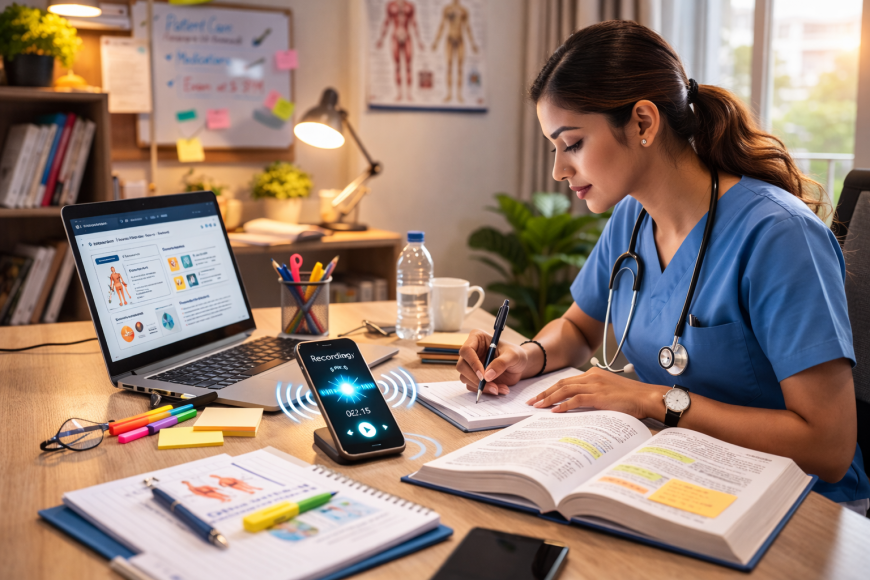
Walk into any multi-doctor clinic on a busy morning and you’ll see the same thing: controlled chaos. Patients waiting, nurses coordinating, doctors moving from one consultation to the next. Now imagine trying to keep records perfectly clean in that environment. It’s not just hard, it’s borderline unrealistic.
Here’s the thing. When multiple doctors handle the same patient over time, even small documentation gaps can snowball into serious issues. That’s where tools like speech note start to make a real difference.
The Problem With Traditional Note-Taking
Let’s break it down. In a multi-doctor setup:
-
One doctor might document quickly and move on
-
Another might dictate later from memory
-
A third might rely on shorthand that no one else fully understands
You end up with fragmented records. Not wrong, just inconsistent. And inconsistency in healthcare? That’s risky.
A study published in healthcare informatics journals suggests that documentation errors contribute to nearly 30% of clinical communication breakdowns. That’s not a small number.
Why Speech-Based Notes Just Work Better
Now imagine this instead: a doctor finishes a consultation and immediately records detailed observations using speech to text notes. No delay. No memory gaps. No scribbled handwriting.
What this really means is clarity.
Speech-based tools capture:
-
Tone and nuance
-
Complete thoughts instead of shorthand
-
Real-time clinical reasoning
And because everything is digitized instantly, the next doctor sees the full picture, not just fragments.
Real-Life Scenario: Where It Clicks
Take a simple case. A patient with recurring migraines visits three different doctors over two months.
Doctor 1 notes symptoms but skips lifestyle triggers.
Doctor 2 focuses on medication but misses sleep patterns.
Doctor 3 tries to piece everything together and ends up repeating tests.
Now switch that to a system using voice to notes.
Each doctor speaks their observations right after the consultation. The notes are detailed, structured, and easy to access. By the time Doctor 3 steps in, they’re not guessing. They’re building on a clear, continuous narrative.
That’s the difference. Less repetition, better care.
Speed Without Compromising Accuracy
One concern people often have is speed. Typing feels controlled. Speaking feels messy.
But here’s what actually happens. Most doctors speak 3 to 4 times faster than they type. With voice to text, that speed translates into efficiency without cutting corners.
You’re not choosing between fast and accurate anymore. You get both.
And let’s be honest, after a long shift, typing detailed notes is the last thing anyone wants to do.
Collaboration Becomes Effortless
Multi-doctor practices rely heavily on teamwork. But teamwork only works when everyone is on the same page.
Speech-based notes create:
-
Standardized documentation
-
Easier handovers between shifts
-
Better continuity in treatment plans
Instead of “I think the previous doctor meant this,” it becomes “I know exactly what was observed and why.”
That shift alone can improve patient outcomes more than most people expect.
Adoption Is Easier Than You Think
You don’t need a complete system overhaul to start using this. Most modern tools are mobile-friendly and simple to integrate into daily routines.
Doctors can dictate notes between consultations, during rounds, or even right after stepping out of a patient’s room.
If you’re curious how it works in practice, take a quick look at this demo video on YouTube. It gives a pretty clear picture without overcomplicating things.
Try It Yourself
If you’re running or managing a clinic, this is one of those upgrades that pays off almost immediately.
You can get started by downloading the app:
-
Download from the Apple App Store
-
Download from the Google Play Store
No steep learning curve. No massive training sessions. Just start speaking and let the system handle the rest.
Final Thoughts
Clear records aren’t just about compliance or organization. They directly impact patient care. In multi-doctor practices, they’re the backbone of continuity.
Speech-based note-taking isn’t some fancy add-on. It’s a practical fix to a very real problem. It saves time, reduces errors, and makes collaboration smoother.
If your current system feels like it’s barely holding together, that’s your signal. Try something that actually fits the pace of modern healthcare.