Understanding Accounts Receivable Financing for Growing Businesses
Learn how accounts receivable financing works, its benefits, costs, risks, and eligibility, and how businesses can use invoices to improve cash flow
 edudrona
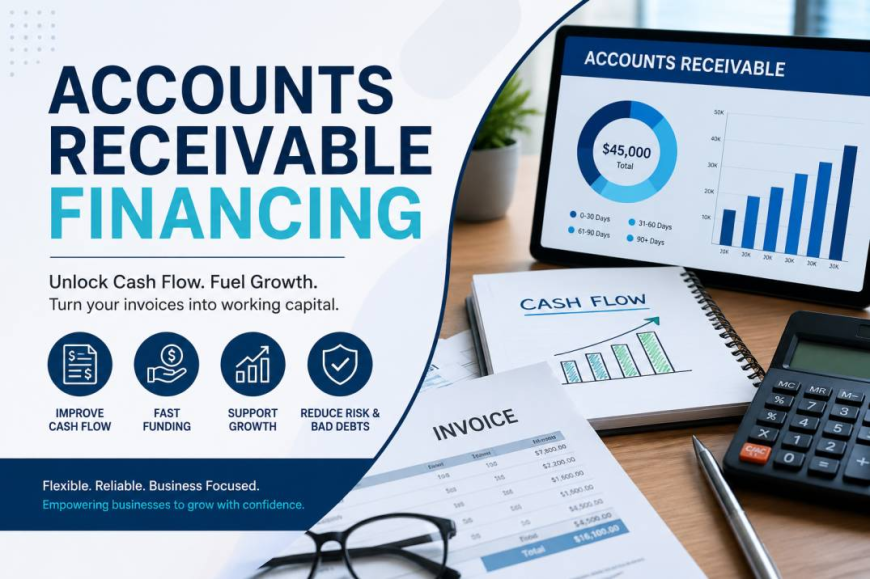
Cash flow is one of the most important factors determining whether a growing business can operate smoothly and take advantage of new opportunities. A company may have strong sales, profitable customers, and a healthy order pipeline, yet still face cash shortages because customers often take 30, 60, 90, or more days to pay their invoices.
This is where accounts receivable financing can become an important working-capital solution.
Accounts receivable, commonly called A/R, represents money owed to a business for products or services that have already been delivered. Instead of waiting for customers to pay their outstanding invoices, a business may be able to use those receivables to obtain financing and access cash sooner. The U.S. Small Business Administration describes invoice factoring as a way to convert outstanding invoices into cash, while the Office of the Comptroller of the Currency recognizes accounts receivable as a form of collateral for commercial financing.
For growing companies, this can help bridge the gap between making a sale and receiving payment.
What Is Accounts Receivable Financing?
Accounts receivable financing is a type of business financing in which a company uses eligible outstanding invoices or accounts receivable to obtain working capital.
The basic concept is simple:
Sales are made → invoices are issued → customers have payment terms → cash is needed before invoices are paid → receivables are used to access financing.
Depending on the financing structure, the business may borrow against its receivables as collateral, or it may sell eligible invoices to a financing provider.
The exact structure matters because accounts receivable financing is a broad term that can include several different arrangements, including invoice financing, factoring, and asset-based lending.
The OCC describes accounts receivable and inventory financing as a form of collateral-based commercial lending in which the value of receivables and inventory can support financing for business operations.
Why Accounts Receivable Financing Matters for Growing Businesses
Growth frequently creates a working-capital challenge.
Imagine a company wins a large contract worth $500,000. The company must purchase materials, pay employees, cover transportation expenses, and manage operating costs. However, the customer has negotiated 60-day payment terms.
The business may therefore have substantial revenue on its books but insufficient cash in its bank account.
This is often called the cash flow gap.
Accounts receivable financing can help reduce this gap by allowing the company to access some of the value tied up in qualifying invoices before customers make their payments.
For a growing business, this can make it easier to:
- Purchase inventory
- Pay suppliers
- Meet payroll obligations
- Fund new projects
- Accept larger customer orders
- Manage seasonal demand
- Expand into new markets
- Invest in equipment and operations
- Maintain smoother day-to-day cash flow
How Does Accounts Receivable Financing Work?
The process varies depending on the lender and financing structure, but the general process typically follows several stages.
1. The Business Makes a Sale
The company provides products or services to a customer under agreed payment terms.
For example, a business may complete a $100,000 project and issue an invoice with payment due in 60 days.
2. The Invoice Becomes an Account Receivable
The $100,000 invoice becomes an account receivable on the company's balance sheet.
Although the company has earned the revenue, it has not yet received the cash.
3. The Financing Provider Reviews the Receivable
The financing provider may evaluate factors such as:
- Customer creditworthiness
- Invoice validity
- Payment history
- Invoice aging
- Concentration of customers
- Existing liens or claims
- Business financial information
- Historical collections
- Industry risk
The quality of the underlying receivables is often extremely important.
4. Funding Is Provided
If the receivables qualify, the financing provider may advance a percentage of the eligible invoice value.
For example, if a $100,000 invoice qualifies for an 80% advance, the initial funding could be $80,000.
The actual advance rate, fees, interest, reserves, and other terms depend on the provider and financing arrangement.
5. The Customer Pays the Invoice
When the customer pays, the financing arrangement is settled according to its terms.
In some structures, the customer continues paying the original business. In factoring arrangements, customers may be instructed to make payments directly to the factor.
The SBA notes this distinction: with invoice financing, the business can remain in control of its sales ledger, collections, and invoice processing, while factoring can involve directing customer payments to the factor.
Accounts Receivable Financing vs. Invoice Factoring
The terms accounts receivable financing, invoice financing, and invoice factoring are sometimes used interchangeably, but they can describe different structures.
Accounts Receivable Financing
In a conventional receivables-backed financing arrangement, eligible accounts receivable may serve as collateral for a loan or revolving line of credit.
The business generally continues to own and manage the receivables.
Invoice Financing
Invoice financing generally allows a business to access funds based on outstanding invoices while maintaining control over customer relationships and collections.
The SBA specifically distinguishes invoice financing from factoring based partly on who controls invoice payments and collections.
Invoice Factoring
Factoring involves selling eligible receivables to a factor rather than simply borrowing against them.
The OCC defines factoring as an arrangement in which a company sells its accounts receivable to a third party known as a factor. Depending on the arrangement, the factor may assume collection risk and may handle accounting and collection functions.
Because these structures differ, businesses should carefully review the legal agreement rather than relying only on the product name.
A Simple Accounts Receivable Financing Example
Consider a growing wholesale company with the following situation:
Outstanding invoices: $250,000
Average customer payment period: 60 days
Potential advance rate: 80%
If the eligible invoices qualify, the company could potentially access up to:
$250,000 × 80% = $200,000
The company receives working capital earlier rather than waiting the full 60 days for customers to pay.
When the invoices are collected, the financing provider settles the transaction according to the agreed terms, including any applicable interest, discount, fees, or reserve.
This example is purely illustrative. Actual financing amounts and costs vary significantly by provider, customer quality, industry, invoice terms, and contractual conditions.
Key Benefits of Accounts Receivable Financing
1. Improved Cash Flow
The most obvious advantage is faster access to working capital.
Instead of allowing unpaid invoices to tie up cash for weeks or months, a business may be able to convert part of that receivable value into usable funds.
2. Supports Business Growth
A company may have enough demand to grow but lack the cash needed to fulfill new orders.
Accounts receivable financing can potentially provide working capital to purchase inventory, hire staff, increase production, or fund additional projects.
3. Financing Can Grow With Sales
A traditional loan may provide a predetermined amount of capital.
Receivables-based financing can sometimes provide a funding capacity that changes as eligible receivables change.
As sales and qualifying invoices increase, the potential borrowing base may also increase, subject to the financing agreement.
The OCC notes that accounts receivable financing can be structured around the value of working assets used as collateral.
4. May Reduce Dependence on Traditional Loans
Businesses do not always fit conventional lending criteria.
A company with strong commercial customers and reliable invoices may have an alternative source of working capital through its receivables.
That does not mean approval is automatic. Providers still evaluate risk and eligibility.
5. Helps Manage Long Payment Cycles
Businesses selling to large corporations, distributors, government entities, or other organizations may face extended payment terms.
Receivables financing can help businesses manage the period between completing a sale and receiving payment.
6. Can Help Businesses Handle Large Orders
A major purchase order can create both an opportunity and a cash-flow challenge.
For example, a manufacturer may receive a large order but need significant funds for raw materials before the customer pays.
Access to working capital against eligible receivables can help reduce that pressure.
Potential Risks and Disadvantages
Accounts receivable financing is not free money. Businesses should understand the costs and risks before entering an agreement.
Financing Costs
Depending on the structure, costs may include:
- Interest
- Discount fees
- Origination fees
- Service fees
- Processing fees
- Collection fees
- Wire or administrative fees
- Other contractual charges
A business should calculate the total effective cost, not simply compare the headline interest rate or advance rate.
Customer Concentration Risk
A financing provider may be concerned if a large percentage of the company's receivables comes from one customer.
If that customer delays payment or becomes unable to pay, the financing arrangement may be affected.
Invoice Eligibility Restrictions
Not every invoice necessarily qualifies.
Providers may exclude invoices that are:
- Overdue
- Disputed
- Subject to returns
- Owed by financially weak customers
- Already pledged elsewhere
- Related to restricted industries
- Subject to contractual offsets
Eligibility rules should be reviewed carefully.
Potential Impact on Customer Relationships
Some factoring arrangements involve customer notification and direct payment to the financing provider.
This may affect how customers perceive the company's financing arrangement.
Businesses should understand whether the facility is disclosed, undisclosed, recourse, or non-recourse before signing an agreement.
Recourse Risk
Some receivables financing arrangements are structured with recourse.
If a customer does not pay an invoice, the business may remain responsible for the financed amount.
Other factoring structures may transfer some or all collection risk to the factor, subject to the contract.
Businesses should never assume that "factoring" automatically means all customer credit risk has been transferred.
What Is the Difference Between Recourse and Non-Recourse Financing?
This is an important consideration when evaluating accounts receivable financing.
Recourse Financing
Under a recourse arrangement, the business may remain responsible if the customer fails to pay an eligible invoice because of credit-related or other specified events.
This can make the financing less expensive but leaves more risk with the business.
Non-Recourse Financing
Under a non-recourse structure, the financing provider may assume specified credit risk associated with customer non-payment.
However, "non-recourse" does not necessarily mean the provider assumes every possible risk. Contract terms may contain exclusions for disputes, fraud, commercial disagreements, offsets, or other circumstances.
Therefore, businesses should carefully examine the agreement.
Who Can Benefit From Accounts Receivable Financing?
Accounts receivable financing may be particularly useful for businesses that:
- Sell to established commercial customers
- Issue invoices on credit terms
- Have predictable customer payment behavior
- Experience working-capital shortages
- Are growing rapidly
- Have seasonal revenue cycles
- Need funds to fulfill large orders
- Have significant outstanding receivables
- Want working capital without relying entirely on traditional term loans
Industries that may use receivables-based financing include manufacturing, wholesale, distribution, staffing, transportation, business services, construction, technology services, and other B2B industries.
Eligibility depends on the provider and financing structure.
When Accounts Receivable Financing May Not Be the Best Choice
Accounts receivable financing is not appropriate for every business.
It may be less attractive when:
- Customers consistently pay late
- A large portion of invoices is disputed
- Receivables are highly concentrated
- Customers have weak credit
- Financing costs are too high
- Profit margins are too low
- The business does not have sufficient eligible receivables
- A lower-cost traditional credit facility is available
A business should compare the total cost and flexibility of receivables financing with alternatives such as a bank line of credit, term loan, business credit facility, or other working-capital solutions.
The SBA notes that financing options differ in cost, qualification requirements, collateral requirements, and speed of funding.
Accounts Receivable Financing vs. Traditional Business Loans
Traditional business loans and receivables financing serve different purposes.
| Feature | Accounts Receivable Financing | Traditional Business Loan |
|---|---|---|
| Primary basis | Eligible receivables | Business credit and financial strength |
| Funding purpose | Working capital | Broad business purposes |
| Funding capacity | May change with receivables | Often predetermined |
| Repayment | Linked to financing structure and collections | Usually scheduled payments |
| Collateral | Receivables may be collateral | May require assets or guarantees |
| Speed | Can be relatively fast depending on provider | Varies |
| Customer involvement | May or may not be visible | Usually none |
| Cost | Varies by structure | Usually interest and fees |
The best option depends on the company's financial position, cash-flow needs, borrowing capacity, and objectives.
How Lenders Evaluate Accounts Receivable
A financing provider is not only evaluating the business. It is also evaluating the quality of the invoices.
Important factors can include:
Customer Credit Quality
Invoices owed by financially strong customers may be viewed more favorably than invoices owed by customers with weak payment histories.
Aging of Receivables
Recent invoices are generally more attractive than severely overdue receivables.
Payment History
Consistent customer payment behavior can support the quality of the receivables portfolio.
Dilution
Lenders may consider credit notes, returns, discounts, disputes, and other factors that reduce the amount ultimately collected.
Customer Concentration
A portfolio heavily dependent on one customer can present additional risk.
Legal Ownership
The financing provider needs confidence that the business has the legal right to pledge or sell the receivables and that there are no conflicting claims.
Documents Businesses May Need
Requirements differ among financing providers, but a company may be asked for:
- Accounts receivable aging report
- Accounts payable aging report
- Customer list
- Outstanding invoice details
- Bank statements
- Business financial statements
- Tax documents
- Sales reports
- Customer contracts
- Business registration documents
- Ownership information
- Existing loan or lien information
Accurate financial records can make the evaluation process more efficient.
For example, the SBA's current Working Capital Pilot guidance identifies timely and accurate financial statements, A/R and A/P aging reports, and inventory reports as relevant information for certain working-capital borrowers.
How to Choose an Accounts Receivable Financing Provider
Choosing the provider is just as important as choosing the financing structure.
Businesses should compare:
Advance Rate
What percentage of eligible receivables can be accessed?
Total Cost
Calculate all interest, discount charges, fees, reserves, and administrative costs.
Contract Length
Check whether the facility requires a minimum commitment or long-term contract.
Recourse Terms
Understand who bears the risk if a customer fails to pay.
Customer Notification
Determine whether customers will know that invoices have been financed or sold.
Funding Speed
Consider how quickly funds can be accessed after invoices are submitted.
Reporting Requirements
Understand how frequently borrowing-base reports, aging reports, or financial statements must be provided.
Termination Fees
Check whether the agreement includes early termination charges or other exit costs.
How Businesses Can Improve Their Eligibility
Companies can improve the quality of their receivables portfolio by implementing strong credit and collection practices.
Maintain Accurate Invoices
Invoices should contain correct customer information, payment terms, purchase-order references, tax details, and due dates.
Monitor Aging Reports
Regularly review receivables by age:
- Current
- 1–30 days overdue
- 31–60 days overdue
- 61–90 days overdue
- 90+ days overdue
Reduce Customer Concentration
A diversified customer base can reduce dependency on one account.
Establish Clear Credit Policies
Before extending credit, businesses should evaluate customers and establish appropriate credit limits and payment terms.
Follow Up on Overdue Accounts
Efficient collections can improve cash flow and reduce financing risk.
Keep Financial Records Updated
Clean accounting records help businesses demonstrate financial discipline and provide lenders with reliable information.
Accounts Receivable Financing and Business Growth
Growth requires more than revenue. It requires sufficient working capital to support the operational cycle behind that revenue.
A company may receive a $1 million order but need hundreds of thousands of dollars to purchase materials, pay employees, ship products, and deliver the order.
If customers pay 60 or 90 days after delivery, the company must finance the gap.
This is why working capital becomes increasingly important as businesses grow.
Accounts receivable financing can help connect sales growth with cash availability.
Instead of allowing every new sale to increase the cash-flow burden, a company may use eligible receivables to support the next stage of growth.
The Role of Accounts Receivable Financing in Working Capital Management
Working capital management involves balancing short-term assets and liabilities.
Accounts receivable is an important part of this cycle.
A simplified operating cycle looks like this:
Cash → Inventory/Operations → Sale → Invoice → Accounts Receivable → Customer Payment → Cash
The longer the period between invoicing and customer payment, the longer capital may remain tied up in receivables.
Accounts receivable financing can potentially shorten the effective cash conversion period by providing access to capital before the customer's payment arrives.
However, financing should complement—not replace—strong cash-flow management.
Best Practices Before Using Accounts Receivable Financing
Before accepting an offer, businesses should:
- Calculate the actual cost of financing.
- Review the advance rate and reserve requirements.
- Understand recourse and non-recourse provisions.
- Check whether customer notification is required.
- Review all fees.
- Understand invoice eligibility rules.
- Compare multiple financing options.
- Review contract termination provisions.
- Confirm how disputes are handled.
- Ensure the financing supports a sustainable business need.
Frequently Asked Questions About Accounts Receivable Financing
What is accounts receivable financing?
Accounts receivable financing is a financing method that allows a business to obtain working capital using eligible outstanding invoices or accounts receivable. Depending on the arrangement, receivables may be pledged as collateral or sold to a financing provider.
Is accounts receivable financing the same as factoring?
Not always. Factoring generally involves selling receivables to a factor, while receivables financing can involve borrowing against receivables as collateral. Invoice financing and factoring may also differ in how collections and customer payments are handled.
How much can a business borrow against accounts receivable?
The amount depends on the provider, quality of receivables, customer creditworthiness, invoice aging, concentration, industry, and financing agreement. There is no universal advance rate that applies to every business.
Does the customer need to know about the financing?
It depends on the structure. Some facilities involve customer notification and direct payment to the financing provider, while others allow the business to continue managing collections.
Is accounts receivable financing expensive?
Costs vary widely. Businesses should evaluate the complete financing cost, including interest, discount charges, fees, reserves, and other contractual expenses.
Can startups use accounts receivable financing?
Potentially, but eligibility depends heavily on whether the startup has qualifying business-to-business receivables and customers that meet the financing provider's requirements.
What happens if a customer does not pay?
The outcome depends on the agreement. In a recourse arrangement, the business may remain responsible for certain unpaid invoices. In a non-recourse arrangement, specified credit risk may be transferred to the financing provider, subject to contractual exclusions.
Read also: Remote Payroll Services to Reduce Your Administrative Workload
Is accounts receivable financing a loan?
It depends on the structure. Some forms are loans or revolving credit facilities secured by receivables, while factoring involves selling receivables. Businesses should examine the legal structure rather than relying solely on the product's marketing name.
Final Thoughts
Accounts receivable financing can be a valuable working-capital tool for growing businesses that have strong sales but must wait for customers to pay their invoices.
By converting eligible receivables into earlier access to cash, businesses may be able to manage payment cycles, support larger orders, maintain operations, and pursue growth opportunities without waiting for every invoice to reach its due date.
However, financing costs, eligibility requirements, customer concentration, recourse provisions, and collection responsibilities must be carefully evaluated.
The right approach is not simply to find the highest advance rate. Businesses should select a financing structure that provides the right combination of cost, flexibility, risk protection, funding capacity, and control.
For companies with healthy B2B receivables and a clear working-capital requirement, accounts receivable financing can become an important part of a broader financial strategy.
Important: Financing terms, legal requirements, tax treatment, and eligibility vary by country, lender, and transaction structure. Businesses should review the applicable agreement and obtain qualified financial or legal advice before entering into a financing arrangement.