Under Construction Properties in Gurgaon: A Smart Buyer's Guide
 clifflowe
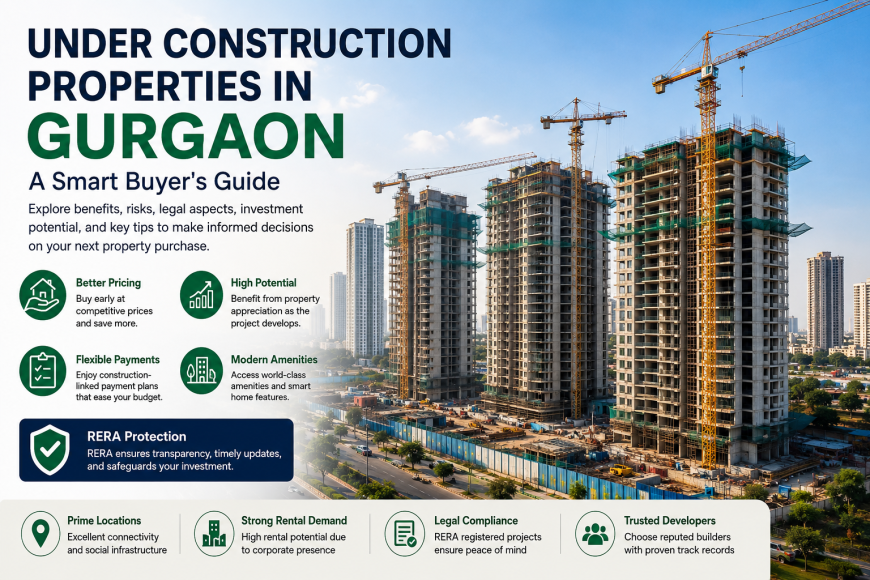
Introduction
Buying a home is one of the biggest financial decisions most people will make. For many buyers and investors, under construction properties in Gurgaon have become an attractive option because they often combine competitive pricing with the potential for long-term appreciation. Gurgaon continues to expand as a major business and residential hub, supported by modern infrastructure, employment opportunities, and planned urban development. This growth has encouraged both end-users and investors to explore projects that are still under development rather than limiting themselves to ready-to-move homes.
At the same time, purchasing a property before completion requires careful planning. Construction timelines, developer credibility, financing options, legal approvals, and regulatory compliance all play a role in determining whether an investment meets your expectations. A lower launch price may appear attractive, but buyers should always balance affordability with project quality, location, and delivery confidence.
This guide explains how under-construction residential projects work, who they are best suited for, what benefits and risks they offer, and the practical steps buyers should follow before making a decision. Whether you are a first-time homebuyer, an experienced investor, or an NRI looking for opportunities in India's growing real estate market, understanding these fundamentals can help you make a confident and well-informed purchase.
Table of Contents
- What Are Under Construction Properties?
- Why Gurgaon Continues to Attract Property Buyers
- Why Buyers Choose Under Construction Properties in Gurgaon
- Ready-to-Move vs Under Construction Homes
- How RERA Protects Homebuyers
- Factors to Evaluate Before Investing
- Understanding Project Costs Beyond the Base Price
- Common Mistakes Buyers Should Avoid
- Who Should Consider Under Construction Projects?
- Future Outlook for Gurgaon Real Estate
What Are Under Construction Properties?
Under construction properties are residential or commercial projects that are currently being built and have not yet received their completion certificate or occupancy certificate. Buyers typically purchase these homes during different stages of development—from the pre-launch phase to the final stages of construction.
Unlike ready-to-move homes, buyers usually pay for these properties through construction-linked payment plans, where payments are released as the project reaches predefined construction milestones.
These projects may include:
- Apartments
- Builder floors
- Luxury residences
- Villas
- Mixed-use developments
- Integrated townships
For many buyers, purchasing during construction provides access to a wider range of unit choices, flexible payment structures, and pricing that may be lower than comparable completed properties.
However, these advantages should always be weighed against construction timelines and the developer's track record.
Why Gurgaon Continues to Attract Property Buyers
Over the past two decades, Gurgaon has evolved into one of India's leading real estate destinations. Its strong corporate presence, expanding infrastructure, and diverse housing options continue to attract professionals, entrepreneurs, NRIs, and long-term investors.
Several factors contribute to this sustained demand.
Strong Employment Opportunities
Gurgaon is home to numerous multinational corporations, technology companies, consulting firms, and financial institutions. The city's commercial districts create consistent housing demand from professionals seeking homes close to their workplaces.
This steady influx of working professionals supports both residential sales and rental demand.
Expanding Infrastructure
Infrastructure development has significantly improved connectivity across Gurgaon.
Some notable improvements include:
- Expansion of metro connectivity
- Wider expressways
- Improved road networks
- Better access to the airport
- Growth of commercial corridors
- Development of new residential sectors
Infrastructure often influences long-term property appreciation because improved accessibility increases the attractiveness of surrounding neighborhoods.
Diverse Housing Choices
Today's buyers can choose from:
|
Buyer Type |
Suitable Property |
|
First-time buyers |
Affordable apartments |
|
Working professionals |
Mid-segment condominiums |
|
Families |
Integrated townships |
|
Luxury buyers |
Premium residences |
|
Investors |
Early-stage under-construction projects |
|
NRIs |
Branded residential developments |
This diversity allows buyers to align property choices with both lifestyle needs and financial goals.
Why Buyers Choose Under Construction Properties in Gurgaon
Several practical advantages make under-construction homes appealing to different categories of buyers.
Competitive Pricing During Early Stages
Developers often introduce projects at launch prices that may be lower than prices closer to project completion. As construction progresses and demand grows, prices may increase depending on market conditions, project quality, and location.
While appreciation is never guaranteed, buying early can provide better value compared with purchasing the same project after completion.
Flexible Payment Plans
Many developers offer payment structures that spread costs across multiple construction milestones instead of requiring full payment upfront.
Common payment options include:
- Construction-linked plans
- Down payment plans
- Flexi payment plans
- Possession-linked plans (where available)
This flexibility can make budgeting easier for buyers who prefer staggered financial commitments.
Wider Unit Selection
Early buyers often have access to:
- Preferred floor levels
- Better views
- Corner apartments
- Larger balconies
- More desirable layouts
- Units facing parks or open spaces
As projects near completion, these premium inventory options may become limited.
Modern Design Standards
Many new residential developments incorporate features that reflect changing lifestyle preferences, including:
- Energy-efficient construction
- Smart home provisions
- Clubhouses
- Fitness centers
- Children's play areas
- Landscaped open spaces
- Dedicated work-from-home zones
- Electric vehicle charging infrastructure
- Enhanced security systems
These amenities are increasingly important for buyers planning long-term occupancy.
H2: Comparing Ready-to-Move Homes and Under Construction Properties
Choosing between a completed home and an under-construction project depends on your financial situation, timeline, and risk tolerance.
|
Factor |
Under Construction |
Ready-to-Move |
|
Initial Cost |
Often lower at launch |
Usually higher |
|
Possession |
Future date |
Immediate |
|
GST |
Applicable in many cases, subject to prevailing tax laws |
Generally not applicable on completed resale properties; tax treatment varies |
|
Rental Income |
Starts after possession |
Immediate |
|
Unit Choice |
Greater availability |
Limited inventory |
|
Customization |
More flexibility during construction (where permitted) |
Minimal |
|
Appreciation Potential |
Depends on project execution and market conditions |
Generally more stable but varies by location |
Neither option is universally better. Buyers seeking immediate occupancy may prefer completed homes, while those with a longer investment horizon may find under-construction projects more suitable.
H3: Which Option Is Right for You?
Your decision should be based on practical considerations rather than market trends alone.
An under-construction property may be suitable if you:
- Have a flexible moving timeline.
- Want access to newer developments and amenities.
- Prefer staggered payment plans.
- Are comfortable monitoring project progress.
- Can evaluate developer credibility and regulatory approvals.
A ready-to-move home may be a better fit if you:
- Need immediate possession.
- Want to inspect the finished property before buying.
- Prefer avoiding construction-related uncertainty.
- Plan to generate rental income right away.
- Value certainty over potential price appreciation.
How RERA Has Improved Buyer Confidence
The introduction of the Real Estate (Regulation and Development) Act, 2016 (RERA) has brought greater transparency and accountability to India's real estate sector. While it does not eliminate every risk associated with buying an under-construction property, it gives buyers important legal protections and access to project information.
For anyone considering under construction properties in Gurgaon, checking a project's RERA registration should be one of the first steps during research.
What Does RERA Require?
Registered developers are generally expected to:
- Register eligible projects before marketing or selling them.
- Provide approved plans and project details.
- Update construction progress periodically.
- Follow prescribed rules regarding project funds.
- Deliver projects according to the terms agreed with buyers, subject to applicable provisions and circumstances.
Because regulations and project-specific obligations can vary, buyers should always review the project's registered information and sale agreement carefully.
Why RERA Matters to Homebuyers
RERA encourages greater transparency by making important project information publicly available. This allows buyers to verify details instead of relying only on marketing brochures.
Useful information typically includes:
- Project registration number
- Developer details
- Approved layout plans
- Construction milestones
- Expected completion timeline
- Number of units
- Project approvals, where disclosed
Having access to this information helps buyers compare projects more objectively.
Factors to Evaluate Before Investing
Buying a property should never be based on price alone. A thoughtful evaluation reduces the chances of unexpected issues later.
1. Research the Developer's Track Record
One of the strongest indicators of project reliability is the developer's past performance.
Look for:
- Previously completed projects
- Delivery timelines
- Construction quality
- Customer reviews across multiple platforms
- Responsiveness after possession
- Maintenance standards in completed communities
A developer with a consistent record of completing projects on time may inspire more confidence than one with multiple delayed developments.
2. Study the Location Carefully
Location influences both lifestyle and long-term value.
Instead of focusing only on the project's address, evaluate the surrounding ecosystem.
Questions to ask include:
- How far is the nearest metro station?
- Are schools and hospitals easily accessible?
- What employment hubs are nearby?
- Is public transport available?
- Are shopping centres planned or operational?
- What infrastructure projects are under development?
Areas benefiting from improved connectivity often experience stronger demand over time, although appreciation is never guaranteed.
3. Review Construction Progress
Marketing images often show the completed vision rather than the current reality.
Whenever possible:
- Visit the construction site.
- Compare progress with the promised schedule.
- Observe workforce activity.
- Assess overall construction quality.
- Speak with existing buyers if possible.
A site visit frequently reveals practical details that brochures cannot.
4. Understand the Floor Plan
A well-designed apartment can feel more spacious than a larger but poorly planned one.
Consider:
- Natural lighting
- Ventilation
- Storage space
- Balcony usability
- Privacy between rooms
- Future furniture placement
Good layouts improve everyday living, not just resale value.
5. Review Legal Documentation
Before making a financial commitment, buyers should verify that the project has the necessary approvals and documentation relevant to the transaction.
Depending on the project, this may include reviewing:
- RERA registration
- Title-related information provided by the developer
- Building plan approvals
- Sale agreement
- Payment schedule
- Possession terms
Many buyers also choose to consult an independent legal professional before signing any agreement.
Expert Tip: Spending a modest amount on legal due diligence can help prevent far more costly disputes later.
Understanding the Total Cost of Buying
The advertised price is only one part of the overall investment.
Buyers should prepare a complete budget that includes additional expenses.
|
Cost Component |
Why It Matters |
|
Base sale price |
Primary purchase cost |
|
GST (where applicable) |
Tax payable under applicable rules |
|
Stamp duty and registration |
Government charges payable at registration |
|
Home loan processing fees |
Charged by lenders |
|
Maintenance deposits |
Initial community maintenance contribution |
|
Club membership (if applicable) |
May be charged separately |
|
Parking charges |
Can differ by project |
|
Interior finishing |
Furniture, wardrobes, modular kitchen, lighting and décor |
|
Moving expenses |
Shifting and setup costs |
Understanding the full financial picture helps buyers avoid budget surprises.
Why Investors Continue to Explore Gurgaon
Gurgaon remains one of India's most closely watched residential markets because it combines employment growth with expanding infrastructure and a broad range of housing options.
For many investors, the objective is not simply purchasing property but identifying locations that may benefit from future demand drivers such as improved connectivity, commercial expansion, and social infrastructure.
Those researching investment opportunities in Gurgaon India should evaluate projects based on long-term fundamentals rather than short-term market sentiment. Buyers looking for verified project information, location insights, and practical guidance can also refer to MyEstateFinder's resources on under construction properties in Gurgaon and investment opportunities in Gurgaon India as part of their broader research process.
Common Mistakes Buyers Should Avoid
Even experienced buyers can overlook important details. Avoiding these common mistakes can make the purchasing process smoother.
Choosing Price Over Value
A lower price is attractive, but it should not outweigh factors such as construction quality, location, developer reputation, and legal compliance.
Ignoring Future Infrastructure
Current surroundings tell only part of the story.
Upcoming roads, metro extensions, business districts, and civic facilities may significantly influence the area's future appeal.
Not Reading the Agreement Carefully
Many buyers skim through lengthy agreements.
Instead, pay close attention to:
- Possession timelines
- Payment obligations
- Delay clauses
- Cancellation terms
- Maintenance responsibilities
- Specifications promised by the developer
Understanding these details helps set realistic expectations.
Stretching the Budget
Buying at the upper limit of affordability can create financial stress if interest rates rise or unexpected expenses occur.
Maintaining a financial buffer is often a wiser approach.
Relying Solely on Advertisements
Marketing campaigns highlight a project's strengths.
Independent research—including site visits, document verification, and conversations with existing buyers—provides a more balanced perspective.
Who Should Consider Under Construction Projects?
Different buyer profiles have different priorities.
|
Buyer Profile |
Suitable? |
Why |
|
First-time homebuyers |
Yes, with careful planning |
Lower entry price and modern amenities may suit long-term ownership. |
|
Working professionals |
Yes |
Flexible payment plans can align with career growth and future relocation plans. |
|
NRIs |
Yes |
Professionally managed projects and digital documentation can simplify remote purchasing, but due diligence remains essential. |
|
Long-term investors |
Yes |
They may benefit from entering projects early if the location and developer fundamentals are strong. |
|
Buyers needing immediate occupancy |
Usually No |
Ready-to-move homes are generally more suitable for immediate possession. |
Future Trends Shaping Gurgaon Real Estate
The city's residential market continues to evolve in response to changing buyer expectations and urban development.
Some trends likely to influence future projects include:
Smart Residential Communities
Developers are increasingly incorporating:
- App-based visitor management
- Digital security systems
- Smart lighting
- Automated utilities
- Home automation compatibility
Sustainable Construction
Modern projects are placing greater emphasis on environmental efficiency through features such as:
- Rainwater harvesting
- Solar-powered common areas
- Waste management systems
- Water-efficient landscaping
- Energy-efficient lighting
These initiatives can contribute to lower resource consumption and improved community sustainability.
Integrated Living
Many new developments combine residential, retail, recreational, and commercial spaces within a single master-planned community.
This approach aims to reduce travel time and improve everyday convenience for residents.
Infrastructure-Led Growth
Road expansions, metro connectivity, and commercial development continue to shape buyer preferences. While future appreciation cannot be predicted with certainty, infrastructure improvements often enhance an area's accessibility and desirability over time.
Data-Driven Buying Decisions
Today's buyers increasingly compare projects using verified information rather than relying solely on promotional material. Online project updates, regulatory disclosures, virtual site tours, and independent market research have become valuable tools in the decision-making process.
Frequently Asked Questions
1. Are under construction properties in Gurgaon a good investment?
They can be a good investment for buyers with a medium- to long-term outlook, but suitability depends on factors such as the developer's reputation, project location, construction progress, and prevailing market conditions. Early-stage projects may offer competitive pricing and a wider choice of units, while completed projects provide greater certainty. Buyers should evaluate each project individually rather than assuming all under-construction properties will appreciate in value. Conducting due diligence and verifying RERA registration are essential before making any commitment.
2. Is buying an under-construction property riskier than purchasing a ready-to-move home?
Under-construction properties generally involve additional considerations, including construction timelines and project execution. Ready-to-move homes allow buyers to inspect the finished product and take possession immediately. However, many under-construction projects are delivered successfully by established developers. The key is to assess the developer's track record, legal approvals, financial planning, and project progress before investing.
3. How does RERA help protect homebuyers?
RERA improves transparency by requiring eligible projects to be registered and by making important project information available to buyers. It also establishes standards for disclosures and provides a framework for addressing certain disputes. While RERA offers valuable protections, buyers should still verify documents, understand the sale agreement, and seek professional advice where appropriate.
4. What documents should buyers review before booking a property?
Buyers should review the project's RERA registration details, the draft sale agreement, payment schedule, approved plans (where available), and any documentation relating to the developer's legal title and approvals. If financing through a home loan, reviewing lender requirements is also advisable. Consulting an independent legal expert can provide additional confidence before signing any agreement.
5. What is the biggest advantage of buying during the construction phase?
One of the primary advantages is the opportunity to purchase at an earlier stage of development, when pricing may be more competitive than after completion. Buyers may also have access to a broader selection of units, preferred floor plans, and flexible payment options. However, these benefits should always be balanced against construction timelines and project execution risks.
6. How can I evaluate a developer's credibility?
Start by researching the developer's completed projects, delivery record, construction quality, customer feedback, and after-sales service. Visiting completed developments can provide valuable insights into workmanship and maintenance standards. Buyers should also review publicly available project information and avoid relying solely on marketing materials.
7. Are under-construction homes suitable for first-time buyers?
Yes, many first-time buyers choose under-construction properties because of phased payment plans and access to newer residential communities. However, first-time buyers should avoid stretching their budgets and should understand all associated costs, including taxes, registration charges, and interior finishing expenses. Careful planning is often more important than choosing the lowest-priced property.
8. What factors influence property appreciation in Gurgaon?
Property values are influenced by several factors, including infrastructure development, connectivity, employment hubs, social amenities, demand and supply, developer reputation, and overall market conditions. No single factor guarantees appreciation. Buyers should evaluate the broader ecosystem surrounding a project rather than focusing only on launch prices or promotional claims.
9. What additional costs should buyers plan for?
Beyond the base property price, buyers may need to budget for GST (where applicable), stamp duty, registration charges, home loan processing fees, maintenance deposits, parking charges, club membership (if applicable), interior work, and moving expenses. Preparing a comprehensive budget helps avoid financial surprises after booking.
10. How can buyers make a more informed purchasing decision?
An informed decision comes from combining independent research with professional guidance. Compare multiple projects, visit sites whenever possible, verify legal documentation, assess the developer's history, understand payment obligations, and evaluate future infrastructure plans. Taking time to research thoroughly often leads to better long-term outcomes than making a quick decision based solely on pricing or promotional offers.
Conclusion
Purchasing under construction properties in Gurgaon can be a practical choice for homebuyers and investors who value modern developments, flexible payment structures, and the potential benefits of entering a project during its development phase. At the same time, every purchase should be supported by careful due diligence, realistic financial planning, and a clear understanding of project timelines and legal documentation.
Gurgaon's continued growth as a business and residential destination creates ongoing interest among buyers, but successful real estate decisions are rarely based on location alone. Factors such as developer credibility, infrastructure, project quality, RERA compliance, and long-term lifestyle needs all deserve equal attention.
Whether you are purchasing your first home, expanding your investment portfolio, or exploring investment opportunities in Gurgaon India, taking a balanced and research-driven approach will help you choose a property that aligns with your financial goals and personal priorities.