The Ultimate Guide to Color Theory, Color Correction, and Shot Composition in Filmmaking
 FillmeNetworks
Introduction
In the magical world of filmmaking, visual storytelling is everything. From the way a scene is framed to the mood conveyed through colors, every shot is a carefully constructed piece of art. This comprehensive guide explores three critical pillars of cinematic storytelling: color theory, color correction, and shot composition.
Whether you’re a budding filmmaker, cinematographer, or content creator, mastering these concepts will elevate your projects and help you craft visually compelling stories.
What is Color Theory in Filmmaking?
Color theory in film refers to the use of color to influence emotions, create depth, and establish tone. It’s about the why behind the color decisions from costumes to lighting to set design.
Why it Matters
- Evokes emotion
- Enhances narrative
- Builds character arcs
- Sets the tone and era
Understanding Color Psychology

Colors affect our mood, perception, and understanding. Here’s how they translate in the film:
- Red — Passion, danger, power (e.g., Whiplash)
- Blue — Calmness, sadness, isolation (e.g., Moonlight)
- Green — Nature, envy, rebirth (e.g., The Matrix)
- Yellow — Joy, madness, hope (e.g., Her)
- Black & White — Timelessness, conflict, simplicity (e.g., Schindler’s List)
Popular Color Schemes in Cinema
Understanding these schemes can help you make intentional visual choices.
1. Monochromatic
Uses variations of a single hue. Common for dream sequences or character-focused scenes.
2. Complementary
Opposing colors on the color wheel (e.g., blue and orange). Creates contrast and tension.
3. Analogous
Colors next to each other on the wheel. Often used for harmony and balance.
4. Triadic
Three evenly spaced colors. Offers vibrant visuals without chaos.
The Role of Color Correction in Post-Production

Once filming wraps, color correction ensures that the visual tone remains consistent and true to life.
Goals of Color Correction:
- Balance exposure
- Match shots from different cameras
- Adjust white balance and skin tones
- Remove unwanted color casts
Color Grading vs. Color Correction: Know the Difference
While color correction fixes problems, color grading is where the magic happens.
Essential Tools for Color Correction and Grading

Software Every Filmmaker Should Know:
- DaVinci Resolve — Industry standard for grading.
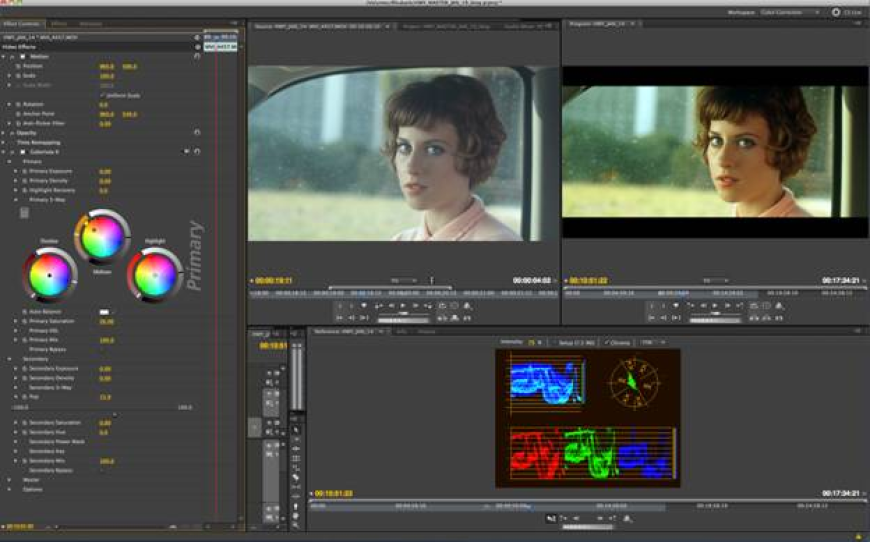
- Adobe Premiere Pro — Accessible and flexible.
- Final Cut Pro X — Mac-exclusive, intuitive.
- LUTs — Look-up tables for stylized grading.
- Color Wheels/Scopes — Professional tools for accuracy.
Shot Composition: The Art of Framing
Composition is how you arrange visual elements in a frame. It’s your canvas within the screen.
The Goal of Great Composition:
- Guide viewer’s eye.
- Emphasize emotion or dialogue.
- Maintain continuity.
- Create dynamic visuals.
Key Principles of Shot Composition
1. Rule of Thirds
Divide the frame into a 3×3 grid. Place key elements at intersections for balance.
2. Leading Lines
Use architectural or natural lines to direct focus.
3. Symmetry & Balance
Use symmetry for calm scenes or to create unease when broken.
4. Framing Within the Frame
Use windows, mirrors, or doorways to add depth and focus.
5. Depth & Layering
The foreground, middle ground, and background add richness.
6. Headroom & Lead Room
Space around a subject’s head or in front of their gaze for natural movement.
Using Color and Composition to Tell Stories
The best filmmakers master the marriage of color and composition.
Examples:
- Wes Anderson — Uses symmetry and pastel palettes for quirky worlds.
- Denis Villeneuve — Employs minimalism and muted tones for tension.
- Christopher Nolan — Dark tones, strong contrast for high-stakes drama.
- Greta Gerwig — Rich, nostalgic tones in Little Women to evoke emotion.
Mastering color theory, color correction, and shot composition gives you the ability to craft stories that captivate. These aren’t just techniques; they’re storytelling languages that resonate deeply with audiences.
Whether you’re a one-man crew or part of a large production house, always think like a painter: light, color, and space are your tools. Experiment, analyze great films, and develop your unique visual voice.