The Role of Technology in Digital Forensics Investigation
Explore how digital forensics investigation, video processing, and photogrammetry software work together to uncover critical evidence in modern forensic analysis. Learn their key roles, benefits, and applications in criminal and civil investigations.
 EstelleNicholson
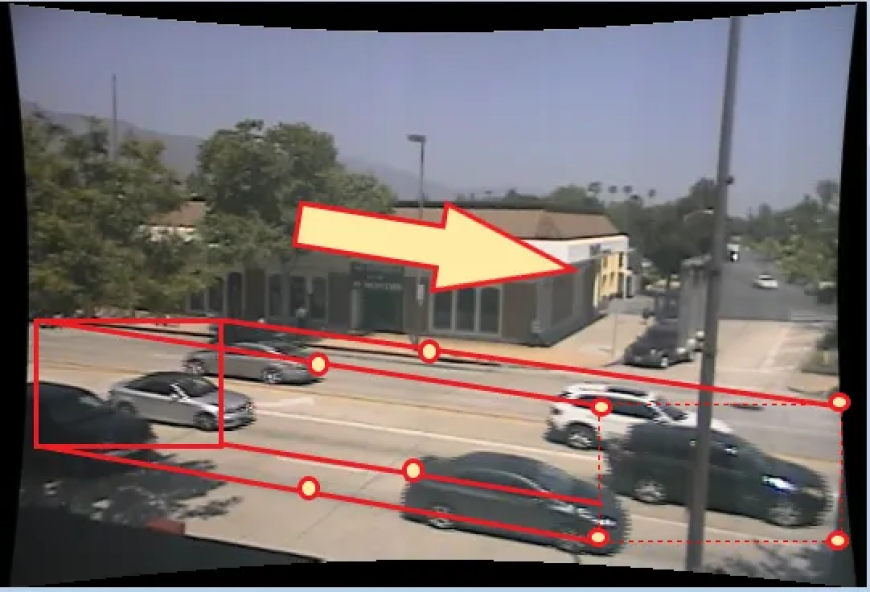
Digital forensics investigation has evolved dramatically with the integration of high-precision video processing and advanced photogrammetry software. These tools empower investigators to extract, analyze, and authenticate digital evidence, helping law enforcement and legal teams uncover the truth in criminal and civil cases.
In this blog, we’ll delve into how digital forensics investigation works, explore the power of video processing in evidence analysis, and explain how photogrammetry software plays a vital role in reconstructing crime scenes with accuracy.
What Is a Digital Forensics Investigation?
A digital forensics investigation involves collecting, analyzing, and preserving data from digital devices to be used as evidence in legal proceedings. This process ensures that digital evidence, including videos, images, and metadata, is reliable, authentic, and admissible in court.
Whether examining a hard drive, analyzing mobile data, or enhancing surveillance footage, digital forensics professionals follow strict protocols to maintain the integrity of evidence. The main objectives are:
-
Identifying sources of digital data
-
Recovering deleted or hidden files
-
Validating file authenticity
-
Creating tamper-proof reports
Enhancing Evidence with Video Processing
How Video Processing Strengthens Investigations
In many digital forensics investigation, video processing becomes the linchpin. Surveillance footage from public spaces, businesses, or personal devices can offer critical visual evidence. However, raw video often contains issues such as low resolution, motion blur, poor lighting, or distorted angles.
Video processing enhances such footage through techniques like:
-
Frame-by-frame enhancement
-
Object tracking and detection
-
Color correction and brightness adjustment
-
Motion stabilization
By refining video quality, investigators can isolate key moments, identify individuals or license plates, and establish timelines—all while maintaining evidentiary standards.
Reconstructing Crime Scenes with Photogrammetry Software
The Power of Visual Measurement
Photogrammetry software is a revolutionary tool in modern digital forensics. It allows investigators to create precise 3D models from 2D images or videos. This technique is particularly useful in:
-
Accident reconstruction
-
Crime scene mapping
-
Spatial analysis of evidence placement
Using triangulation and depth algorithms, photogrammetry software can measure distances, angles, and object dimensions. This provides forensic teams and juries with a scientifically accurate, visual representation of the scene—making complex evidence easier to interpret.
Conclusion
Digital forensics investigation continues to evolve thanks to tools like video processing and photogrammetry software. These technologies help professionals reveal the truth hidden in digital evidence—whether it's clarifying surveillance footage or reconstructing a crime scene in 3D.
Their combined use ensures that evidence is clearer, more accurate, and legally reliable, ultimately enhancing the pursuit of justice in today’s digital world.
Frequently Asked Questions (FAQs)
Q1: What types of digital devices can be analyzed in a forensics investigation?
A: Computers, smartphones, USB drives, DVR systems, cloud data, and more can be examined.
Q2: Is video evidence always admissible in court?
A: Video must be processed and presented in a way that preserves its integrity and meets legal standards to be admissible.
Q3: How accurate is photogrammetry software in forensic analysis?
A: When used correctly, photogrammetry can measure spatial elements with millimeter precision, making it a reliable tool in investigations.
Q4: Can photogrammetry be applied to historical crime scenes?
A: Yes, provided that quality photographs or videos of the scene exist, historical reconstructions are possible.
Q5: What skills are needed to conduct digital forensics investigations?
A: Investigators typically require expertise in digital systems, legal standards, software tools, and forensic methodology.