Sewer Line Replacement: Timeline, Yard Impact & Permits
Considering sewer line replacement? Learn the timeline, yard impact, and permit process, plus how to choose trusted sewage services near you.
 tricounty011
Sewer Line Replacement: Timeline, Yard Impact, and Permits Explained
A full sewer line replacement typically takes one to three days for most homes, though the exact timeline depends on pipe length, depth, and whether your yard needs trenching or can be repaired with trenchless methods. If you're noticing slow drains, sewage odors, or soggy patches in your yard, it may be time to call in professional sewage services before a small problem turns into a backed-up basement.
Replacing a sewer line is one of those projects homeowners hope to avoid, but putting it off usually costs more in the long run. Below, we'll walk through how long the job takes, what happens to your yard, which permits you'll need, and how to pick a contractor who won't leave you guessing.
Signs You Might Need Sewer Line Replacement
Before jumping into timelines and permits, it helps to know what prompts this repair in the first place. Common warning signs include:
• Recurring clogs in multiple drains at once
• Gurgling sounds from toilets or sinks
• Sewage smells inside or around the yard
• Unusually green, lush patches of grass (often a sign of leaking wastewater)
• Cracks in the foundation or basement flooding after heavy rain
Older homes with clay or Orangeburg pipe, both common across Berks, Lancaster, Chester, and Delaware Counties, are especially prone to root intrusion and collapse. A camera inspection from a licensed sewage services provider is the fastest way to confirm whether you're looking at a repair or a full replacement.
How Long Does Sewer Line Replacement Take?
Most residential sewer line replacements take one to three days from start to finish, though the number can shift based on a few factors:
• Pipe length and depth: A short run near the street is quicker than a long line running under a driveway or patio.
• Method used: Traditional open trenching usually takes longer than trenchless pipe bursting or lining, which can sometimes be completed in a single day.
• Access and obstacles: Trees, fences, retaining walls, or utility lines can add time.
• Permit and inspection scheduling: Municipal inspections between the pipe removal and backfill stages can add a day or two if scheduling doesn't align.
A reputable contractor will walk the property first, run a camera inspection, and give you a written estimate that includes a realistic start-to-finish window, not just a vague "a few days."
Will Sewer Line Replacement Damage My Yard?
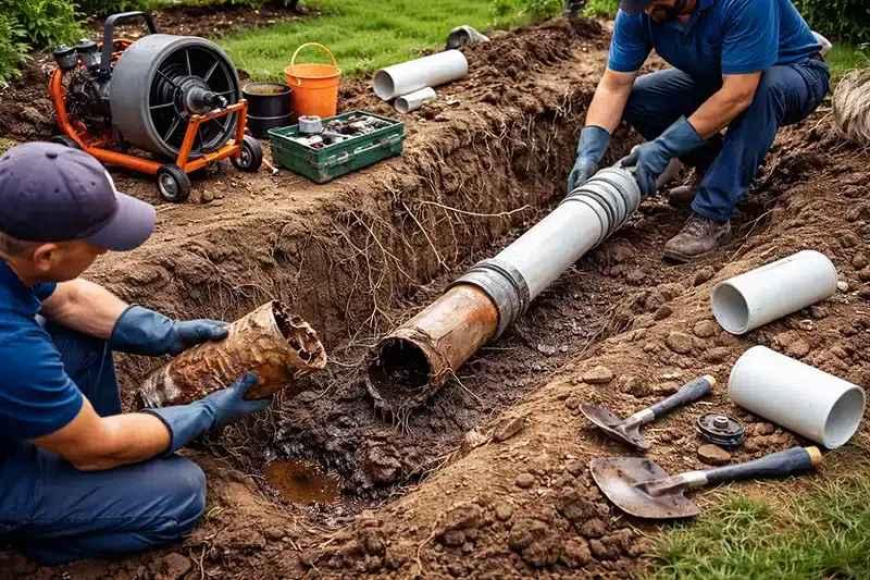
This is usually the first question homeowners ask, and it's a fair one. Traditional trenching does require digging a trench along the pipe's path, which means disturbing grass, mulch beds, or hardscaping directly above the line. The good news is that most of this damage is temporary and repairable.
Trenchless methods, including pipe bursting and cured-in-place pipe lining, cut yard disruption dramatically. Instead of a long open trench, crews only need a couple of small access pits, often one near the house and one near the connection point at the street or septic system. That can mean the difference between reseeding a strip of lawn and re-landscaping your entire yard.
A few things to expect either way:
• Marked utility lines (called in before digging begins)
• Temporary fencing or barriers around the work zone
• Soil settling over the following weeks as the backfill compacts
• A final grading and seeding pass once the pipe is confirmed working
Ask your contractor directly whether trenchless replacement is an option for your property. Not every yard qualifies, but when it does, it's usually the faster and less invasive route.
Permits and Inspections: What's Required
Sewer line work almost always requires a permit from your municipality or township, and in many cases a separate permit from the local sewer authority. Skipping this step isn't just risky; it can leave you unable to sell the home later without retroactively pulling permits and passing inspection.
Typically, the process looks like this:
1. Contractor submits a permit application with pipe specs and a site plan
2. Utility marking is completed (usually through a call-before-you-dig service)
3. Work begins once the permit is approved
4. A municipal inspector reviews the open trench before backfill
5. Final inspection confirms the connection and grading meet code
Timelines for permit approval vary by township, sometimes a same-day process, sometimes closer to a week. An experienced local sewage services company will already know the requirements for your specific municipality and can help avoid delays.
Choosing the Right Sewage Services Provider
Not every plumbing company handles full sewer line replacement, and fewer still are equipped for trenchless methods. When comparing sewage services providers, look for:
• Camera inspection capability, so you get diagnosis before a quote
• Experience with both trenching and trenchless repair
• Familiarity with permit requirements in your specific county
• Clear, written estimates with a defined timeline
• Warranty coverage on the completed line
Tri-County Water Services has handled sewer line replacements throughout Berks, Lancaster, Chester, and Delaware Counties, working directly with local permitting offices so homeowners aren't left navigating paperwork alone.
Get a Sewer Line Inspection Before It Becomes an Emergency
A slow drain or a faint odor in the yard is easy to ignore until it isn't. If you're seeing any of the warning signs above, scheduling a camera inspection now can save you from an emergency repair later. Reach out to our team for a straightforward assessment and a clear timeline for your property.
Read More: Sewer Line Replacement: Timeline, Yard Impact, and Permits Explained
Frequently Asked Questions
Q: How much does sewer line replacement cost?
A: Cost depends on pipe length, depth, and whether trenchless methods are an option, since trenchless repair typically costs less in restoration even if the pipe work itself is comparable. Getting a camera inspection first gives you an accurate, property-specific estimate rather than a general range.
Q: How long does a sewer line last before it needs replacing?
A: Clay and cast iron pipes common in older homes often last 50 to 60 years, while modern PVC piping can last upwards of 100 years under normal conditions. Root intrusion, shifting soil, and age-related corrosion can shorten that lifespan significantly.
Q: Can sewer line replacement be done without digging up my whole yard?
A: In many cases, yes. Trenchless methods like pipe bursting or lining only require small access pits rather than a full trench, though the property's layout and pipe condition determine whether this option applies.
Q: Do I need a permit to replace a sewer line?
A: Yes, sewer line replacement almost always requires a municipal permit and inspection, and sometimes a separate sewer authority permit as well. A local sewage services contractor will typically handle the application on your behalf.
Q: What happens if I skip the permit process?
A: Unpermitted sewer work can create problems when you sell your home, including required retroactive inspections or costly corrections. It can also mean the work wasn't verified to meet local code, which raises the risk of future leaks or backups.
Q: How do I know if I need a repair or a full replacement?
A: A camera inspection is the most reliable way to tell. Isolated cracks or minor root intrusion may be repairable, while widespread collapse, misalignment, or repeated backups usually point to full replacement.