Princess Diana Black Sheep Sweater: The Fashion Message America Still Understands
Discover the fascinating story of the Princess Diana Black Sheep Sweater, its royal symbolism, a unique history, and lasting influence on American fashion.

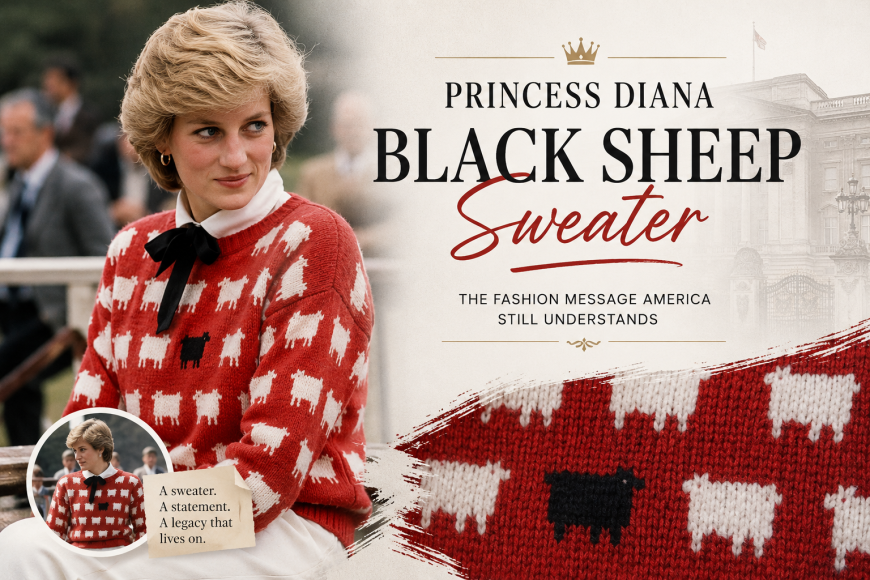
Long before celebrities could explain an outfit through an Instagram caption, Princess Diana understood that clothing could begin a conversation. Few examples prove that better than the Princess Diana Black Sheep Sweater—a bright red knit covered with rows of white sheep and one unmistakable black sheep.
At first glance, the Princess Diana black sheep sweater looks cheerful and playful. Look a little longer, however, and it begins to feel personal. That tension is exactly why the design has survived decades of changing fashion trends. It was never simply a cute piece of knitwear. It became a symbol of individuality, public pressure and the quiet courage required to stand apart from the crowd.
The Polo Match That Created a Fashion Icon
Diana first wore the sweater to a polo match in June 1981, shortly after becoming engaged to Prince Charles and only weeks before their July 29 wedding. At the time, she was still Lady Diana Spencer, just 19 years old and already facing extraordinary attention from the international press.
The sweater was designed by artists Sally Muir and Joanna Osborne for Warm & Wonderful, the British knitwear label they founded in 1979. Its design was wonderfully simple: dozens of white sheep arranged across a colorful background, with one black sheep standing alone. The company had created the motif before Diana wore it, but photographs of the future princess introduced it to a global audience.
For the young designers, the publicity transformed their business. For Diana, the moment became an early example of how people would search for hidden meaning in almost everything she wore.
Was the Black Sheep a Secret Royal Message?
No one can say with certainty that Diana selected the sweater to describe her future position within the royal family. That interpretation became popular later, as the public learned more about the pressure, loneliness and emotional difficulties she experienced.
It is more accurate to say that the symbolism felt remarkably appropriate.
The single black sheep could represent rebellion, independence, loneliness or simply a sense of humor. It leaves enough room for every viewer to recognize something different.
That may be one reason the design connects so strongly with American audiences. American culture has always been fascinated by individuals who challenge powerful institutions, follow their own path and refuse to blend into the background. The sweater communicates that idea instantly without needing a slogan.
Be different. Be visible. Do not apologize for it.
A Damaged Sweater and a Forgotten Piece of History
The story became even more interesting after Diana’s first appearance in the sweater.
Buckingham Palace contacted Warm & Wonderful to explain that the garment had been damaged and asked whether it could be repaired or replaced. The designers sent Diana another sweater, which she wore to a polo match in 1983 with white pants and a dark ribbon tied around her neck. The original damaged sweater was returned to the company and eventually packed away.
Decades later, Joanna Osborne discovered it inside a box while searching through an attic. The accompanying letters from Buckingham Palace helped confirm the sweater’s remarkable history.
In 2023, Sotheby’s offered it as part of its Fashion Icons auction. The estimated selling price was between $50,000 and $80,000. After 44 bids, it sold for approximately $1.143 million, setting an auction record for a sweater.
The buyer was not simply purchasing wool and thread. They were purchasing a physical piece of a story that millions of people still feel connected to.
Why the Sweater Still Works in American Fashion
The Princess Diana Black Sheep Sweater fits surprisingly well into a modern American wardrobe. It has the confidence of a statement piece but the comfort of something that can genuinely be worn.
Paired with straight-leg jeans and sneakers, it feels relaxed and contemporary. With tailored pants and loafers, it becomes polished enough for the office. It can also work with a pleated skirt, ankle boots or a simple pair of black leggings.
The sweater sits between two familiar American aesthetics. Its polo-match history and classic crewneck shape connect it to East Coast preppy fashion. At the same time, its relaxed fit and bold graphic design feel perfectly at home in modern streetwear.
Most importantly, it reflects the way many consumers now approach fashion. A memorable garment should do more than look expensive. It should express personality, carry a recognizable story and feel distinctive without becoming difficult to wear.
Diana’s Greater Fashion Lesson
Princess Diana later became famous for glamorous evening gowns, sharp tailoring, colorful suits and relaxed off-duty outfits. Yet the sheep sweater remains special because she wore it before her public style became carefully polished.
It captured a young woman entering an extremely traditional environment while still wearing something humorous, warm and unexpected.
Later in life, Diana learned how to use the enormous media attention surrounding her to highlight humanitarian causes, including AIDS awareness, homelessness and the campaign against landmines. Her clothing and charitable work were not the same thing, but both demonstrated her understanding of visibility: she knew that a powerful image could challenge assumptions and encourage people to pay attention.
More Than a Royal Collectible
The lasting appeal of the Princess Diana Black Sheep Sweater is not really about royalty. It is about recognition.
Almost everyone has experienced a moment of feeling like the person standing in a different direction—at school, at work, within a family or inside an unfamiliar social group.
Diana wore the sweater during a very specific chapter of British royal history, but its emotional message travels easily. From New York and Los Angeles to Chicago and small American college towns, the idea remains universal:
Belonging does not always require blending in.
Sometimes the thing that makes you look different becomes the very thing people remember.
emmawatson3848