Pond Aeration vs. Water Circulation: What's the Difference?
Learn how pond aeration systems and water circulation work differently to improve oxygen levels, water movement, and overall pond health.
 stevejones
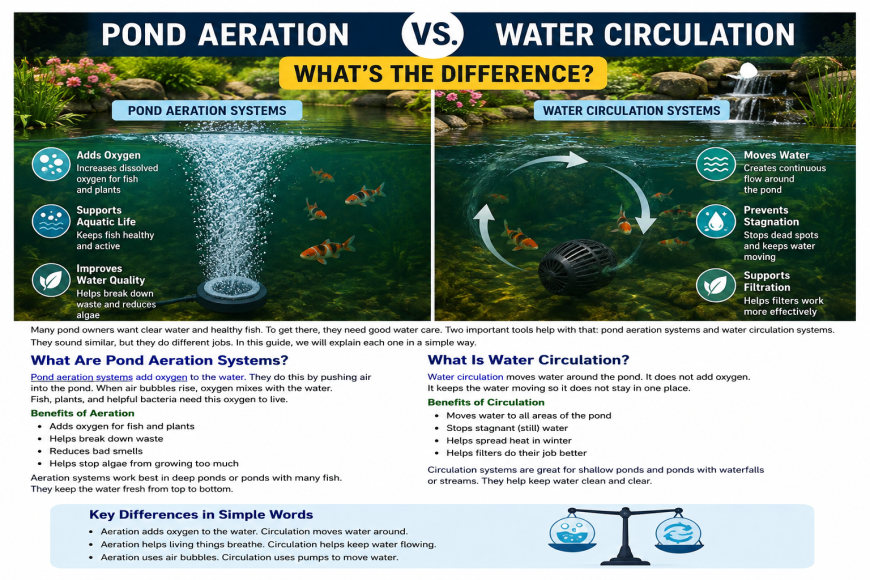
A healthy pond needs good water movement and enough oxygen. These two things are important for fish, plants, and other pond life.
Pond aeration systems and water circulation systems can both improve pond conditions, but they do different jobs. Understanding the difference can help you choose the right setup for your pond.
What Is Pond Aeration?
Pond aeration is the process of adding oxygen to pond water. An aeration system usually uses an air pump, tubing, and diffusers. The diffuser sits in the water and releases small air bubbles.
As the bubbles move toward the surface, they help mix oxygen into the water.
Good oxygen levels are important because fish and other living things in the pond need oxygen to survive.
Benefits of Pond Aeration
Pond aeration can:
- Increase dissolved oxygen
- Support fish health
- Help beneficial bacteria
- Reduce bad odors
- Improve overall water quality
- Help reduce stagnant areas
- Support a healthier pond ecosystem
Aeration is especially useful in ponds with many fish or deeper areas where oxygen levels can become low.
What Is Water Circulation?
Water circulation is different from aeration. Its main job is to move water around the pond.
A pond pump can pull water from one area and send it to another. Water may flow through a filter, waterfall, stream, or fountain before returning to the pond.
This constant movement helps prevent water from sitting still for too long.
Benefits of Water Circulation
Good water circulation can:
- Move water throughout the pond
- Reduce stagnant areas
- Help distribute heat
- Support filtration
- Move debris toward filters
- Create attractive waterfalls and fountains
Water circulation is useful for many garden ponds and decorative water features.
Pond Aeration vs. Water Circulation
The easiest way to understand the difference is to look at their main jobs.
Aeration adds oxygen.
Circulation moves water.
An aeration system uses air to increase oxygen in the water. A circulation pump uses water flow to move water around the pond.
They may work together, but they are not the same thing.
Which One Does Your Pond Need?
The right choice depends on your pond and its goals.
Choose Aeration When Oxygen Is the Main Concern
Aeration can be a good choice if your pond has:
- Many fish
- Deep water
- Low oxygen levels
- Bad odors
- Stagnant bottom water
A good aeration system can help move oxygen-rich water through deeper parts of the pond.
Choose Circulation When Water Movement Is the Main Goal
Water circulation may be more important if you want to:
- Run a waterfall
- Power a fountain
- Move water through a filter
- Improve surface movement
- Create a decorative water feature
A pond pump can help keep water moving while supporting other pond equipment.
Can You Use Both?
Yes. In many ponds, using both systems can provide better results.
A circulation pump can move water through filters and water features. At the same time, an aeration system can add oxygen to deeper areas.
Together, they can support:
- Better water movement
- Higher oxygen levels
- Healthier fish
- Better filtration
- A more balanced pond ecosystem
The important thing is to choose equipment that matches the size and depth of your pond.
What About Pond Fountains?
Pond fountains can also improve water movement and add oxygen near the surface. They are popular because they combine pond care with a decorative display.
However, a fountain is not always a replacement for a dedicated aeration system. Deep ponds may need an aerator that sends oxygen to lower areas.
This is why it is helpful to look at the pond as a whole before choosing equipment.
How to Choose the Right System
Before buying pond equipment, consider these factors:
- Pond size
- Pond depth
- Number of fish
- Water features
- Filtration needs
- Desired water flow
- Available power source
- Maintenance requirements
For a pond with fish and deep water, aeration may be a high priority. For a garden pond with a waterfall, circulation may be more important.
Final Thoughts
Pond aeration and water circulation both play useful roles, but they solve different problems. Aeration focuses on adding oxygen, while circulation focuses on moving water.
For many ponds, the best approach is to use both when needed. A properly sized system can help create cleaner water, healthier fish, and a better-looking pond.
Before choosing equipment, think about your pond's size, depth, fish population, and water features. This will help you select the right solution for long-term pond health.
Frequently Asked Questions
Is pond aeration the same as water circulation?
No. Aeration adds oxygen to the water, while circulation moves water from one part of the pond to another.
Do pond aeration systems help fish?
Yes. Aeration increases dissolved oxygen, which is important for fish and other aquatic life.
Does a pond pump add oxygen?
A pump can increase oxygen near the surface when it creates water movement, but its main purpose is usually to circulate water.
Do I need both aeration and circulation?
Some ponds benefit from both. The right setup depends on pond size, depth, fish population, filtration, and water features.
Is a fountain an aerator?
A fountain can add oxygen through surface movement, but it may not provide the same deep-water oxygenation as a dedicated aeration system.