On-Page SEO Strategies: A Complete Guide to Improving Rankings and User Experience
We'll explore the most effective on-page SEO strategies that can improve your website's visibility, increase organic traffic, and help you rank higher in search engine results.
 highrnaker
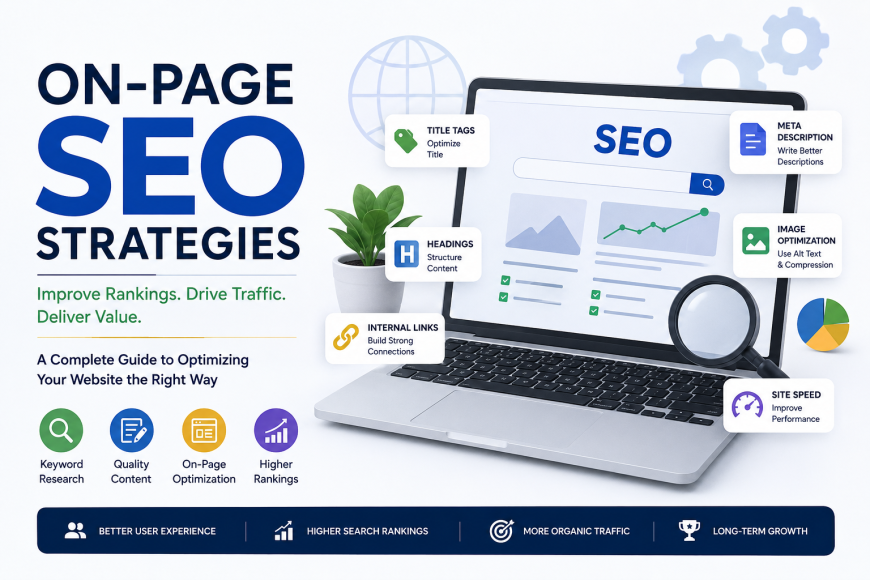
Search engine optimization continues to evolve, but one thing remains constant: strong on-page SEO is the foundation of every successful website. Whether you run an eCommerce store, a business website, or a personal blog, optimizing your pages correctly helps search engines understand your content while providing visitors with a better experience.
Many website owners spend time building backlinks but overlook the importance of on-page optimization. Without a properly optimized website, even the best backlink strategy will struggle to deliver long-term results.
We'll explore the most effective on-page SEO strategies that can improve your website's visibility, increase organic traffic, and help you rank higher in search engine results.
What Is On-Page SEO?
On-page SEO refers to all the optimization techniques performed directly on a webpage to improve its search engine rankings. Unlike off-page SEO, which focuses on backlinks and external signals, on-page SEO involves optimizing content, HTML elements, website structure, internal links, images, and user experience.
The goal is simple: make every page valuable for users while helping search engines understand what the page is about.
Start with Proper Keyword Research
Every successful SEO campaign begins with keyword research.
Instead of targeting highly competitive keywords immediately, focus on search terms that match user intent. Look for keywords your audience is actually searching for and naturally incorporate them into your content.
When selecting keywords, consider:
- Primary keyword
- Secondary keywords
- Long-tail keywords
- Related search phrases
- User search intent
Avoid stuffing keywords throughout your content. Search engines now prioritize relevance and readability over keyword frequency.
Write High-Quality, Helpful Content
Content remains one of the strongest ranking factors.
Google rewards websites that provide useful, original, and trustworthy information. Instead of writing solely for search engines, create content that genuinely answers users' questions.
High-quality content should:
- Solve a problem
- Answer common questions
- Be well-organized
- Include practical examples
- Stay updated
- Be easy to read
Long-form content often performs better because it covers topics in greater depth, but quality should always come before word count.
Optimize Your Title Tags
The title tag is one of the first things both users and search engines notice.
An effective SEO title should:
- Include the primary keyword
- Be clear and descriptive
- Stay within 50–60 characters
- Encourage users to click
For example:
On-Page SEO Strategies: Improve Rankings with Proven Techniques
Avoid clickbait titles that don't match the actual content.
Write Compelling Meta Descriptions
Although meta descriptions are not a direct ranking factor, they significantly influence click-through rates.
A strong meta description should:
- Summarize the page
- Include the target keyword
- Stay under 160 characters
- Encourage users to visit the page
Think of the meta description as a short advertisement for your content.
Use Proper Heading Structure
Headings improve both readability and SEO.
Your page should include:
- One H1 heading
- Multiple H2 headings
- Supporting H3 headings where needed
A logical heading structure helps visitors scan your content quickly while making it easier for search engines to understand the page hierarchy.
Avoid skipping heading levels unnecessarily.
Visit: Professional Website SEO Services In Rawalpindi
Create SEO-Friendly URLs
Clean URLs improve user experience and search engine crawling.
A good URL looks like this:
example.com/on-page-seo-strategies
Instead of:
example.com/page?id=45678
Keep URLs:
- Short
- Descriptive
- Keyword-focused
- Easy to read
Avoid unnecessary numbers or symbols.
Optimize Images
Images enhance engagement, but large or poorly optimized images can slow down your website.
Follow these image optimization tips:
- Compress images before uploading
- Use descriptive file names
- Add relevant alt text
- Choose modern formats like WebP where possible
- Resize images appropriately
Alt text also improves accessibility for visually impaired users.
Improve Internal Linking
Internal links help search engines discover your pages and distribute authority throughout your website.
A good internal linking strategy:
- Connects related articles
- Guides users to helpful resources
- Reduces bounce rates
- Increases page views
For example, if you're discussing technical SEO, you can naturally link to another article covering website speed optimization.
Avoid excessive internal links that overwhelm readers.
Focus on User Experience
Search engines increasingly reward websites that provide a positive user experience.
Important UX factors include:
- Easy navigation
- Clear page layout
- Mobile responsiveness
- Fast loading speed
- Readable typography
- Simple menus
When users stay longer on your website and interact with multiple pages, it sends positive engagement signals.
Optimize for Mobile Devices
Most searches now happen on smartphones.
A mobile-friendly website should:
- Load quickly
- Adjust to different screen sizes
- Use readable fonts
- Feature clickable buttons
- Avoid intrusive pop-ups
Responsive design has become essential for modern SEO.
Increase Website Speed
Website speed affects both rankings and user satisfaction.
Ways to improve loading speed include:
- Compress images
- Enable browser caching
- Minify CSS and JavaScript
- Use a Content Delivery Network (CDN)
- Choose reliable web hosting
- Remove unnecessary plugins
Even a one-second improvement in loading time can positively impact conversions and engagement.
Use Schema Markup
Structured data helps search engines better understand your content.
Schema markup can improve the appearance of your listings by generating rich results such as:
- FAQs
- Reviews
- Ratings
- Products
- Articles
- Breadcrumbs
Although schema doesn't guarantee higher rankings, it can improve visibility and click-through rates.
Keep Content Fresh
SEO is not a one-time task.
Regularly update existing articles by:
- Adding new statistics
- Improving outdated information
- Expanding sections
- Fixing broken links
- Refreshing screenshots
- Including recent examples
Updated content often performs better than neglected pages.
Improve Readability
People rarely read every word on a webpage.
Make your content easy to scan by using:
- Short paragraphs
- Bullet points
- Numbered lists
- Clear headings
- Simple language
- White space
Better readability increases user engagement and reduces bounce rates.
Optimize for Search Intent
One of the biggest SEO mistakes is targeting the wrong intent.
Before creating content, determine whether users are looking for:
- Information
- Products
- Comparisons
- Services
- Tutorials
- Reviews
Your content should directly satisfy the purpose behind the search query.
Build Trust Through Expertise
Modern SEO places significant emphasis on content quality and credibility.
You can improve trust by:
- Providing accurate information
- Citing reliable sources when appropriate
- Demonstrating industry expertise
- Avoiding misleading claims
- Updating content regularly
Users are more likely to return to websites they consider trustworthy.
Monitor SEO Performance
Optimization should always be backed by data.
Track important metrics such as:
- Organic traffic
- Keyword rankings
- Click-through rates
- Bounce rate
- Average session duration
- Conversion rate
Using analytics tools helps identify what's working and where improvements are needed.
Common On-Page SEO Mistakes to Avoid
Many websites fail to rank because of avoidable mistakes, including:
- Keyword stuffing
- Duplicate content
- Missing title tags
- Poor heading structure
- Slow loading pages
- Broken internal links
- Thin content
- Unoptimized images
- Ignoring mobile users
Regular SEO audits can help identify and fix these issues before they affect rankings.
Final Thoughts
Successful SEO begins with a well-optimized website. By implementing effective on-page SEO strategies, businesses can improve search visibility, attract qualified visitors, and create a better experience for users.
From keyword research and content optimization to website speed and internal linking, every element contributes to stronger search performance. Rather than chasing quick wins, focus on building a website that consistently delivers value to your audience.
If you're looking to learn more about SEO best practices, website optimization, and digital marketing insights, visit HighRnaker.pk, where you'll find practical resources designed to help businesses improve their online presence and long-term search engine performance.