Next Generation Terahertz Technology Transforming High-Speed Sensing Systems
Terahertz systems are valued because they can identify materials without direct contact and can support imaging without using ionizing radiation.
 Adnan2453
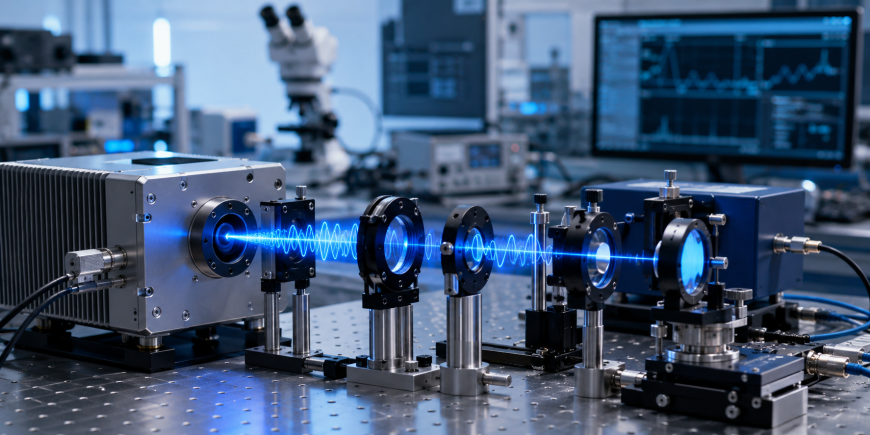
Next Generation Terahertz Technology is becoming an important part of high-speed sensing, imaging, and communication research. It works in the electromagnetic range between microwave and infrared signals, making it useful for detecting materials, inspecting surfaces, and supporting advanced wireless applications. As industries look for faster and more precise systems, terahertz solutions are gaining attention across telecommunications, semiconductor inspection, aerospace, healthcare imaging, and industrial quality control.
Understanding the Role of Terahertz Systems
Terahertz systems are valued because they can identify materials without direct contact and can support imaging without using ionizing radiation. This makes the technology useful in sensitive environments where accuracy and safety are both important. In manufacturing, terahertz sensing can inspect coatings, layers, cracks, and hidden defects. In laboratories, it supports spectroscopy and advanced material analysis. These capabilities are helping terahertz technology move beyond research settings toward practical commercial use.
Unlike many traditional inspection methods, terahertz systems can analyze certain materials through packaging, plastics, ceramics, and other non-metallic surfaces. This feature supports applications in electronics testing, security screening, pharmaceutical inspection, and high-frequency communication validation. As devices become smaller and more complex, industries may require non-destructive testing tools that can deliver detailed insights without damaging expensive components.
Key Data Behind the Technology Shift
According to MarkNtel Advisors, the Global Next-Generation Terahertz Technology size was valued at around USD 0.81 billion in 2025 and is projected to rise from USD 0.89 billion in 2026 to USD 1.94 billion by 2032. The sector is estimated to record a CAGR of about 13.87% during 2026–2032. North America held the largest share of nearly 46% in 2026, while electronic THz technology accounted for around 48% by technology segment.
The report also notes that telecommunications represented a significant end-user share of about 27% in 2026. This reflects the rising role of terahertz frequencies in research linked to ultra-fast data transmission and future wireless systems. Semiconductor manufacturing and precision metrology infrastructure are also highlighted as important drivers, especially as advanced chips require more accurate inspection and measurement technologies.
Applications Across Sensing and Imaging
Next Generation Terahertz Technology is widely studied for imaging because it can reveal internal structures that may not be visible through optical methods. In industrial use, it can help evaluate product thickness, detect voids, and inspect layered materials. In healthcare research, terahertz imaging is being explored for tissue analysis and diagnostic support, although broader clinical adoption still depends on validation, cost, and regulatory readiness.
According to The National Institute of Standards and Technology, terahertz radiation is being studied for applications such as imaging, spectroscopy, and communications because it occupies a unique part of the electromagnetic spectrum.
Regional Adoption and Infrastructure Readiness
North America’s strong position is linked to advanced research institutions, defense technology programs, semiconductor facilities, and telecommunications development. The region has a mature ecosystem for photonics, electronics testing, and scientific instrumentation. These strengths create favorable conditions for terahertz adoption in high-value applications such as wafer inspection, aerospace component testing, and next-generation communication research.
Europe and Asia-Pacific are also important regions for terahertz development. European companies are active in spectroscopy, photonics, and scientific systems, while Asia-Pacific benefits from semiconductor manufacturing capacity and electronics production. Countries with strong chipmaking, telecom, and precision manufacturing ecosystems may increase adoption as terahertz systems become more compact, reliable, and commercially scalable.
According to The International Telecommunication Union, future wireless communication research continues to examine higher frequency bands to support faster data transmission and advanced connectivity requirements.
Technical Barriers and Cost Considerations
Despite its potential, terahertz technology still faces several challenges. High equipment cost, limited commercial standardization, and complex integration requirements can slow adoption. Many systems require specialized sources, detectors, optics, and calibration methods. For manufacturers, the decision to adopt terahertz tools depends on whether the technology can deliver measurable value compared with existing inspection or sensing methods.
Technical performance can also vary depending on the material being inspected, the operating environment, and the frequency range used. Metals and water-rich materials may create limitations for some terahertz applications. As a result, successful use often requires careful system design, skilled operators, and clear application-specific validation. Continued miniaturization and improved electronic THz sources may reduce these barriers over time.
According to The Institute of Electrical and Electronics Engineers, terahertz communication and sensing research is closely connected with advances in electronics, photonics, signal processing, and high-frequency device design.
Major Companies Active in This Space
Several companies are contributing to the commercial and research development of next-generation terahertz systems. Key names mentioned in the report include Advantest Corporation, Luna Innovations Incorporated, TeraView Limited, TOPTICA Photonics AG, HÜBNER GmbH & Co. KG, Menlo Systems GmbH, TeraSense Group Inc., Gentec Electro Optics Inc., QMC Instruments Ltd., TeraVil Ltd, Virginia Diodes, Inc., Microtech Instruments Inc., SWISSto12 AG, Del Mar Photonics, Inc., and Thorlabs, Inc.
These companies support different parts of the ecosystem, including terahertz sources, detectors, spectroscopy platforms, imaging systems, optical components, and testing equipment. Their role may become more important as industries seek solutions that can move from laboratory use to automated inspection, telecom validation, and advanced sensing workflows.
Next Generation Terahertz Technology is expected to remain an important area of innovation for high-speed sensing systems. Its ability to support non-destructive inspection, spectroscopy, imaging, and communication research gives it relevance across several advanced sectors. However, wider adoption may depend on cost reduction, technical standardization, and easier integration with industrial platforms. As semiconductor, telecom, and precision manufacturing needs become more complex, terahertz systems could become a stronger part of future sensing infrastructure.