Milford Delaware Area Guide: Why Buyers Value Affordability and Regional Accessibility
Explore why buyers choose Milford, Delaware, for affordable housing, healthcare access, year-round services, community character, and regional convenience.
 davidthomas00
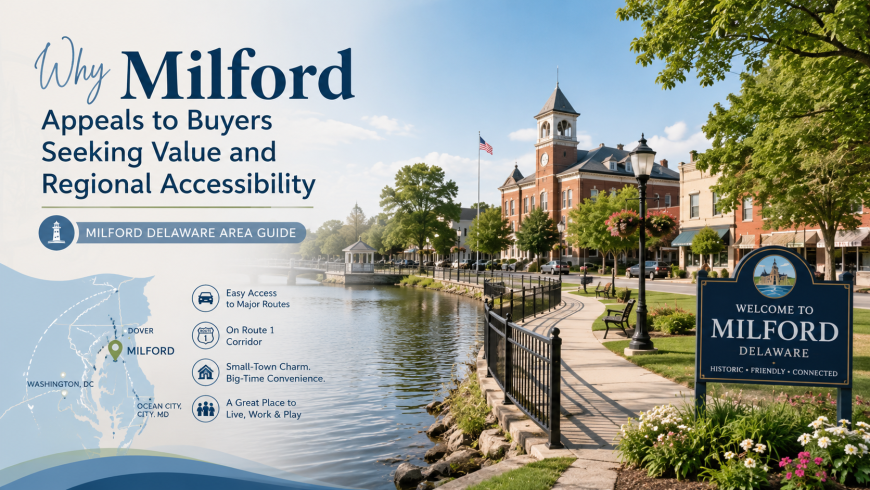
Buyers exploring Coastal Delaware often begin with the best-known beach towns. Rehoboth Beach, Lewes, Bethany Beach, and nearby coastal communities offer strong lifestyle appeal, but they can also come with higher property prices, seasonal congestion, and limited housing inventory. For buyers who want access to the region without living directly in a resort market, Milford presents a practical alternative.
This Milford Delaware Area Guide explains why the city appeals to buyers seeking value, year-round convenience, healthcare access, and stronger regional connections. Milford offers a distinct combination of small-town character, established services, varied housing options, and reasonable access to both coastal and inland destinations.
The city may not provide direct oceanfront living, but that is part of its appeal. Buyers can remain connected to the Delaware beaches while enjoying a more balanced residential environment.
Milford Offers More Value Than Many Coastal Markets
Housing affordability is one of the main reasons buyers consider Milford. Properties in prominent beach communities often carry premiums based on shoreline proximity, walkability, rental potential, and limited available land.
Milford may provide buyers with more flexibility in terms of home size, lot space, parking, storage, and neighborhood choice. Depending on the property, a buyer may be able to prioritize a garage, home office, guest room, or larger yard without reaching the same price level commonly associated with direct beach-town ownership.
A Milford DE Area Guide is especially useful for buyers comparing different property types. Milford includes established homes, newer construction, townhomes, planned developments, and properties near the downtown area. This variety allows buyers to make decisions based on lifestyle and budget rather than focusing only on proximity to the water.
Value should still be measured carefully. A lower purchase price does not automatically make a property the better long-term choice. Buyers should compare insurance, taxes, maintenance, utility costs, association fees, and anticipated repairs before making a decision.
Regional Accessibility Strengthens Milford’s Appeal
Milford’s location is one of its strongest advantages. Residents can travel toward Delaware’s beaches, inland communities, employment areas, shopping destinations, and healthcare services without being limited to one coastal corridor.
This regional accessibility is valuable for households with different daily routines. One family member may work locally, while another commutes to a nearby city or coastal area. Retirees may prioritize access to medical appointments, while remote workers may want a quieter home base with weekend access to the beach.
Road connectivity also makes Milford practical for buyers who travel regularly to visit family, attend appointments, or reach regional services. Instead of paying a premium to live directly beside the ocean, residents can treat beach visits as part of their broader lifestyle.
Travel times can still vary during summer, holidays, and major events. Buyers should test important routes at realistic times rather than relying only on mileage shown on a map.
Milford Supports Year-Round Residential Life
Many beach communities change dramatically between summer and winter. Businesses may reduce their hours, visitor activity decreases, and some neighborhoods become noticeably quieter.
Milford has a stronger year-round residential structure. Its economy is supported by healthcare, retail, education, professional services, government, small businesses, and local employment. This helps the community remain active even when coastal tourism slows.
For permanent residents, this consistency matters. Grocery stores, pharmacies, healthcare providers, repair services, restaurants, and professional offices are part of ordinary life rather than seasonal conveniences.
An Area Guide to Milford Delaware should therefore focus on more than the city’s distance from the beach. Buyers should also consider how easily they can complete daily errands, access medical care, maintain social connections, and reach employment throughout the year.
Healthcare Access Is an Important Buyer Consideration
Healthcare often becomes a major factor for retirees, families, and buyers planning to remain in the area long term. Milford’s access to medical services makes it attractive to people who do not want to travel deep into the coastal region for every appointment.
Living near primary care providers, pharmacies, emergency services, and regional healthcare facilities can make everyday life more manageable. It may also reduce stress when unexpected medical needs arise.
However, healthcare access should be evaluated at the property level. Buyers should confirm:
- Travel time to their preferred hospital or urgent care facility
- Availability of primary care providers accepting new patients
- Access to specialists and diagnostic services
- Proximity to pharmacies and prescription delivery options
- Traffic conditions along common medical routes
These details may not feel exciting during a home search, but they can have a greater effect on long-term satisfaction than many cosmetic property features.
Downtown Milford Adds Character and Community Connection
Milford offers more than practical convenience. Its downtown and riverfront areas contribute to a distinct local identity.
Independent businesses, restaurants, public spaces, community events, and historic architecture help the city feel established rather than purely suburban. The riverfront environment also provides opportunities for walking, outdoor activity, and local gatherings.
A Milford Delaware Community Guide should highlight how these spaces support everyday community life. Residents may visit local businesses, attend seasonal events, participate in community programs, or enjoy a walk near the river without traveling to a major attraction.
Downtown access may also appeal to buyers who prefer a more connected lifestyle. However, walkability varies by neighborhood. Prospective residents should evaluate sidewalks, road crossings, lighting, parking, and the actual distance between a property and useful destinations.
Milford Can Serve Different Types of Buyers
Milford’s housing options and location allow it to appeal to several buyer groups.
| Buyer Type | Why Milford May Appeal |
|---|---|
| Retirees | Healthcare access, manageable pace, and regional convenience |
| Families | Housing space, year-round services, and access to schools and parks |
| Remote workers | More room for home offices and a quieter residential setting |
| Coastal lifestyle buyers | Reasonable access to Delaware beaches without direct coastal pricing |
| Long-term homeowners | Established services and a community that functions year-round |
No single neighborhood will meet every buyer’s needs. Retirees may prioritize medical access and low-maintenance housing, while families may focus on schools, yard space, and daily travel.
The strongest decision comes from matching the property and neighborhood to the household’s actual routine.
Coastal Access Remains Part of the Lifestyle
Milford is not a beach town, but residents can still enjoy the wider Coastal Delaware region. Beaches, parks, waterways, dining destinations, and seasonal events remain accessible by car.
For many buyers, this creates a useful balance. They can spend a day near the ocean, enjoy coastal recreation, and return to a quieter residential setting afterward.
This arrangement may be particularly appealing to people who visit the beach occasionally rather than every day. Paying more for direct shoreline access may not provide enough value if most weekdays revolve around work, healthcare, shopping, family responsibilities, and local services.
Buyers should consider how often they realistically expect to use the beach. Someone who surfs daily may prefer a closer location. A household that visits several times per month may find Milford more practical.
Buyers Should Compare the Full Cost of Living
Affordability involves more than the purchase price. Buyers should compare all recurring and long-term expenses associated with a property.
Homes farther from the immediate coastline may face less exposure to salt air, wind, and direct storm effects, but they can still have insurance, drainage, and maintenance concerns. Planned communities may offer newer homes and shared amenities while adding association fees and community rules.
Important expenses include:
- Homeowners insurance and any required flood coverage
- Property taxes
- Association or community fees
- Heating, cooling, and utility costs
- Transportation expenses
- Home maintenance and future repairs
A lower-priced home with high recurring expenses may not provide as much value as expected. Property-specific quotes and professional inspections are essential.
A Practical Location Can Support Long-Term Flexibility
One reason Milford appeals to buyers is that it can adapt to changing priorities.
A family may initially value space and school access, then later prioritize healthcare and easier maintenance. A remote worker may eventually return to commuting. Retirees may want a home that remains manageable as mobility and healthcare needs change.
A Living in Milford Delaware Guide should help buyers evaluate whether the area can continue meeting their needs over time. The right home should offer more than immediate affordability. It should also support future transportation, healthcare, maintenance, and lifestyle changes.
Regional access can become increasingly valuable as household needs evolve. Living within reach of multiple communities allows residents to use services across a wider area rather than depending on one small market.
Milford Has Its Own Identity Beyond the Beaches
Milford should not be viewed only as a less expensive alternative to coastal towns. The city has its own history, riverfront, businesses, events, neighborhoods, and local culture.
This independent identity can make relocation more satisfying. Residents are not simply living outside a beach destination; they are joining a year-round community with its own rhythm.
Buyers who value local connection may appreciate the ability to become familiar with business owners, attend community events, and participate in civic or volunteer activities.
That sense of belonging often becomes more important than distance to the shoreline after the initial excitement of relocation has passed.
Final Thoughts
Milford appeals to buyers seeking value and regional accessibility because it combines housing flexibility, healthcare access, year-round services, community character, and convenient connections to the wider Delaware region.
It may not suit buyers who require immediate beach access or ocean views. However, it can be a strong fit for households that prefer a residential environment and are comfortable driving to coastal destinations.
The best approach is to compare neighborhoods, property types, ownership costs, travel routes, and daily services before purchasing. Buyers should also visit during different seasons to understand how the city and surrounding region function throughout the year.
For people who want access to Coastal Delaware without accepting the full cost and intensity of resort-town living, Milford offers a practical and appealing alternative.