Lithium Battery Recycling Plant Cost in India
Learn about lithium battery recycling plant cost in India, recycling process, required licenses, and lithium ion battery recycling companies in India. Understand investment, battery disposal methods, and business opportunities in the growing battery recycling industry.
 corpseed01
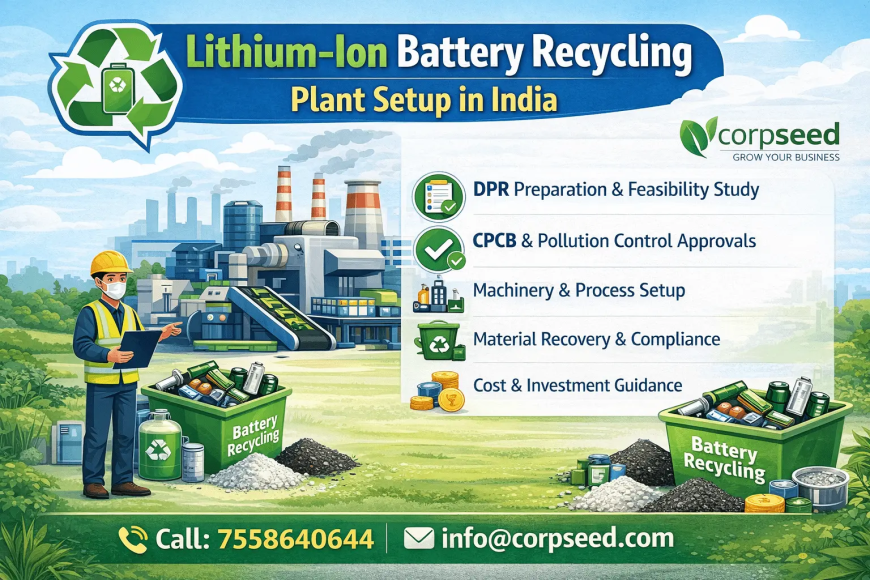
The rapid growth of electric vehicles, smartphones, and renewable energy storage devices has increased the demand for lithium battery recycling in India. Used lithium-ion batteries contain valuable resources like lithium, cobalt, and nickel, which can be recovered with li ion battery recycling.
To meet this demand, many industries are investing in lithium battery recycling plants, where these resources are recovered, reducing environmental hazards. It is necessary for industries to understand lithium battery recycling plant cost in India, battery disposal, and other requirements before entering this business.
What is Lithium Battery Recycling?
Recycling lithium-ion batteries involves collecting used lithium-ion batteries and processing them for recovering valuable resources. Rather than discarding lithium-ion batteries in landfills, industries can recycle lithium-ion batteries and use these resources for manufacturing new lithium-ion batteries.
Recycling lithium ion batteries involves disassembling lithium ion batteries and recovering resources like lithium, cobalt, and nickel using chemical and mechanical methods.
Recycling lithium ion batteries is a sustainable practice for strengthening a circular economy in lithium-ion battery industry.
Lithium Battery Recycling Plant Cost in India
The cost for the lithium ion battery recycling plant setup depends on the capacity of the plant, machinery, technology, and regulatory requirements.
Estimated Investment
|
Component |
Approximate Cost |
|
Land and infrastructure |
₹20 lakh – ₹1 crore |
|
Recycling machinery |
₹50 lakh – ₹3 crore |
|
Pollution control systems |
₹10 lakh – ₹40 lakh |
|
Government licenses |
₹5 lakh – ₹20 lakh |
|
Operational capital |
₹10 lakh – ₹50 lakh |
Total Estimated Cost
➡ ₹1 crore to ₹5 crore depending on the capacity of the plant.
Lithium Ion Battery Recycling Process
The process of disposing of lithium ion batteries at the recycling plant is as follows:
1. Battery Collection
The used lithium-ion batteries are collected from electric vehicle manufacturers or other industries.
2. Battery Discharge
The batteries are discharged before recycling to ensure safety against fire.
3. Dismantling
The batteries are dismantled to extract the casing, cathode, anode, etc.
4. Mechanical Shredding
In Mechanical Shredding, battery parts are shredded into “black mass,” containing lithium, cobalt, nickel, and graphite.
5. Chemical Recovery
The recycling of batteries through hydrometallurgical or pyrometallurgical methods recovers metals for reuse in the manufacturing of batteries and other products. This process not only allows for the safe recycling of lithium-ion batteries, but also recycles lithium batteries efficiently.
Battery Recycling Industry in India: Growth
The battery recycling industry in India is growing rapidly due to the rise of Electric Vehicle (EV) production and energy storage technology.
The primary drivers of this growth are:
-
Growing use of EVs in India
-
Regulatory requirements for the disposal of batteries
-
Extended Producer Responsibility (EPR) legislation
-
Increasing demand for recycled battery components
Due to these drivers, many new companies that focus on battery recycling and lithium-ion battery recycling have established recycling facilities utilizing modern recycling technology.
Lithium Ion Battery Recycling Companies in India
Many lithium-ion battery recycling companies are actively pursuing the recovery of metals from waste lithium-ion batteries in India.
For example:
-
Attero Recycling
-
Lohum Cleantech
-
Exigo Recycling
-
Tata Chemicals
The lithium-ion battery recycling companies in India are working together to develop a sustainable battery recycling system and implement new technologies for recovering valuable resources from discarded batteries.
Licenses Required for Lithium Battery Recycling Plant
To start a Li-Ion battery recycling plant, you’ll need to get approval from various regulatory agencies. Some of the major approvals you will need are:
-
Pollution Control Board
-
EPR registration for battery waste
-
Factory License
-
Environmental Clearance
-
Authorization for Hazardous Waste Management
-
Compliance is to ensure that you have a legal and safe means of recycling Li-Ion Batteries
Future of Lithium Battery Recycling in India
The lithium battery recycling market in India has a bright future. With the continued growth of electric vehicles (EVs), and millions of batteries coming off their productive cycle and needing recycled, will continue to create demand for recycling Lithium Batteries, Advanced Battery Recycling Plants, and effective means of disposal of Lithium batteries.
If your company invests in building up Li-Ion Battery Recycling capability early on, you will create opportunities for substantial long-term growth in this market.
Frequently Asked Questions (FAQs)
What is the cost of a lithium ion battery recycling plant in India?
The cost of a lithium ion battery recycling plant in India ranges from ₹1 crore to ₹5 crores depending on the capacity of the plant.
How does the lithium battery recycling process work?
The lithium battery recycling process involves discharging, dismantling, shredding, and chemical recovery of lithium ion batteries.
Why is recycling of lithium ion batteries important?
Recycling of lithium ion batteries is important as it helps in recovering valuable resources, reducing environmental pollution, and promoting sustainable battery production.
Are there lithium ion battery recycling companies in India?
Yes, lithium ion battery recycling companies in India like Attero Recycling and Lohum Cleantech are present.
Is lithium ion battery recycling a profitable business in India?
Yes, lithium ion battery recycling in India is a profitable business as more and more people are adopting electric vehicles, and strict environmental policies are in place.