Laser Trackers: Advanced Solutions for 3D Measurement and Alignment
Explore how Laser Trackers provide accurate 3D measurement, alignment, and inspection solutions across industries, improving precision, quality, and efficiency.
 eliannadaniel
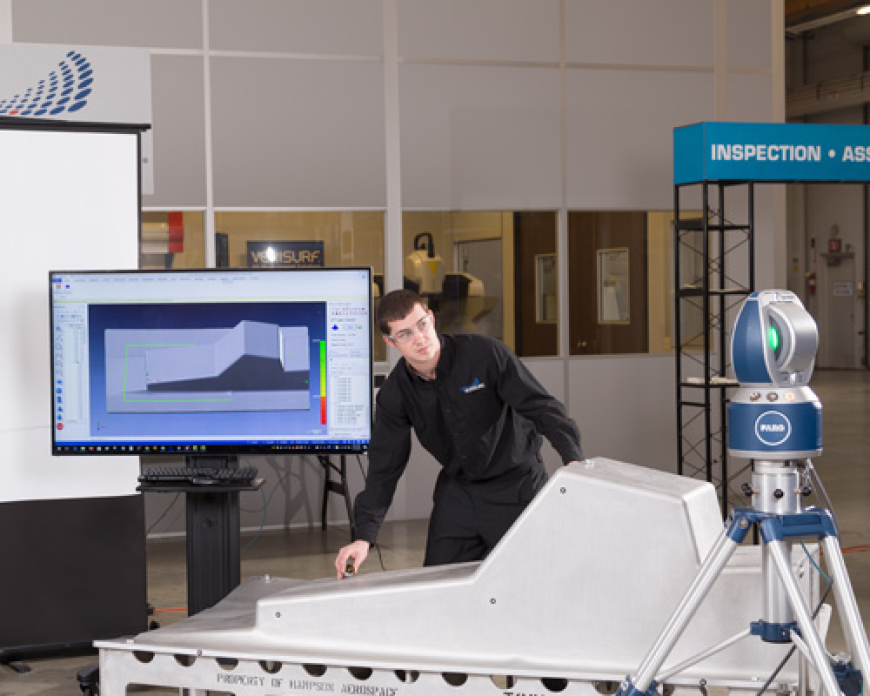
In precision-driven industries like aerospace, automotive, and energy, accuracy isn’t just important—it’s essential. Whether you’re aligning components, inspecting large assemblies, or ensuring machinery is correctly positioned, Laser Trackers offer a cutting-edge solution for achieving pinpoint precision. These advanced measurement tools have revolutionized how engineers and manufacturers approach quality control, alignment, and dimensional analysis.
To explore how laser tracker systems are transforming modern manufacturing and engineering, visit Laser Trackers and learn how industry experts deliver world-class precision and measurement accuracy.
What Are Laser Trackers?
Laser trackers are portable, high-precision measuring devices used to capture accurate 3D measurements over large distances. They operate by projecting a laser beam to a reflective target (usually a spherically mounted retroreflector, or SMR) and measuring the time it takes for the light to return. Using this data, the system calculates the exact position of the target in 3D space.
This technology allows engineers to measure, align, and inspect parts or structures with incredible accuracy—down to micrometres—even across distances of several metres.
How Do Laser Trackers Work?
Laser trackers use a combination of laser interferometry and angular encoders to determine precise coordinates. Here’s a simple breakdown:
-
The laser tracker emits a laser beam toward the SMR (reflective target).
-
The SMR reflects the beam back to the tracker’s sensor.
-
The system calculates the exact position of the target using the time-of-flight or phase shift method.
-
As the SMR moves around the object, the tracker continuously records position data, creating a detailed 3D model.
This process ensures fast, accurate, and repeatable measurements, making laser trackers ideal for large-scale manufacturing and engineering applications.
Applications of Laser Trackers in Modern Industries
Laser trackers have become an indispensable tool across various sectors where precision and alignment are critical.
1. Aerospace Industry
In aerospace manufacturing, even the smallest misalignment can have serious consequences. Laser trackers are used to measure aircraft components, align fixtures, inspect fuselage assemblies, and verify tool positioning—ensuring every part meets strict industry tolerances.
2. Automotive Manufacturing
In automotive production, Laser Trackers play a key role in body-in-white inspection, robot calibration, and component alignment. They help ensure that car frames, panels, and assemblies fit perfectly, improving both safety and efficiency.
3. Energy and Power Generation
In wind, nuclear, and power generation industries, laser trackers help align turbines, measure large components, and maintain heavy machinery. Their accuracy ensures optimal performance and minimal downtime.
4. Shipbuilding and Marine Engineering
For shipbuilders, aligning massive hull sections and verifying large structural components would be nearly impossible without laser trackers. Their portability and range make them ideal for use in large-scale maritime environments.
5. Industrial Equipment Installation
Laser trackers are widely used to align and install machinery in factories and industrial facilities. They ensure that equipment is positioned with absolute precision, preventing vibrations, inefficiencies, and early wear.
Key Benefits of Using Laser Trackers
Laser trackers provide several significant advantages over traditional measurement tools such as theodolites, tape measures, or coordinate measuring machines (CMMs).
1. Unmatched Accuracy
Modern laser trackers can measure with sub-millimetre precision, even over long distances. This level of accuracy ensures that every part and assembly meets exact engineering requirements.
2. High Efficiency
With their quick setup and automated data capture, laser trackers drastically reduce measurement time. Complex assemblies that once took days to inspect can now be measured in hours.
3. Portability
Unlike traditional CMMs that are fixed in one location, laser trackers are lightweight and portable. This flexibility allows engineers to perform accurate measurements directly on the shop floor or in the field.
4. Real-Time Data Visualization
Laser trackers are often integrated with 3D visualization software, allowing real-time monitoring of measurements. Engineers can immediately see deviations or errors and correct them on the spot.
5. Cost Reduction
By minimizing rework, improving quality control, and speeding up inspection processes, laser trackers help businesses reduce overall manufacturing costs while maintaining top-tier precision.
Laser Tracker vs. Traditional Measurement Tools
Traditional measuring methods often involve multiple instruments and manual calculations, which increase the risk of human error. In contrast, laser trackers provide:
-
Faster Measurements: Capturing data in real time with minimal setup.
-
Higher Accuracy: Sub-millimetre precision over long distances.
-
Digital Integration: Data can be seamlessly imported into CAD systems for analysis.
-
Reduced Human Error: Automated systems eliminate subjective measurement discrepancies.
For high-value projects, such as aerospace tooling or turbine installation, laser trackers have become the gold standard for reliable 3D metrology.
The Role of Software in Laser Tracker Systems
Modern Laser Trackers rely on powerful metrology software to collect, analyze, and report measurement data. These programs enable users to visualize components in 3D, perform virtual alignments, and generate detailed inspection reports instantly.
Advanced software also integrates with CAD systems, allowing engineers to compare live measurements with digital models. This real-time feedback ensures immediate error correction, improving manufacturing precision and efficiency.
How Laser Trackers Improve Alignment Processes
Alignment plays a crucial role in ensuring machinery, tooling, and assemblies function as intended. Laser trackers simplify complex alignment processes through:
-
Live Adjustment Feedback: Technicians can adjust components in real time while monitoring precise measurements.
-
Multi-Point Alignment: Trackers capture multiple reference points simultaneously for complex setups.
-
Automated Recalibration: Systems can automatically detect shifts and recalibrate for consistent accuracy.
Whether aligning jet engine mounts or industrial machinery, laser trackers ensure everything is positioned exactly as it should be.
Choosing the Right Laser Tracker for Your Application
When selecting a laser tracker, several factors determine which system best fits your needs:
1. Measurement Range
Different trackers are designed for different ranges—from compact devices for small-scale assemblies to long-range systems for large industrial spaces.
2. Accuracy Level
Depending on the application, you may require micron-level precision (for aerospace) or general millimetre accuracy (for construction alignment).
3. Portability and Setup Time
For field work, a lightweight, easy-to-deploy laser tracker is ideal. For fixed industrial environments, a more robust system may be better suited.
4. Software Compatibility
Ensure your tracker is compatible with your preferred CAD and metrology software for seamless data processing and reporting.
For expert guidance on choosing the ideal system, explore Laser Trackers—where specialists can help match your project needs with the right technology.
Maintenance and Calibration of Laser Trackers
Like all precision instruments, laser trackers require routine maintenance to ensure optimal performance. Regular calibration helps verify that the system continues to meet its accuracy specifications.
Manufacturers often recommend periodic service intervals and certified calibration from authorized providers. Proper maintenance not only extends the lifespan of the device but also guarantees reliable results over time.
Future Trends in Laser Tracking Technology
As technology evolves, laser tracking systems are becoming more powerful, user-friendly, and connected. Some exciting trends include:
1. Integration with AI and Automation
AI-driven tracking allows systems to self-correct, predict deviations, and optimize measurements automatically.
2. Wireless and Portable Designs
Next-generation laser trackers are smaller, lighter, and fully wireless, making them ideal for remote or confined environments.
3. Hybrid Measurement Systems
Combining laser tracking with photogrammetry or 3D scanning technologies enhances accuracy and data capture flexibility.
4. Cloud-Based Data Management
Future systems will allow real-time sharing and analysis of measurement data across teams globally, enabling faster collaboration and decision-making.
Why Businesses Are Investing in Laser Trackers
The growing demand for quality assurance, speed, and precision in modern manufacturing is driving the adoption of laser tracking technology. Companies investing in Laser Trackers gain a competitive advantage by improving product quality, reducing inspection time, and eliminating costly rework.
From aerospace assembly lines to heavy equipment installations, these systems are redefining what’s possible in large-scale metrology.
Conclusion
Laser Trackers have become an essential tool for achieving high-precision 3D measurement and alignment across multiple industries. Their unmatched accuracy, portability, and efficiency make them a game-changer for any organization that values precision and quality.