Jowar Atta – Why India's Weight-Conscious Households Are Making This Their Daily Flour
Diet culture in India has created complicated relationships with food. Here's why jowar atta offers a simpler, more sustainable approach to daily nutrition and weight management
 10on10foods
Why Jowar Atta Is Becoming the Default Flour for Weight-Conscious Indian Households
India's relationship with weight management has become increasingly complicated over the last decade. Diet trends arrive and depart — keto, intermittent fasting, low-carb, GM diet, juice cleanses. Each one requires a more dramatic departure from normal Indian eating patterns than the last. And each one, for most people, produces short-term results that don't survive contact with the realities of daily cooking, family meals, and the social food culture that's central to how Indians eat.
The households that are making sustainable progress with their daily nutrition aren't, in most cases, following dramatic dietary interventions. They're making smaller, more permanent changes to the ingredients in the meals they were already cooking. Jowar atta is one of the most practically impactful of those changes.
What Weight Management Actually Requires From Daily Food
Before looking at jowar atta specifically, it's worth being clear about what the body actually needs from food when weight management is a goal — because a lot of popular dietary advice gets this wrong in ways that make the approach unsustainable.
Effective weight management doesn't require eliminating carbohydrates. It requires managing the type and timing of carbohydrate intake in ways that support stable blood sugar, sustained satiety, and adequate fibre for digestive health. A low-glycaemic, fibre-rich carbohydrate source that the body processes slowly is not a weight management problem — it's a weight management asset. The problem is rapidly digesting, low-fibre refined carbohydrates that produce blood sugar spikes, early hunger return, and a hormonal environment that makes fat storage more likely.
Jowar atta addresses exactly this distinction. It's a carbohydrate — but one that the body processes very differently from refined wheat flour.
The Glycaemic Advantage That Makes Jowar Atta Useful for Weight Management
The glycaemic index of jowar atta is significantly lower than that of refined wheat flour or maida. When a roti made from jowar atta is eaten, the starch in the grain digests more slowly than refined wheat starch — because the bran layers are intact, because the fibre slows enzymatic breakdown, and because sorghum's starch structure itself has a lower digestibility rate than refined wheat.
The result is a flatter, more sustained blood sugar curve after a meal. Blood sugar rises moderately and falls moderately — rather than spiking sharply and dropping quickly. This flatter curve has two consequences that are directly relevant to weight management.
First, the satiety signal lasts longer. When blood sugar is maintained at a reasonable level for longer after eating, the hunger signal that triggers snacking or overeating at the next meal is delayed. People who eat jowar atta rotis for lunch consistently report feeling satisfied for longer than after equivalent wheat flour meals — a difference that accumulates across the daily caloric intake over weeks and months.
Second, the insulin response is more moderate. High insulin spikes, repeated regularly across multiple refined-carbohydrate meals per day, create a hormonal environment that favours fat storage and makes weight management considerably harder. A consistently lower insulin response from lower-glycaemic meals creates a more favourable hormonal environment for the body to access and use stored fat as energy.
The Satiety-Fibre Connection
Jowar atta's fibre content is another component of its weight management utility. Dietary fibre occupies space in the stomach and slows gastric emptying — the rate at which food moves from the stomach into the small intestine. This mechanical effect on satiety is independent of caloric content. A meal that takes longer to process produces a feeling of fullness that extends further than a calorically equivalent meal that processes quickly.
The practical significance for weight management is that jowar atta rotis are more filling per calorie than refined wheat rotis. Two jowar atta rotis provide meaningful fibre that extends satiety. Two refined wheat rotis of the same size provide considerably less fibre and a shorter satiety window.
For households trying to manage daily caloric intake without constantly fighting hunger — the experience that makes most diets unsustainable — this satiety advantage is genuinely valuable.
Why Jowar Atta Works Better Than the Diet Alternatives
The alternatives that weight-conscious households typically consider — low-carb replacements like cauliflower rice, quinoa, or almond flour — share a common problem: they require a fundamental departure from how Indian meals are structured and cooked. They're expensive, often difficult to source consistently, and require learning new recipes and cooking techniques that most household members don't accept immediately.
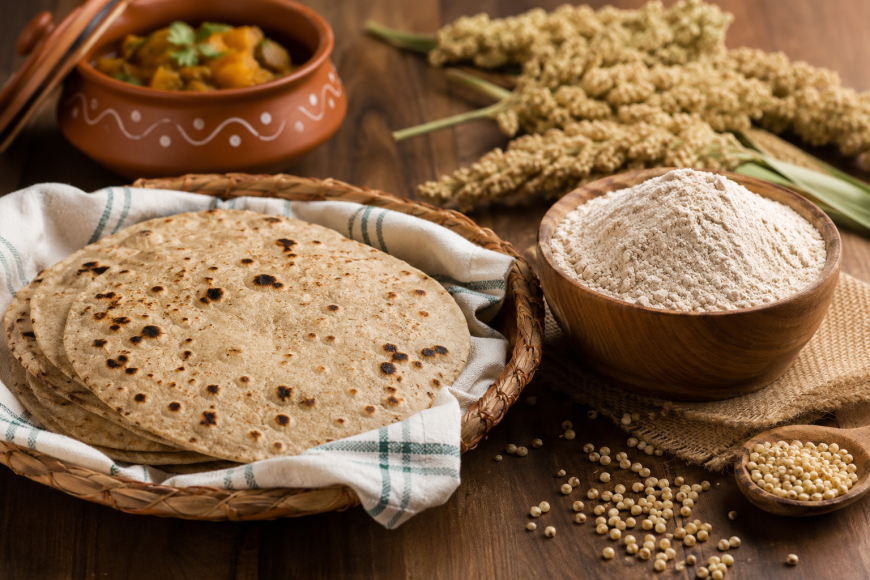
Jowar atta requires none of this. It produces rotis — the same format, the same cooking method, the same meal structure that Indian households already use. The switch is invisible to most family members, requires no new cooking skills, and produces meals that fit naturally into the existing culinary culture of the household. This compatibility with normal Indian eating patterns is precisely what makes jowar atta a sustainable choice rather than another dietary intervention that works briefly before abandoning it for convenience.
Using Jowar Atta in Daily Cooking — What to Know
The dough requires slightly more water than wheat atta and benefits from a few minutes of resting after kneading. Rolling is done with a light hand — jowar lacks gluten, so the roti doesn't stretch the way wheat does and is typically patted or rolled more carefully. The finished roti has a slightly firmer, earthier character than wheat roti — a difference most households adapt to within a week of regular use.
For households starting out, mixing jowar atta with a small proportion of wheat atta initially allows the family to adjust to the new texture gradually rather than all at once. Most households find they can transition to full jowar atta within two to three weeks.
10on10foods and Accessible Traditional Grain Products
For jowar atta to deliver its nutritional advantages consistently, the processing matters — over-milling degrades the bran layers that contain the fibre and micronutrients that make the flour valuable. 10on10foods processes its jowar atta to preserve these layers, ensuring that the flour consumers receive retains the properties that make it a meaningful nutritional upgrade rather than a label on otherwise ordinary flour.
For households making jowar atta a permanent feature of their kitchen rather than an occasional experiment, the consistency of sourcing and processing quality that 10on10foods provides makes the daily use reliably beneficial rather than variable.
The Sustainable Nutrition Shift
The households making the most durable progress on daily nutrition aren't the ones doing the most dramatic things. They're the ones making small, permanent changes to foundational ingredients — changes that compound over months into meaningfully different nutritional outcomes without requiring daily willpower or constant dietary discipline.
Jowar atta is exactly this kind of change. It fits where refined wheat already sits in the daily meal structure. It works in the same recipes. And it delivers nutritional characteristics — lower glycaemic response, higher fibre, better satiety — that support weight management through the most practical possible mechanism: better ingredients in the food the family was already eating.