Impact of Google Business Profile reviews vs third-party UK sites
An authoritative guide for UK SMEs on balancing Google Business Profile reviews with third-party directories to maximise local search visibility and authority.
 localukpage
In the rapidly evolving landscape of British commerce, the digital storefront has surpassed the physical one in primary importance. For SMEs, startups, and trade professionals across the United Kingdom, the question is no longer whether to be online, but where to exert the most effort. The tension between Google Business Profile (GBP) and third-party UK review platforms and directories is at the heart of modern local SEO. While Google remains the gateway to the internet, the UK’s unique ecosystem of niche directories and verified review sites provides a layer of trust and "Britishness" that a global algorithm cannot always replicate.
As we look toward 2026, the maturity of the UK digital market suggests a dual-pathway approach. Google Business Profile reviews are the fuel for the "Map Pack" visibility, yet third-party signals—often referred to as business citations—act as the foundation of credibility. For a UK local listings strategy to be effective, business owners must understand how these two forces interact to influence the consumer's journey from discovery to conversion.
The Current State of UK Local Discovery and SME Growth
Statistics suggest that the UK SME sector is more resilient than ever, with over 5.5 million small businesses contributing significantly to the national GDP. However, with this volume comes immense competition. Recent data indicates that over 80% of UK consumers search online before choosing a local service, and 72% of those consumers prioritize businesses with a high volume of recent, local reviews. Furthermore, digital marketing adoption among UK service providers has increased by 15% year-on-year, placing a premium on "Discoverability."
For retail businesses in London or healthcare clinics in Manchester, the "Near Me" search intent is dominated by Google. However, the conversion often happens after the user verifies the business on a UK company directory or a specialized trade platform. This "cross-pollination" of trust is what defines the modern UK consumer's path to purchase.
Industry Trends and the Shift Toward Verification
We are witnessing a significant shift in how "Social Proof" is calculated. In the past, a high star rating on Google was sufficient. Today, UK consumers are increasingly wary of "Review Spam." This has led to a resurgence in the importance of third-party sites that require verified proof of purchase or professional accreditation. For legal professionals and financial advisors, a listing on a curated SME directory uk provides a level of professional vetting that Google’s open-entry system lacks. Expert predictions for 2026 suggest that search engines will place even higher weight on these verified third-party signals to combat AI-generated misinformation.
Free UK Business Directories for SMEs
The barrier to entry for digital visibility has lowered, but the complexity of maintaining it has grown. Utilizing a Free company directory online is the first step for any new startup or freelancer. These platforms provide the necessary "NAP" (Name, Address, Phone Number) consistency that search engines crave. When a business is listed across multiple reputable UK platforms, it creates a "Network Effect," signaling to Google that the entity is legitimate and active within the UK market.
UK Local Business Directory Platforms for Service Providers
For service providers, such as plumbers, electricians, or digital agencies, specialized directories act as lead generation engines. Unlike Google, which is a broad discovery tool, a Free companies directory online often attracts users further down the sales funnel—people who are ready to hire. Hospitality businesses, in particular, benefit from this niche targeting, as tourists and locals alike look for "Best of" lists curated by local authorities rather than just a map pin.
Business Citations UK and Their Impact on SEO
A citation is any mention of your business online. For UK companies, these citations from a UK company listing sites act as digital votes of confidence. If your business appears on the local Chamber of Commerce, a trade-specific list, and a general UK directory, Google’s confidence in your location data increases. This directly impacts your ranking in the "Map Pack." For technology startups and digital marketing agencies, these citations are often the "Low-Hanging Fruit" that separates a page 1 result from page 3.
Expert Predictions: Local Search in 2026
Industry experts predict that by 2026, "Hyper-Localization" will be the dominant trend. Search engines will not just look at your distance from the user, but your "Community Engagement." This engagement is measured through reviews across multiple platforms. If a real estate agent has 100 reviews on Google but zero on any UK suppliers directory, it may look suspicious to newer AI-driven ranking algorithms. The future belongs to the "Omnipresent" SME—one that exists everywhere the customer looks.
SME Directory UK as a Trust Signal
Trust is the currency of the digital economy. For construction and trade services, where the average transaction value is high, trust is paramount. Listing your business in a B2B directory uk allows for peer-to-peer verification. Financial advisors and healthcare clinics also find that these platforms provide a "Safe Space" for client testimonials that are shielded from the volatility of generic search engine reviews.
Register Company Directory UK for Competitive Edge
The act of choosing to Register company directory uk profiles is a proactive SEO strategy. It allows you to control the narrative of your brand. By optimizing these listings with high-quality images, detailed service descriptions, and local keywords, you occupy more "Digital Real Estate." When a potential client searches for your brand name, you want the entire first page to be filled with your assets—your website, your GBP, and your high-authority directory profiles.
Strategic Industry Comparison: Marketing Channels
| Strategy | Cost | Visibility | Lead Potential | Best For |
|---|---|---|---|---|
| SEO Content | Medium | High | Medium | Long-term traffic |
| Paid Ads | High | High | High | Immediate campaigns |
| Business Directories | Low | High | High | Local discovery |
| Social Media | Medium | Medium | Medium | Brand awareness |
Beginner Action Plan for Local Discovery
- Claim Your Google Business Profile: Ensure all details are 100% accurate and match your official registration.
- Audit Your Citations: Use a search to find existing mentions and correct any outdated addresses or phone numbers.
- Submit to Top UK Directories: Focus on high-authority sites like Local Page to build an initial foundation.
- Keyword Optimization: Include your primary service and city in your listing descriptions.
- Review Management: Create a simple process to ask every satisfied customer for a review, alternating between Google and third-party sites.
- Visual Content: Upload at least 5-10 professional photos of your work, team, or office to every profile.
Advanced Strategies for Market Leaders
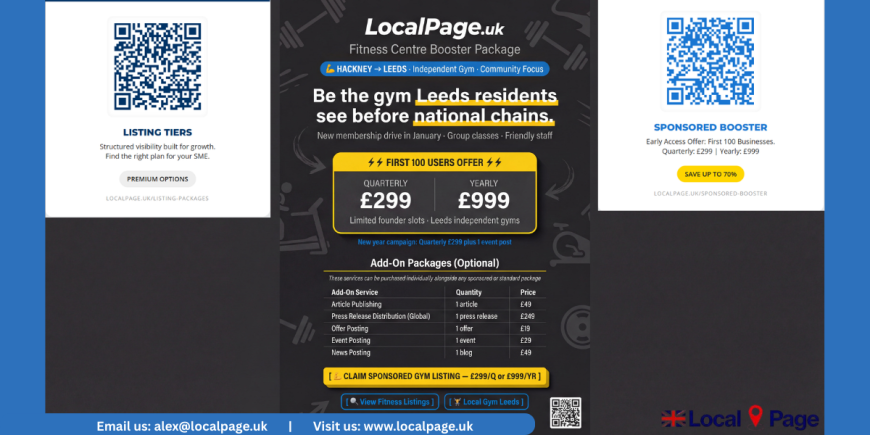
For established businesses, a basic listing is not enough. Market leaders employ "Reputation Management Systems" that automatically prompt customers for reviews based on their experience. They also utilize "Multi-Location Listings" to dominate several postcodes simultaneously. Furthermore, "Directory-Based SEO" involves publishing unique articles or offers directly onto your directory profiles, which can sometimes rank independently for niche long-tail keywords. Sponsored visibility on these platforms can also provide a "Shortcut" to the top of category searches during peak seasonal periods.
What are UK business directories?
UK business directories are online platforms where companies list their services so customers can find them through category or location searches. They act as a digital phonebook, providing essential business data like contact info, maps, and reviews to help local consumers make informed hiring or purchasing decisions across the United Kingdom.
Industry-Specific Use Cases
Retail: Local shops use directories to drive foot traffic by highlighting "In-Store Only" events or new stock arrivals. Hospitality: Restaurants use third-party reviews to rank for "Best [Cuisine] in [City]" searches, which are often dominated by directory aggregators. Legal & Finance: Professional services use these platforms to showcase accreditations and build a profile of "Authoritative Trust" that is separate from their own website.
FAQ
What is a UK business directory?
It is a curated online database that categorizes UK-based businesses by industry and location to facilitate consumer discovery.
Are free UK business listings effective?
Yes, they are highly effective for SEO as they build NAP consistency and provide valuable backlinks to your main website.
How do citations help SEO?
Citations validate your business’s physical existence and location, which increases Google’s confidence in ranking you for local searches.
What information should a business listing include?
At a minimum, include your business name, address, phone number, website URL, opening hours, and a clear description of services.
Do directories help generate leads?
Absolutely. Many users visit directories specifically looking for a service provider, meaning they have high "Commercial Intent" compared to general searchers.