Hydraulic Clamping Unit: Why a 3 Jaw Chuck is Essential for Precision Machining
 nutanswami
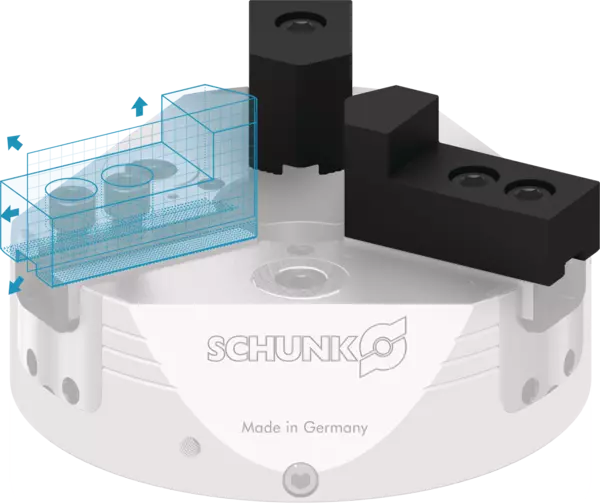
Precision machining forms the backbone of modern manufacturing, enabling industries to produce complex components with exceptional accuracy and consistency. Whether manufacturing automotive engine parts, aerospace components, medical devices, or industrial machinery, maintaining secure workholding throughout the machining process is critical for achieving high-quality results. Even the most advanced CNC machines cannot deliver consistent performance if the workpiece is not clamped accurately.
Among the most important workholding technologies used in machining are the hydraulic clamping unit and the 3 jaw chuck. These systems provide the stability, rigidity, and positioning accuracy required for high-speed machining while reducing setup time and improving operational efficiency. As manufacturers increasingly adopt automation and smart manufacturing practices, advanced clamping solutions have become indispensable for achieving higher productivity and superior machining quality.
The Role of Workholding in Modern Manufacturing - H2
Every machining operation depends on one fundamental requirement—the workpiece must remain securely positioned throughout the cutting process.
During machining, cutting tools generate significant forces that can cause vibration, movement, or misalignment if the workholding system is inadequate.
An efficient clamping solution helps manufacturers achieve:
-
Higher machining accuracy
-
Better surface finish
-
Improved dimensional consistency
-
Reduced vibration
-
Longer tool life
-
Faster production cycles
-
Improved operator safety
-
Greater machine utilisation
Reliable workholding therefore has a direct impact on both productivity and product quality.
What is a Hydraulic Clamping Unit?
A hydraulic clamping unit is a workholding system that uses hydraulic pressure to generate powerful and consistent clamping force. Unlike manual clamping methods, hydraulic systems apply uniform pressure across every production cycle, ensuring secure workpiece positioning with minimal operator effort.
Hydraulic clamping is widely used in precision machining because it combines high holding force with excellent repeatability, making it suitable for demanding industrial applications.
These systems are commonly integrated into:
-
CNC turning centres
-
Machining centres
-
Milling machines
-
Grinding machines
-
Flexible manufacturing systems
-
Automated production lines
Their ability to deliver stable and repeatable clamping makes them a preferred choice in high-volume manufacturing.
How a Hydraulic Clamping Unit Works
A hydraulic clamping unit operates by converting hydraulic fluid pressure into mechanical clamping force.
The basic process includes:
-
Hydraulic pressure is generated by the system.
-
The pressure activates the clamping mechanism.
-
The workpiece is securely clamped.
-
Machining operations are performed.
-
Hydraulic pressure is released after machining.
-
The finished component is removed safely.
Because hydraulic pressure remains consistent throughout machining, the workpiece stays firmly positioned even during heavy cutting operations.
Benefits of Hydraulic Clamping Units
High Clamping Force
One of the greatest advantages of hydraulic clamping is its ability to generate substantial holding force with minimal manual effort.
This ensures excellent workpiece stability during aggressive machining.
Superior Positioning Accuracy
Hydraulic systems provide highly repeatable clamping pressure, reducing positional variations between components.
This contributes to consistent dimensional accuracy across production batches.
Reduced Vibration
Stable workholding minimises vibration during machining.
Reduced vibration improves:
-
Surface finish
-
Tool life
-
Cutting stability
-
Machine performance
-
Component quality
Faster Setup Times
Hydraulic clamping significantly reduces manual adjustment compared with traditional mechanical clamping methods.
Faster setup improves machine utilisation and overall productivity.
Automation Compatibility
Hydraulic clamping systems integrate easily with automated machining centres and robotic loading systems, making them suitable for Industry 4.0 manufacturing environments.
Applications of Hydraulic Clamping Units
Hydraulic clamping supports a wide range of manufacturing processes.
Common applications include:
-
CNC turning
-
Milling
-
Grinding
-
Drilling
-
Boring
-
Precision machining
-
Heavy-duty machining
-
Automated manufacturing
-
Fixture systems
-
Flexible production cells
Their versatility allows manufacturers to handle both simple and highly complex machining operations efficiently.
Understanding the 3 Jaw Chuck
A 3 jaw chuck is one of the most commonly used workholding devices in CNC lathes and conventional turning machines. It features three jaws that move simultaneously towards or away from the centre, automatically centring round or hexagonal workpieces.
Because all three jaws move together, setup is both quick and accurate, making the chuck ideal for high-volume production environments where speed and repeatability are essential.
Its self-centring design has made it a standard workholding solution across numerous machining applications.
How a 3 Jaw Chuck Works
The chuck operates through a scroll mechanism that synchronises the movement of all three jaws.
When the chuck key or actuator rotates the scroll plate:
-
All three jaws move simultaneously.
-
The workpiece is centred automatically.
-
Equal gripping force is applied around the circumference.
-
The workpiece remains securely positioned during machining.
This mechanism simplifies setup while maintaining reliable concentricity.
Advantages of a 3 Jaw Chuck
Quick Workpiece Setup
Because the chuck centres the workpiece automatically, operators spend less time adjusting component alignment.
This significantly reduces machine downtime.
High Repeatability
Consistent jaw movement provides repeatable positioning for multiple production cycles.
Repeatability is particularly valuable in batch manufacturing.
Secure Workholding
Equal gripping pressure across three jaws provides stable clamping for cylindrical components.
Stable workholding improves machining quality while reducing vibration.
Increased Productivity
Shorter setup times enable manufacturers to complete more machining operations within the same production schedule.
This contributes directly to higher productivity.
Versatile Applications
A 3 jaw chuck accommodates numerous round and hexagonal workpieces across different machining operations.
Its flexibility makes it suitable for both general-purpose and precision manufacturing.
Industries That Use Hydraulic Clamping Units and 3 Jaw Chucks
These technologies support a wide variety of industrial sectors.
Major applications include:
-
Automotive manufacturing
-
Aerospace engineering
-
Medical device production
-
Oil and gas equipment
-
Machine tool manufacturing
-
Heavy engineering
-
Defence manufacturing
-
Industrial equipment
-
Energy sector
-
Precision engineering
Their reliability makes them essential across modern machining operations.
Hydraulic Clamping Unit vs Conventional Clamping
Compared with manual clamping systems, hydraulic clamping offers several operational advantages.
Hydraulic systems provide:
-
Higher clamping consistency
-
Faster setup
-
Greater holding force
-
Improved repeatability
-
Reduced operator fatigue
-
Better automation compatibility
These advantages contribute to greater machining efficiency and improved production quality.
Choosing the Right Workholding Solution
Selecting the appropriate workholding system requires evaluating several operational factors.
Manufacturers should consider:
-
Workpiece size
-
Component geometry
-
Required clamping force
-
Machining operation
-
Production volume
-
Machine compatibility
-
Automation requirements
-
Accuracy requirements
-
Maintenance needs
-
Future production flexibility
Careful evaluation ensures long-term productivity and process reliability.
Future Trends in Workholding Technology
Workholding systems continue to evolve alongside advances in digital manufacturing.
Emerging developments include:
-
Smart hydraulic clamping systems
-
Sensor-integrated chucks
-
Real-time clamping force monitoring
-
Predictive maintenance
-
IoT-enabled workholding
-
Automated setup verification
-
AI-assisted process optimisation
-
Industry 4.0 connectivity
These innovations will enable manufacturers to further improve machining accuracy, equipment reliability, and operational efficiency.
Conclusion
A reliable hydraulic clamping unit is essential for achieving secure workholding, improved machining accuracy, and higher production efficiency in modern manufacturing. When combined with the precision and versatility of a 3 jaw chuck, manufacturers can significantly reduce setup times, improve repeatability, and maintain consistent product quality across high-volume production environments. As industrial automation and precision engineering continue to advance, innovative workholding technologies will remain fundamental to efficient machining operations. SCHUNK continues to deliver advanced clamping and workholding solutions that help manufacturers optimise machining performance, increase productivity, and meet the evolving demands of modern manufacturing industries.