E-commerce vs Marketplace: Should Your UAE Business Build Its Own Store or Sell on Amazon/Noon?
Should your UAE business build its own ecommerce store or sell on Amazon and Noon? Learn the pros, cons, and insights from a trusted web development company in UAE.
 michaal_moris
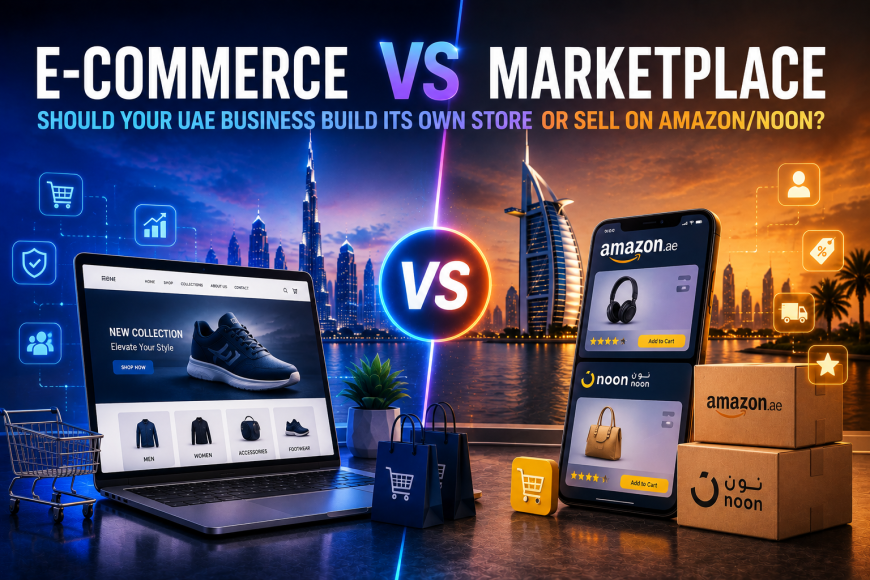
This is one of the first real strategic decisions any UAE seller faces, and the advice has genuinely shifted in the last few years. The old conventional wisdom was simple: start on Amazon or Noon, prove your product, build capital, then eventually build your own store. That made sense a few years ago. It's more complicated now, and getting this call wrong is genuinely expensive either way.
The UAE ecommerce market is projected to reach around AED 27.8 billion by 2026, growing at roughly 14.3% annually, one of the fastest growth rates in the world. That's real opportunity, but the wrong strategy for capturing it can burn through a startup's budget fast. Here's how to think through it properly, and where a web development company in UAE businesses trust for their own store fits into the picture.
Why This Decision Is Harder Than It Used to Be
A few years ago, marketplaces were an easy on-ramp: list a product, get organic visibility, and build from there. That's changed. Both Amazon.ae and Noon have matured their advertising platforms significantly, and organic visibility on either marketplace has compressed as a result. A new seller listing a product today without a paid advertising budget should expect minimal organic traffic in competitive categories. The "just list it, and they will come" era is largely over.
At the same time, launching directly with your own store carries its own risk. A brand with no existing audience often burns through marketing budget trying to drive traffic to a store nobody has heard of yet, competing against marketplaces that already have millions of active monthly users.
The Case for Selling on Marketplaces
- Built-in traffic. Amazon.ae reaches over 6 million active users, and Noon reaches approximately 5 million, audiences you'd otherwise have to build from scratch.
- Trust is already established. Buyers trust these platforms with their payment details and return policies, removing a major friction point new brands normally have to overcome.
- Fulfillment infrastructure exists. Amazon's FBA and Noon Express handle storage, packing, and delivery, which matters a lot for a small team without warehouse operations.
- Lower technical barrier to start. You can list products without building any technical infrastructure yourself.
The tradeoff: marketplace fees eat into margins, you don't own the customer relationship or their data, and you're competing directly against other sellers on the same platform, sometimes including the marketplace's own private-label products.
The Case for Your Own Store
- You own the customer relationship. Every sale on your own store gives you the customer's data, purchase history, and the ability to market to them again directly, something a marketplace sale never gives you.
- Better long-term margins. Without marketplace commission fees, your unit economics improve significantly over time, especially as repeat customers grow.
- Full brand control. Your own store lets you control the entire customer experience, from design to checkout to post-purchase communication, rather than working within a marketplace's fixed template.
- You're building an asset, not just revenue. A brand that sells exclusively through marketplaces will often discover, two to three years in, that it built a revenue stream with no underlying asset, because the customer relationship, the data, and the repeat business all belong to the platform, not the seller.
The tradeoff: you're responsible for driving your own traffic, building trust from scratch, and handling technical infrastructure, payments, and fulfillment yourself.
What Most Successful UAE Sellers Actually Do
In practice, the smartest sellers rarely pick one exclusively. Many run both Amazon and Noon simultaneously to reach different buyer segments, while also building their own store as a long-term asset. The combined reach across marketplaces plus a direct-to-consumer channel is consistently stronger than relying on any single channel alone.
A reasonable sequencing for a new UAE business:
- Validate demand on a marketplace first if you're genuinely unproven; the built-in traffic reduces your early risk.
- Start building your own store in parallel, even at a small scale, so you're not starting from zero once marketplace competition intensifies.
- Use marketplace sales data to understand what resonates before investing heavily in your own store's positioning and inventory.
- Shift proportionally toward your own store as you build brand recognition, so you're not permanently dependent on platforms you don't control.
A Real Example: Building the Owned Channel Early
It's easier to see how this plays out with a real project.
Bootesnull, a web and app development company, has built apps for clients who were already selling successfully on marketplaces but needed their own store to reduce platform dependency and start capturing customer data directly, a project that paid off specifically because it started before marketplace competition and rising ad costs made new-brand visibility even harder to achieve. Waiting too long to build that owned channel tends to make the eventual transition more expensive, not less.
If you're planning your own store alongside marketplace selling, a solid web development company in UAE startups can rely on should understand both sides of this equation, not just build you a store, but help you think through how it fits alongside your existing marketplace strategy.
Final Thoughts
There's no universally correct answer between marketplaces and your own store; the smartest UAE sellers increasingly use both, treating marketplaces as a distribution channel and their own store as the long-term brand asset. What matters is not defaulting into one path by accident. Partner with a web development company in UAE that businesses can trust to build that owned channel properly, and decide deliberately based on your product, your budget, and how much you value owning the customer relationship versus accessing built-in traffic today.
Frequently Asked Questions
1. Should I start with a marketplace or my own store as a brand-new seller?
If you're completely unproven, starting on a marketplace like Amazon.ae or Noon can reduce early risk thanks to built-in traffic. But it's worth building your own store in parallel rather than waiting, since marketplace competition tends to intensify over time.
2. How much do marketplace fees actually cost compared to running my own store?
Marketplace commissions typically range from roughly 8% to 25% depending on category and platform, on top of any advertising spend needed for visibility. Your own store avoids these commissions but requires investment in driving traffic and conversion yourself.
3. Can I sell on Amazon, Noon, and my own store at the same time?
Yes, and many successful UAE sellers do exactly this. Running multiple channels simultaneously is manageable with the right systems in place and generally reaches more total customers than relying on a single channel.
4. Is it too late to launch my own ecommerce store if marketplaces already dominate?
No, but it does mean you need a clearer strategy than simply listing products and waiting for traffic. Combining paid marketing, a strong product, and genuine brand positioning still works; it just requires more intentional effort than a few years ago.
5. What's the biggest risk of selling exclusively through marketplaces long-term?
The biggest risk is building a business with no owned customer relationship or data, meaning if the platform changes its fees, algorithm, or policies, your entire revenue stream is vulnerable to decisions you don't control.