From Views to Visibility: How Video Marketing Boosts SEO Performance
Learn how video marketing boosts SEO performance. Turn views into search visibility with strategies that improve indexing, engagement, and rankings.
 Gowtham Krishna
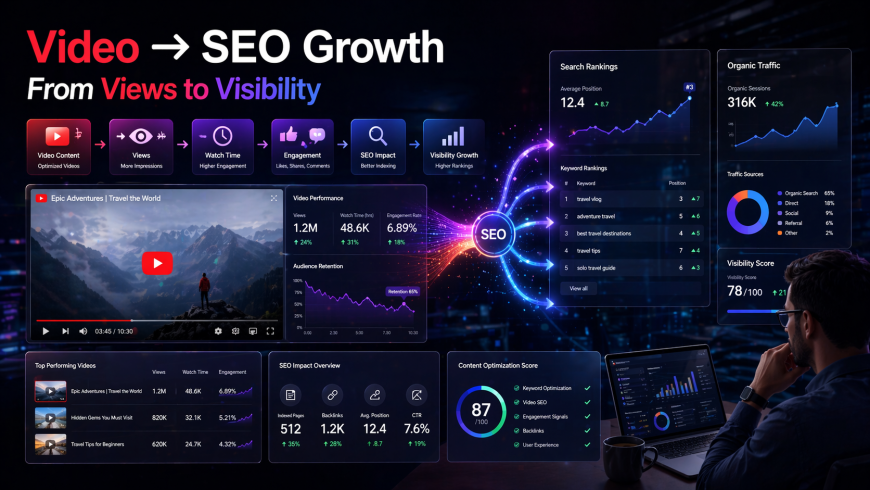
Views pile up fast. Millions scroll past daily. But visibility? That requires search engines to actually understand what your video says, why it matters, and who needs it. The gap between racking up play counts and showing up when someone types a question into Google is wider than most brands realize. Video marketing boosts SEO performance when it's built to be discovered, not just watched. Search algorithms now parse spoken words, interpret visual context, and rank video alongside written content, which means the rules for getting found have fundamentally shifted. Smart teams embed video into their search engine optimization strategy because visibility compounds over time, while views disappear the moment you stop posting.
How Video Marketing Boosts SEO Performance in 2026
Search engines consume video differently now. They extract meaning from transcripts, rank based on engagement signals, and surface video snippets directly in results pages. When someone searches for a solution your video explains, algorithms assess whether your content deserves the top spot by measuring dwell time, click behavior, and how well your metadata matches intent. Visibility stems from being useful enough that both humans and machines recognize your content as the answer, which is why video now functions as a trust and relevance signal that written content alone can't replicate.
Why Search Engines Now "Understand" Video Content
- From Text Crawling to Multimodal Understanding: - Algorithms don't just host video anymore. They analyze what's said, what's shown, and how it connects to the surrounding text. Multimodal search combines voice, visuals, and written context to determine if your video genuinely addresses what someone's looking for. Transcripts feed crawlers the exact language you use, which means every spoken keyword becomes searchable text that strengthens topical relevance. This shift means search engines interpret meaning across formats instead of treating video as a black box.
- What Search Engines Look for Inside a Video: - Clarity matters. Algorithms scan for topic coherence, expertise markers, and consistency between what you say on camera and what's written on the page. If your video claims to explain something but the transcript is vague or off-topic, it won't rank. Search models also weigh whether your content delivers what the title promises, how structured your explanation is, and whether you reference credible entities or concepts. Rambling content gets deprioritized, while step-by-step breakdowns and direct answers rise.
The Real SEO Value of Video Beyond Rankings
- Dwell Time as a Quality Signal: - People stay longer when video gives them a reason to. Extended session duration signals to search engines that your page satisfied the query, which influences how algorithms assess quality. When someone clicks into your site, watches a three-minute explainer, and explores related content, that behavior pattern reinforces relevance. Engagement validates usefulness in ways that text alone struggles to achieve, especially for complex topics where visual demonstrations clarify faster than paragraphs.
- Click Behavior and Visual SERP Advantage: - Thumbnails catch attention in search results. Video-rich snippets generate higher click-through rates because they visually differentiate your content from text-only listings. When users see a thumbnail paired with a clear title and duration, they're more likely to click, which directly impacts SEO performance. The visual element acts as a quality pre-filter. People self-select into your content when the preview matches their intent, which reduces bounce rates and improves engagement metrics.
- Conversion Lift and SEO Feedback Loops: - Visitors who watch videos convert more often. Higher conversion rates create positive feedback loops where improved user satisfaction signals content quality to algorithms. When someone watches your video marketing strategy breakdown and then fills out a form or explores your services, search engines register that as a successful outcome. These conversion signals indirectly strengthen rankings because they prove your content delivers value past the initial click.
Dual Discovery Is the Hidden SEO Advantage of Video
- Google and YouTube as Parallel Search Engines: - Publishing video creates two entry points. YouTube functions as the second-largest search engine, which means your content gets indexed separately and reaches audiences who start their search on video platforms. YouTube citations now appear frequently in AI Overviews for product and service queries, proving that video feeds directly into Google's answer systems and creates search visibility beyond traditional rankings. This dual discovery multiplies visibility without doubling effort, especially for long-tail queries where video tutorials dominate results.
- Social Search as an SEO Accelerator: - Gen Z searches differently. Nearly half of Gen Z users search more frequently on social and video platforms than they did three years ago. Eighty-six percent of Gen Z internet users search on TikTok weekly, making it nearly as common as traditional search engines. Platforms like Instagram and TikTok now function as discovery engines where visual content surfaces before users ever hit Google. Platform behavior is evolving fast, and staying current with changes like Instagram's latest feature rollouts helps you meet audiences where they start searching, then guide them back to your content strategically.
How Video Content Gets Indexed and Surfaced in 2026
- Transcripts as the SEO Backbone: - Captions matter more than descriptions. Transcripts convert spoken content into text that search engines can crawl, which means every keyword mentioned in your video becomes indexable. One study found that pages with transcripts earned 16% more revenue than before transcripts were added. Manual transcripts outperform automated ones when accuracy matters, but even auto-generated captions dramatically improve discoverability compared to video without any text layer. The transcript sits on your page as a permanent SEO asset that reinforces topical authority.
- Video Snippets and AI Overviews: - Search engines extract answers directly from video now. Google pulls key moments, displays timestamps, and surfaces video snippets for how-to queries and step-by-step explanations. Video snippets are the most resilient format in AI-heavy search results because algorithms can't fully summarize a video, so they still send users to watch it. This makes video the most click-friendly snippet type when AI Overviews dominate the top of results. Structured content with clear chapter markers and procedural language wins this visibility game.
Technical SEO Foundations That Make Video Work
- Schema That Helps Search Engines Trust Your Video: - VideoObject schema tells search engines exactly what your video contains. Adding structured data like title, description, thumbnail, upload date, and duration helps your content appear as rich snippets with clickable timestamps. Clip markup highlights specific sections, making your video more interactive and AI-friendly. These schema tags bridge the gap between what your video shows and what search algorithms can recognize, which directly impacts whether you get featured.
- Performance Without Page Speed Sacrifice: - Video files slow pages down unless you optimize. Compressing with H.264 or AV1 codecs, serving through a content delivery network, and enabling lazy loading ensures pages render fast while still hosting video. Core Web Vitals matter for rankings, so balance video quality against load times. Videos that take ten seconds to buffer kill engagement, which defeats the entire SEO advantage.
- Video Sitemaps and Crawlability: - Videos go unseen without proper indexing. Video sitemaps explicitly tell search engines where your video files live and what they contain. Submitting a video sitemap through Search Console ensures crawlers find and index your content instead of overlooking it buried in page code. This step separates discoverable video from content that technically exists but never surfaces in results.
How to Structure Video Content for SEO Impact
- Front-Loaded Titles That Match Search Intent: - Keyword placement matters without stuffing. Titles should clearly indicate what the video covers using the exact language people search for. Clarity beats cleverness. "How to Optimize Video Metadata for SEO" ranks better than "Meta Magic: Secret Sauce for Visibility" because the first version matches how users phrase queries. Front-load your primary keyword naturally in the first few words for maximum effect.
- Descriptions That Feed Search Models: - Context outperforms promotion. Video descriptions should explain what viewers will learn, using semantic-rich language that reinforces the topic. Timestamps and section markers improve user experience and provide additional indexing signals. Avoid generic placeholder text like "watch this video to learn more" and instead write paragraph-form descriptions that expand on the title with related keywords naturally integrated.
- Script Writing for Search Visibility: - Clear signposting language helps algorithms extract meaning. When you verbally state section transitions or summarize key points within your video, transcripts become more structured and search-friendly. Procedural clarity means explaining steps explicitly rather than relying on visual-only cues. This dual approach serves both viewers who watch and search engines that read the transcript.
Short-Form vs Long-Form Video for SEO
- When Short-Form Wins: - Retention rates stay higher with shorter content. Sixty-second explainers keep viewers engaged from start to finish, which boosts average view duration metrics. Social discovery favors short form because platforms prioritize content that holds attention and gets shared quickly. When your goal is reach and rapid engagement, short form dominates.
- When Long-Form Still Matters: - Authority requires depth. Long-form video establishes expertise on complex topics where quick tips fall short. Ten minutes of clear explanation often ranks better than two minutes of surface-level content because algorithms prefer comprehensive sources they can reference. Long-form also captures more long-tail keywords naturally through extended discussion, which multiplies discoverability across niche queries.
Emerging Video SEO Trends Brands Are Adopting
- Generative Engine Optimization for Video: - AI systems now extract and cite video content in generated summaries. Making your video extractable means using named entities, clear topic statements, and public transcripts that AI models can access. The more question-focused and well-documented your videos are, the higher their chances of being referenced in AI-generated answers or overviews.
- Interactive Video as a Conversion Signal: - Engagement depth matters. Interactive elements like embedded quizzes or clickable chapters transform passive watching into active participation. These engagement signals indicate higher-quality user experiences, which algorithms factor into visibility decisions. User participation extends session duration and provides behavioral proof that your content delivers value.
- Personalized Video at Scale: - Localization opens new search opportunities. Creating region-specific or audience-specific versions of video content helps you rank for localized queries and speak directly to niche segments. Personalization at scale means templates that adapt messaging while maintaining technical SEO fundamentals across variants.
Common Video SEO Mistakes Brands Still Make
Publishing without transcripts wastes crawl potential. Search engines can't index what they can't read, so skipping transcripts leaves your video invisible to text-based queries. Treating video as decoration rather than functional content misses the engagement advantage. Ignoring performance impact by embedding massive files without compression slows pages and hurts Core Web Vitals. Chasing views instead of visibility focuses energy on vanity metrics that don't correlate with search rankings or conversions. These mistakes are fixable, but they cost brands months of missed organic traffic.
Conclusion: Build Video That Gets Found, Not Just Watched
Video marketing strengthens SEO when it answers questions clearly, gets indexed properly, and keeps people engaged long enough to validate relevance. Algorithms reward content that serves user intent across formats, which means video is no longer optional for competitive visibility. The brands winning in 2026 are those that build video into their content strategy from the start, optimize for dual discovery across Google and social platforms, and structure every element to be both human-friendly and machine-readable. Visibility compounds when video becomes part of how you show up, not just what you post.