How to Keep Boiler Feed Systems Running Without Costly Downtime
Numbers like these explain why boiler feed systems deserve closer attention in most industrial maintenance programs. When feedwater quality, pump performance, or deaerator function drift out of spec, the effects show up fast.
 businessadd
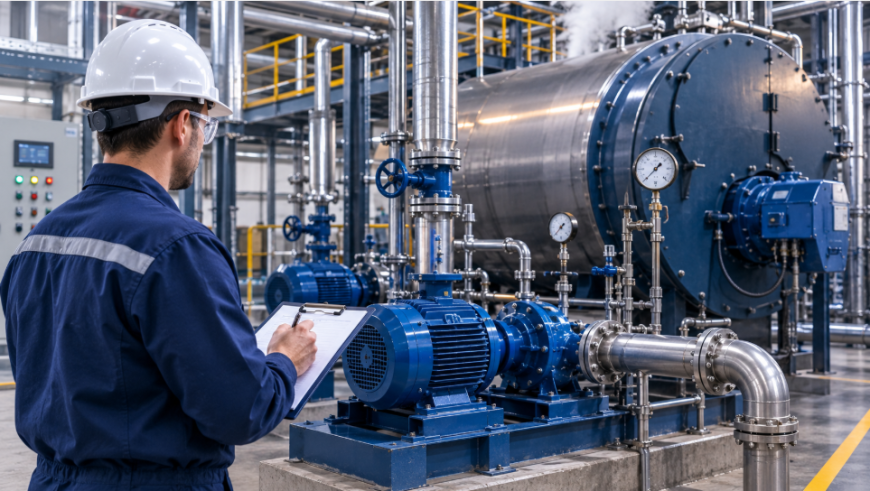
A scale just 1/32 of an inch thick can raise boiler fuel use by 2 percent. That is the finding from a U.S. Department of Energy analysis of firetube boilers. On a boiler burning 450,000 million Btu a year, that adds up to about $72,000 in extra fuel costs annually.
Numbers like these explain why boiler feed systems deserve closer attention in most industrial maintenance programs. When feedwater quality, pump performance, or deaerator function drift out of spec, the effects show up fast. They surface first in energy bills, then later in unplanned outages that halt production.
What Goes Wrong Inside Boiler Feed Systems
These systems handle three jobs: treating water, removing dissolved gases, and delivering it to the boiler under pressure. A gap in any one step creates problems downstream. Feedwater that still carries calcium, magnesium, or silica forms scale on boiler tubes.
Scale acts as an insulator that blocks heat transfer, forcing burners to work harder. Dissolved oxygen left in the water attacks steel piping and boiler internals, causing pitting and leaks. Feed pumps running near their suction limit also risk cavitation, especially when feedwater sits close to boiling temperature.
Left unaddressed, these issues combine to shorten equipment life. They also push fuel costs higher year after year.
Why Common Fixes Fall Short
Many plants only test feedwater after a problem appears, such as a pressure drop or an alarm. By that point, scale or corrosion has already started inside the system. Fixed chemical dosing schedules make this worse, since they ignore how water chemistry shifts with makeup water source and season.
Equipment sizing is another common gap. Pumps and deaerators sized for the original steam load often cannot keep pace as production grows. Blowdown rates set years ago rarely get revisited, even after load or water quality changes.
The result is a maintenance culture built around patching symptoms instead of correcting root causes. That approach costs more over time in fuel, parts, and downtime than a properly managed feedwater program.
A More Reliable Approach to Feedwater Management
A better approach starts with continuous monitoring instead of periodic spot checks. Sensors tracking conductivity, pH, and dissolved oxygen give operators real data on water condition before it damages equipment. This shifts maintenance from guesswork to a response based on actual conditions.
Matching pump and deaerator capacity to actual operating conditions, not just original design specs, also matters. Correct sizing keeps net positive suction head within a safe margin and reduces cavitation risk. Recovering more condensate reduces the load on makeup water treatment and cuts fuel use at the same time.
The U.S. Department of Energy reports that steam system improvements can cut annual energy costs by 10 to 15 percent. That range reflects the combined effect of better water treatment, correct equipment sizing, and consistent monitoring. Steam systems also account for close to a third of total energy use across industrial facilities, which is why these gains matter at scale.
Steps to Apply This in Daily Operations
Turning this approach into daily practice does not require a full system rebuild. A few consistent habits protect equipment and cut costs over time.
-
Test feedwater chemistry on a fixed schedule, not only when an alarm sounds. Track conductivity, pH, hardness, and dissolved oxygen trends over time.
-
Match pump and deaerator capacity to current steam demand, not the plant's original design load. Recheck suction head margins whenever process changes shift feedwater temperature or flow.
-
Recover and return as much condensate as practical. This step alone lowers makeup water treatment costs and fuel use.
-
Set blowdown rates based on measured water chemistry rather than a fixed percentage. Review these rates whenever water quality or production volume changes.
-
Log flue gas temperature over time at a constant firing rate. A steady rise often signals scale buildup before it shows up in the fuel bill.
The Takeaway
These systems will keep drawing more attention as energy costs rise and plants look for savings that do not require new capital equipment.
The data backs this up. A U.S. Department of Energy tip sheet shows that clean heat transfer surfaces, properly sized pumps, and monitored water chemistry protect both the boiler and the budget.
Plants that build these checks into daily routines avoid the slow creep of scale, corrosion, and pump wear that eventually forces a shutdown. The investment is mostly in monitoring and discipline, not expensive hardware.
As facilities modernize, the plants that gain the most will be the ones that treat feedwater management as a continuous process rather than a once-a-year inspection. That shift turns a boiler feed system from a maintenance liability into a dependable part of plant operations.