How to Install MDPE Pipes: A Step-by-Step Guide
The MDPE Pipes (Medium Density Polyethylene Pipes) are highly used in supply of potable water, in the irrigation network and underground water piping systems owing to their flexibility, corrosion resistance and durability.
 manojdey
Proper installation is essential in installation of an MDPE pipe system, in order to guarantee long term operation, leak free joints and efficient distribution of water. The MDPE Pipes (Medium Density Polyethylene Pipes) are highly used in supply of potable water, in the irrigation network and underground water piping systems owing to their flexibility, corrosion resistance and durability.
This guide is a professional, well-organized method on how to install a Medium Density Polyethylene Pipe system that is going to be installed in accordance to the industry standards as well as best practices.
What is an MDPE Pipe?
The Medium Density Polyethylene Pipe is a thermoplastic pipe that is used to supply pressurized water. It offers:
-
High impact resistance
-
Excellent chemical resistance
-
Flexibility for underground installations
-
Long service life (typically 50+ years under proper conditions)
Due to these characteristics, the MDPE Pipes are chosen in municipal water supply lines, agricultural distribution, and residential plumbing.
Tools & Materials Required
Before installation, ensure you have the following:
-
MDPE pipe (correct diameter and pressure rating)
-
Compatible mdpe pipe fittings (compression fittings, couplers, elbows, tees)
-
Pipe cutter
-
Deburring tool
-
Measuring tape
-
Pipe liner (for compression fittings)
-
Spanner or wrench
-
Sand bedding material
Installations with a high-pressure or significant size would be recommended to use experienced MDPE pipe fitters to achieve technical precision of the installation.
Step-by-Step Installation Process
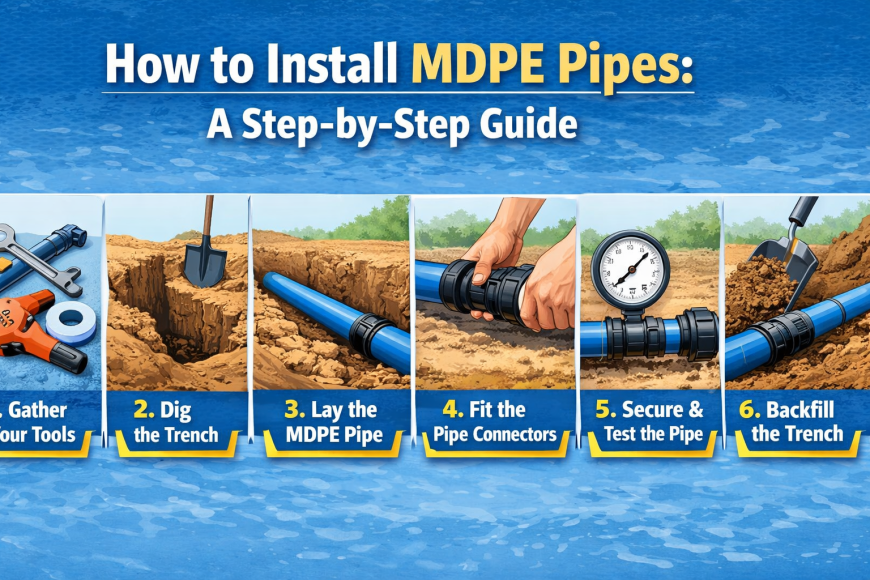
1. Site Preparation & Trench Excavation
-
Dig a trench to a depth that is necessary (usually 750mm-900mm in the case of domestic water supply lines).
-
Make sure that the base of the trench is smooth and must be dark.
-
Lay a 100mm layer of sand bedding to avoid damage to the pipes.
Correct trench preparation ensures that there is less stress outside the pipe of mdpe and this prolongs its life.
2. Measuring & Cutting the Pipe
-
Check the adequate length of a pipe.
-
A pipe cutter is used to make a square cut that is a clean cut.
-
Remove burrs using a deburring tool.
A clean cut will provide good sealing using mdpe pipe fittings and makes leakage impossible.
3. Connecting MDPE Pipe Fittings
-
Insert a pipe liner into the pipe end (mandatory for compression fittings).
-
Push the pipe fully into the fitting until it reaches the internal stop.
-
Tighten the compression nut securely using a wrench (avoid overtightening).
Good pipe fittings are made of high quality mdpe that will guarantee no pressure leakage at any of the joints and will offer durability of the system.
4. Pressure Testing
Before backfilling:
-
Fill the pipeline with water.
-
Pressure test in accordance with the local standards.
-
Check the joints, round each, checking leakage.
The pipe fitters who fit the professional MDPE piping engage in pressure-testing to ensure that the system is sound as per the calibration procedures.
5. Backfilling the Trench
-
Channel sand about the pipe (no less than 150mm cover).
-
Roll after rolling to prevent the movement of piping.
-
Full intermingling of excavated soil.
Compaction that is properly done prevents settlement and stress of pipes in the future.
Factors Affecting MDPE Pipe Price
The mdpe pipe price depends on:
-
Pipe diameter (20mm, 32mm, 63mm, etc.)
-
Pressure rating (PN6, PN10, PN16)
-
Brand and quality standards
-
Bulk order quantities
Cost is a consideration though emphasis should be made on certified materials and competent installation, which guarantees a long-term value and low maintenance costs.
Common Installation Mistakes to Avoid
-
Skipping pipe liners in compression joints
-
Uneven trench bedding
-
Overtightening fittings
-
Ignoring pressure testing
-
Using incompatible fittings
These errors can be prevented thus promoting the system's duration and effectiveness.
Conclusion
The process of installing MDPE Pipes will need technical accuracy, the use of appropriate equipment and following the best practices. The preparation of the trench to pressure testing, levels of performance to the system and life of the system directly affect these processes.
Regardless of whether you are dealing with a residential project or a municipal supply network, quality Medium Density Polyethylene Pipe, quality mdpe pipe fittings and qualified MDPE pipe fitters will provide with you a robust and leak proof water distribution system.
MDPE pipe network installed professionally is efficient, durable and cost-effective over a period of decades.
Source: goflo