How Structured Data Supports Effective Entity Optimization
 thatwarellp
Introduction
Modern search engines have evolved beyond matching webpages with keywords. Today, Google and AI-powered search platforms strive to understand the meaning behind content by identifying entities, relationships, and context. This evolution has made Entity Optimization an essential part of any successful SEO strategy.
One of the most effective ways to help search engines understand your website is through structured data. Structured data provides machine-readable information that clearly explains who you are, what your business offers, and how different pieces of content are connected. When implemented correctly, it enhances semantic understanding, supports AI-driven search experiences, and increases the chances of appearing in rich results and knowledge-based search features. Businesses that combine entity-focused strategies with structured data create a stronger digital presence and improve their long-term search performance.
What is Entity Optimization?
Entity Optimization is the process of helping search engines accurately recognize and understand your business, brand, products, services, and expertise as real-world entities rather than isolated keywords.
Unlike traditional SEO, which primarily focuses on keyword placement, entity-based optimization builds meaningful relationships between content, users, and search engines.
An entity may include:
- A business
- A person
- A product
- A service
- A location
- An organization
- An event
For example, when search engines consistently associate your business name with your services, website, authors, locations, and trusted mentions across the web, they develop greater confidence in your brand. This improves visibility not only in traditional search results but also across AI-powered platforms.
Understanding Structured Data
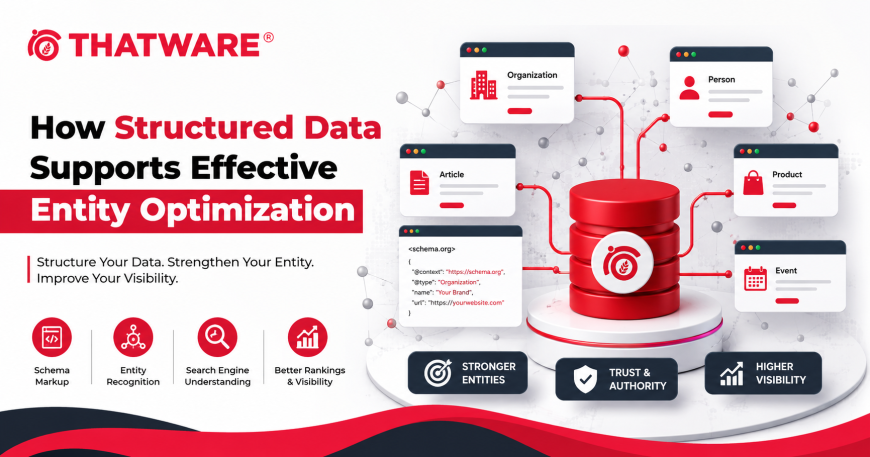
Structured data is a standardized format that provides search engines with detailed information about the content on your website. It uses schema markup to label important elements so search engines can interpret them more accurately.
Instead of asking search engines to infer what a page is about, structured data explicitly communicates information such as:
- Organization details
- Products and services
- Authors
- Reviews
- Articles
- FAQs
- Breadcrumbs
- Local business information
- Events
This additional context allows search engines to organize information more efficiently and connect your website with relevant entities.
For businesses aiming to improve online visibility, structured data acts as a bridge between human-readable content and machine-readable understanding.
How Structured Data Strengthens Search Understanding
Search engines process billions of webpages every day. Structured data helps reduce ambiguity by clearly defining what each page represents.
Some of the key advantages include:
Improved Content Recognition
Schema markup enables search engines to distinguish between different types of content, such as service pages, blogs, products, and organizational information.
Enhanced Rich Results
Well-implemented structured data can improve eligibility for enhanced search features, including:
- FAQ snippets
- Review ratings
- Breadcrumb navigation
- Organization information
- Article enhancements
These features improve visibility and can increase user engagement.
Better Brand Recognition
When business information remains consistent across structured data and website content, search engines are better able to recognize your brand as a trusted entity.
Improved AI Interpretation
AI-powered search platforms rely on contextual understanding. Structured data provides additional signals that help these systems interpret relationships between your business, services, and expertise more accurately.
The Relationship Between Structured Data and Semantic Search
Semantic search focuses on understanding meaning rather than matching exact keywords. This approach helps search engines deliver results based on context, intent, and relationships between entities.
Semantic SEO supports this process by creating content that answers user intent while covering topics comprehensively.
Structured data strengthens semantic search by:
- Clarifying page purpose
- Identifying entities
- Connecting related information
- Supporting contextual understanding
- Reducing ambiguity
For example, when an article references your organization, services, authors, and locations through structured data, search engines gain a clearer picture of your expertise and authority.
Best Practices for Implementing Structured Data
Implementing structured data correctly is essential for maximizing the benefits of Entity Optimization. While schema markup provides valuable context to search engines, following best practices ensures your website remains accurate, trustworthy, and aligned with Google's guidelines.
1. Use the Most Relevant Schema Types
Select schema types that accurately represent your content.
Some commonly used schema types include:
- Organization
- LocalBusiness
- Service
- Article
- FAQ
- Breadcrumb
- Product
- Review
- Person
- WebSite
Using the appropriate schema helps search engines understand the purpose of each page more effectively.
2. Keep Information Consistent
Your business information should remain consistent across:
- Website
- Google Business Profile
- Social media profiles
- Business directories
- Structured data markup
Consistency strengthens search engine confidence and reduces ambiguity when identifying your business entity.
3. Connect Related Content
Internal linking plays a major role in reinforcing entity relationships.
For example:
- Service pages should link to relevant blog articles.
- Blog articles should link back to service pages.
- Case studies should connect to related services.
- FAQs should support important landing pages.
This interconnected structure helps search engines understand topical relevance and strengthens your site's overall authority.
4. Update Structured Data Regularly
As your business evolves, your structured data should reflect those changes.
Regular updates may include:
- New services
- Team members
- Business locations
- Awards and certifications
- Customer reviews
- Contact information
Maintaining accurate information ensures search engines continue to trust your website.
5. Validate Your Markup
Before publishing structured data, validate it using recognized testing tools to ensure it is error-free and follows current schema standards.
Proper validation improves crawl efficiency and reduces implementation issues that may affect search visibility.
Benefits of Combining Structured Data with Entity-Based SEO
Businesses that integrate structured data into their SEO strategy often experience several long-term advantages.
Some key benefits include:
- Improved search engine understanding
- Stronger brand recognition
- Better semantic relationships
- Increased eligibility for rich search results
- Higher visibility in AI-powered search platforms
- Enhanced user experience
- Improved content discoverability
- Greater trust and credibility
- Stronger topical relevance
- Sustainable long-term SEO performance
Rather than simply targeting individual keywords, structured data helps create a connected ecosystem of information that search engines can confidently interpret.
How ThatWare LLP Helps Businesses Improve Entity Recognition
Building a strong digital presence requires more than traditional SEO practices. ThatWare LLP specializes in advanced optimization strategies that combine artificial intelligence, structured data implementation, and entity-based SEO to improve online visibility.
Their comprehensive services include:
- AI-powered SEO strategies
- Advanced schema implementation
- Technical SEO optimization
- Entity relationship mapping
- Internal linking optimization
- Content architecture planning
- Knowledge graph development
- Semantic content optimization
- Website audits
- AI search optimization for emerging platforms
By integrating structured data with modern SEO techniques, ThatWare LLP helps businesses improve how search engines and AI systems interpret their websites, resulting in stronger authority and sustainable organic growth.
Conclusion
Search engines are becoming increasingly sophisticated in how they interpret websites. Instead of relying solely on keywords, they evaluate entities, relationships, context, and trust signals to deliver better search experiences. Structured data plays a vital role in this transformation by helping search engines accurately understand the meaning behind your content.
When combined with Entity Optimization, structured data strengthens semantic relationships, improves search visibility, and supports stronger brand recognition across both traditional search engines and AI-powered platforms. Businesses that invest in structured data today are building a stronger foundation for future search technologies.
If you're looking to improve your website's entity recognition, semantic relevance, and AI search performance, ThatWare LLP offers advanced SEO solutions designed to help your business succeed in the evolving digital landscape.