How Schools Can Reduce Administrative Workload
Discover practical ways to reduce school administrative workload, save staff time, streamline processes, and manage student information efficiently with openSIS.
 openSIS
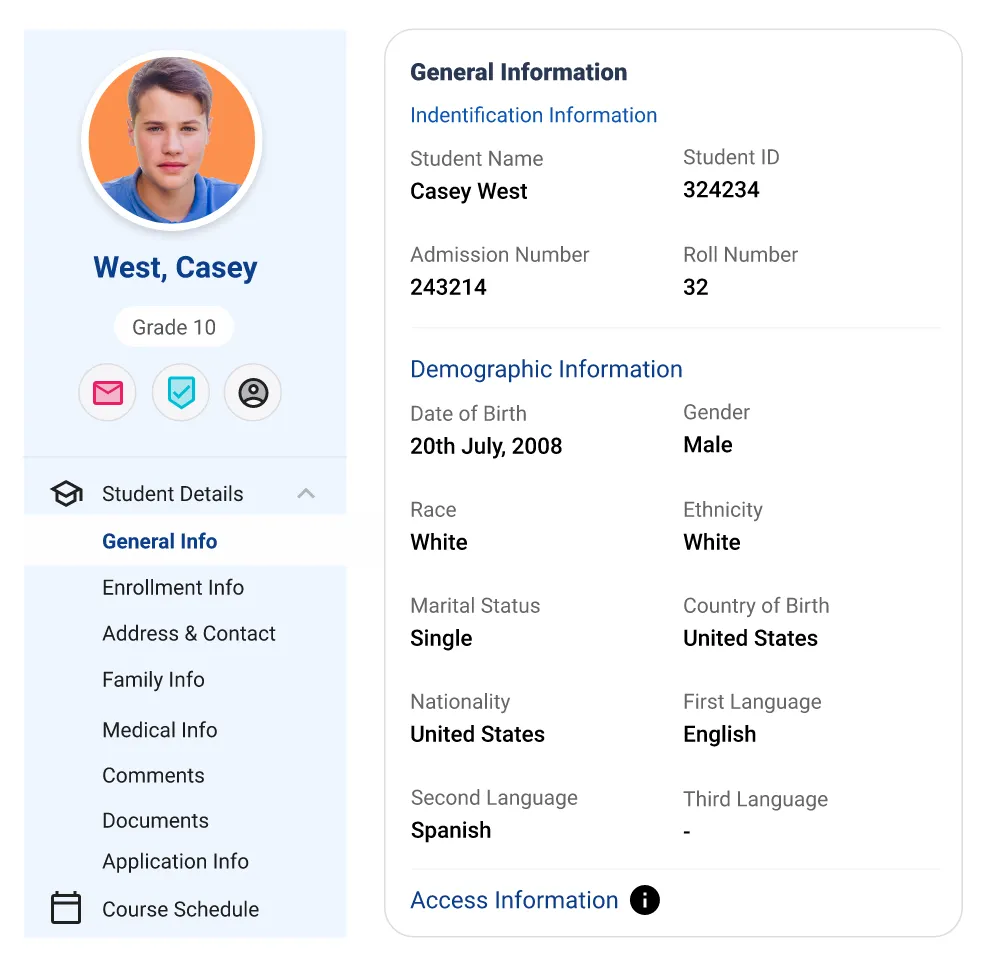
How much time do your administrators spend on student data management? The answer should not be too much time because student data management is a part of the administrative job. Administrators handle an enormous number of tasks. And the problem is not that schools handle huge amounts of data. The problem is that schools usually handle too many data storage systems. While a SIS with Moodle integration can simplify your data management process by centralizing each piece of information in one place.
Digital tools consolidate all the fragmented sources together. These systems connect departments and reduce administrative workload significantly. Schools can make information move through a smooth workflow with a little strategic planning.
The Administrative Workload In School
School administration work requires handling a large volume of data. It involves everything from student enrollment to parent communication. Even though it sounds like a straightforward line of work, if you look at the number of students, you will understand the complex challenges of school administrators. A SIS with Moodle integration system is not a luxury. It is, in fact, a professional requirement that not only simplifies the work, but also reduces the risk of making errors. Human errors are not signs of the lack of efficiency. If anything, it shows that expansion needs a fitting supportive system to rely on.
In a scattered data management system, the same piece of information could be
-
Entered in a document
-
Copied from the original source
-
Updated in the same document
-
Imported to some other document.
So, you see fragmentation does not begin with data entry. Data fragmentation begins with people trying to use information for growth. However, this system leads to one challenge – repetitive tasks. In addition, often multiple tools create data inconsistency as well. It is normal to make mistakes while entering the same number repetitively.
School software systems like openSIS centralize data and automate data processing. It reduces data inconsistency and reduces the need for repetition.
What SIS Can Change
Digitization of school administrative processes mainly refers to workflow automation and data centralization. A well-implemented digital tool should connect student data, academic records, and all the other information, so that administrators can focus on managing the institution rather than spending time solely on data management.
Your SIS with Moodle integration system can work as the main operational point for your administrative team.
SIS Centralizes Data Fragmentation System
A reliable data storage system is the first step toward a smooth administrative system. The modern SIS platforms are designed to maintain essential student data. SIS can manage
-
Student profile
-
Student contact details
-
Enrollment records
-
Fee records
-
Attendance records
Centralization of these records removes the need to maintain ten different spreadsheets. Also, data centralization creates a common data platform for different departments. Accessing information becomes easy when everything is stored on one dashboard.
SIS Reduces Duplicate Data Entry
Data duplication is another challenge that administrators handle all the time. What seems manageable in the midterm becomes a complex situation at the year-end. And the fact is – data is not going anywhere. With each expansion, the number will increase. And along with school expansion, data volume will increase as well.
Under a manually operated system, data duplication is not uncommon. However, duplication does not take place because of carelessness. Usually, it happens due to misaligned workflow. A SIS with Canvas integration allows the information flow between different departments. It reduces the need to make re-entry. Administrators can spend less time copying information and spend more time on verifying it.
Data automation is a great way to eliminate mundane tasks. This is where digitization becomes truly useful for administrators.
SIS Automates Routine Administrative Tasks
Some administrative tasks are predictable. SIS can automate these tasks. A modern school information system can organize routine activities like –
-
Attendance tracking
-
Payment monitoring
-
Enrollment updates
-
Student records maintenance
-
Report generation
-
Notification
Regular maintenance of these tasks takes a lot of time. A SIS with Canvas integration can capture these pieces of information, process them, and analyze them when required. And in the end, SIS will make these pieces available to the authorized users of the dashboard.
SIS Can Integrate With LMS
If you are already using a school software system like a Learning Management System, you won’t have to maintain two separate systems after subscribing to SIS. School information systems are designed to integrate with your existing software systems.
Especially a SIS with Moodle integration can connect student information with the school’s learning software tools. Depending on the existing tool’s features, SIS can easily integrate with –
-
Course enrollment
-
Class information
-
Course data
This will reduce the chance of data mismatch or any data misalignment.
Lastly,
SIS with Canvas integration can work as a digital learning system for your school. It helps create a bridge between student information, course information, course creation, and classroom data. This system works well for schools dealing with a vast volume of data. Without integration, any update can quickly become an administrative event.
FAQ Content
1. How can schools reduce administrative workload?
Schools can reduce administrative workload by centralizing student information, automating repetitive processes, reducing duplicate data entry, simplifying reporting, and using integrated school management software.
2. What administrative tasks take the most time in schools?
Common time-consuming tasks include maintaining student records, attendance tracking, grading, scheduling, communication, reporting, enrollment, and managing administrative paperwork.
3. Can a Student Information System reduce administrative work?
Yes. A Student Information System can centralize student and academic information, streamline workflows, reduce manual data entry, and make information easier for authorized staff to access.
4. How does openSIS help reduce administrative workload?
openSIS brings student records, attendance, grades, scheduling, communication, billing, and reporting into one online platform, helping schools reduce manual processes and administrative overhead.
5. Can openSIS help schools reduce duplicate data entry?
Yes. By connecting important school workflows within a centralized system, openSIS can help reduce the need to repeatedly enter and manage the same student information across disconnected tools.
6. Can schools use openSIS for attendance and grading?
Yes. openSIS includes functionality for attendance management, grades, academic records, and related school workflows.
7. How can schools save teachers' administrative time?
Schools can reduce teacher administrative time by simplifying attendance, grading, scheduling, communication, record keeping, and reporting through connected digital workflows.
8. Is openSIS suitable for K-12 schools?
Yes. openSIS supports K-12 institutions and provides tools designed to manage academic and administrative workflows