How Proper Air conditioner Installation Saves You Money on Energy Bills
We’ve all been there. Staring at a sky-high summer energy bill, wondering what we did wrong. You’ve been diligent—you change the filter, you keep the blinds closed, you even bump the thermostat up a degree or two. So why is the cost of staying cool still so painfully hot?
 kairodune
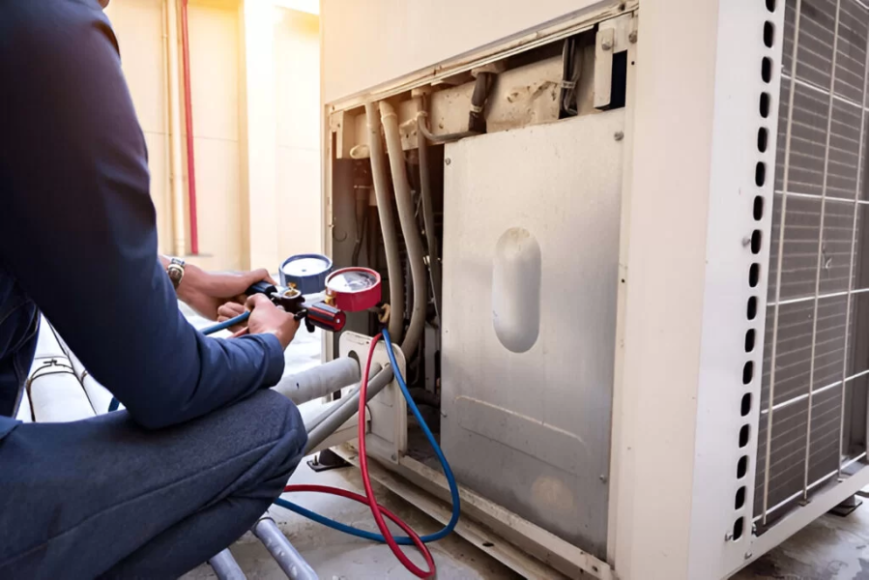
We’ve all been there. Staring at a sky-high summer energy bill, wondering what we did wrong. You’ve been diligent—you change the filter, you keep the blinds closed, you even bump the thermostat up a degree or two. So why is the cost of staying cool still so painfully hot?
Here’s a secret a lot of HVAC companies don’t shout from the rooftops: The single biggest factor in your air conditioner's lifetime energy efficiency isn't the maintenance you do after it's in. It’s the quality of the air conditioner installation itself.
Think of it like building a house. You can have the best lumber, the strongest nails, and the most beautiful windows in the world. But if the foundation is cracked and uneven, you’ll be spending years—and a small fortune—fixing cracks, sealing drafts, and fighting an uphill battle. Your air conditioner is the same. A perfect unit can be doomed to a life of high bills and early breakdowns by a sloppy air conditioner installation.
Let's break down why this one-time job has such a massive, long-term impact on your wallet.
It’s Not Just a Box, It’s a System
Most individuals believe that the installation process of an AC involves replacing a refrigerator: un-plug the old, roll it away, and then plug in the new. However, your cooling system is an intricate union of the indoor (evaporator coil and blower) and the outdoor (condenser) unit. These two halves can only work in harmony when there is a professional air conditioner installed.
When my neighbor, Sarah, got a new AC, she went with the cheapest bid. The crew was in and out in a few hours. But her new, "high-efficiency" unit never seemed to cool her upstairs, and her bills were only slightly better. She finally called a different company for a second opinion.
The technician took one look and sighed. The refrigerant lines hadn't been purged correctly, creating a restriction. The ductwork connecting to the new unit was a hacked-up mess, leaking cooled air into her stuffy attic. Her brand-new unit was straining just to keep up. The cheap air conditioner installation had completely sabotaged her investment.
The "Right-Sizing" Miracle
This is perhaps the most misunderstood part of the process. It has nothing to do with physical size.
Oversizing is a classic mistake of the past. "Bigger is better," right? Wrong. An oversized unit is like using a flamethrower to light a candle. It will cool your house down too quickly in short, powerful bursts—a process called "short-cycling."
Here’s why that murders your efficiency:
• It doesn’t run long enough to properly remove humidity, leaving your house cold and clammy.
• The constant on/off cycling is incredibly hard on the compressor (the heart of the unit), leading to early failure.
• It uses a massive jolt of power every time it starts up, which is far less efficient than a longer, steady run.
A proper air conditioner installation starts with a "Manual J Calculation." This isn't just a guess. It’s a complex calculation a technician does that considers your home’s square footage, window placement, insulation levels, and even the local climate. It tells them the exact capacity of unit you need—not too big, not too small—for peak efficiency and comfort.
The Devil’s in the Ductwork
An ideal unit that is in contact with leaky ducts is the attempt to fill a bathtub with the drain open. You are paying to air-condition your attic, your crawl space, and outside.
Good install involves a comprehensive check of your ductwork and closing it up. Moreover, the physical process of fitting the unit is reeking with minute, minute steps that can be omitted by an installer in a hurry:
• Accurate Refrigerant Fill: The blood of your AC. A 10 percent mistake will shoot up your power consumption by 20 percent. This will be measured by a pro to the ounce.
• Selecting the Right Airflow Calibration: The blower motor should be adjusted to blow the right volume of air (in Cubic Feet per Minute, or CFM) to your system. The improper airflow is associated with inefficient cooling and bad performance.
• Strong, solid base: The condenser should be situated on a solid, flat pad. When it is not even, then it may create lots of stress on the internal parts and premature wear..
The Bottom Line: An Investment, Not a Cost
It’s tempting to see a $5,000 quote for a new system and a $3,500 quote and think you’ve found a deal. But you have to look at the lifetime cost.
• The cheap installation might save you $1,500 today.
• The professional air conditioner installation might save you 20-30% on your energy bills every single month for the next 10-15 years.
Do the math. Saving $40 a month on your bill adds up to $4,800 over ten years—more than making up for that initial difference, not to mention the avoided repair costs from a system that isn't straining.
Key Takeaways
• The brand of the unit is not so important as the installation. A mediocre unit that is installed flawlessly will perform better compared to the best unit that is installed poorly.
That is, right-sizing your AC is a deal-breaker as far as efficiency and comfort are concerned. Request a Manual J Calculation.
• A quality installation will take care of the whole system, including ductwork that may not be given much concern.
• But paying a lot more to have a masterful air conditioner installed is not part of an additional cost, but rather a long term investment that begins to give back to you as soon as your energy bills.
FAQs
Q: What would I do to know whether I did my last installation in a bad way?
Examples include:
-high humidity levels in the house, rooms that do not cool, unusual noises, a unit that switches on and off, and higher energy bills than your neighbors with comparable houses.
Q: Can a cheap and fast installation ever be good?
A: Honestly, no. Modern and high efficiency systems are complex, and there is no corner cutting. The danger of bad performance, high operational expenses, and premature failure are too big.
Q: What does a good installer have to have?
A: Find certified, licensed, and insured professionals who have good reviews. Just ask them: Will you do a Manual J load calculation? and "Do you check and close the ductwork? Their responses will make you know it all.