How Often Does My Fire Alarm System Need Testing and Maintenance?
Regular testing and maintenance keep your Fire Alarm System reliable and compliant. Perform routine inspections, battery checks, detector sensitivity testing, and annual servicing to ensure early fire detection, uninterrupted operation, and maximum occupant safety.
 sigmapowertech
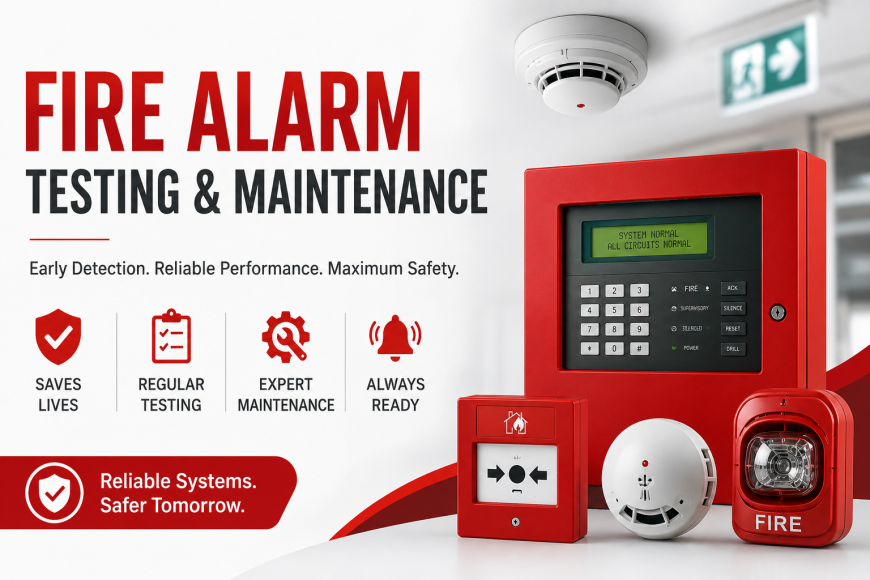
How Often Does My Fire Alarm System Need Testing and Maintenance?
Early detection and reliable alarm performance save lives and limit business interruption—so routine testing and maintenance are not optional. A well-maintained Fire Alarm System ensures detectors, notification appliances, power supplies, and communication links perform exactly when they must. Frequency and scope of tests vary by system type (conventional vs addressable), building occupancy, and applicable codes, but engineering best practice and regulatory guidance define a clear maintenance rhythm to preserve life-safety integrity.
What a Fire Alarm System is
A Fire Alarm System is an engineered network of detectors (smoke, heat, multi-sensor, aspirating), a supervised control panel, notification devices (horns, strobes, voice evac), power supplies with battery backup for fire alarm system survivability, and communications to central stations or building management. Maintenance covers both hardware and system logic: detector sensitivity, loop supervision, battery capacity, panel logs, and transmission paths.
Minimum Recommended Inspection and Testing Cadence
- Daily/Weekly: Visual inspection of the fire alarm system panel for trouble indications; confirm system is in normal mode. Check annunciators and accessible local indicators.
- Monthly: Functional tests of selected manual call points and notification appliances (as per code guidance), verify proper operation of visual indicators, and ensure remote monitoring links report correctly to central stations.
- Quarterly: Test supervised circuits and initiate a supervised mechanical cause if required, exercise voice-evacuation messages where installed, and inspect batteries for visible defects.
- Semi-Annual: Test battery float charge, perform battery capacity checks for smaller installations, test backup communication paths (IP/cellular) and verify panel event logs.
- Annual: Full functional test of all detectors and devices, sensitivity testing for smoke detectors, inspection and testing of all wiring/terminations, full battery discharge test or equivalent capacity measurement, and review of system configuration and event history.
- Every 3–5 Years: More extensive overhauls such as replacement of batteries (typical lifecycle 3–5 years), firmware updates during scheduled maintenance windows, and major bench testing of panels and modules per manufacturer guidance.
Detector-Specific Testing
Smoke detectors require sensitivity testing (either by detector manufacturer’s drift test, calibrated test equipment, or the use of test smoke during annual checks) to ensure they will alarm within design thresholds. Heat detectors undergo functional tests and replacement if drifted or after exposure to high temperatures. Aspirating and multi-sensor systems need specialist calibration and periodic filter replacement; follow manufacturer schedules closely.
Battery Maintenance and Backup
Battery fire alarm systems demand strict attention. Conduct capacity tests under load annually, and inspect charger function and float voltage quarterly. Replace batteries proactively at manufacturer-recommended intervals (often 3–5 years) to avoid unexpected failures. Ensure the battery backup for fire alarm system operation meets regulatory runtime requirements for your installation.
Remote Monitoring and Supervised Reporting
If the system uses fire alarm system remote monitoring, include verification of telemetry paths—IP, GSM, or leased lines—in routine tests. Central monitoring confirmation of alarms, troubles, and supervisory signals is essential. Test both primary and backup transmission channels during commissioning and at least annually thereafter.
Commissioning, Documentation and Record-Keeping
Proper commissioning documents baseline detector sensitivities, zone maps, wiring diagrams, battery calculations, and event logs. Maintain a full record of all tests, faults, repairs, and firmware changes—this documentation supports compliance with local authorities and provides evidence for insurers. Good records also enable trend analysis for predictive maintenance.
Key Features to Verify During Maintenance
- Supervision of circuits and integrity of end-of-line devices
- Detector sensitivity and correct mounting/coverage
- Notification appliance audibility and strobe illumination levels
- Panel event logging, time-stamping, and user access controls
- Redundant reporting paths and gateway health for remote monitoring
- Battery capacity, charger function, and temperature conditions
- Integration points: sprinkler valve supervision, elevator recall, and access control interfaces
Applications and Differing Frequencies
Critical facilities (hospitals, data centres, utilities) should adopt tighter schedules and more frequent verification due to continuity requirements. Commercial fire alarm systems with high occupant loads also warrant more frequent testing and documented drills. Smaller residential systems or house fire alarm system devices have simpler needs but still require battery checks and periodic validation of detector operation.
Choosing a Maintenance Provider
Select a fire alarm system supplier or fire alarm system companies with certified technicians, documented commissioning procedures, and strong after-sales support. Verify they follow manufacturer-recommended test methods and can perform sensitivity testing, battery capacity verification, and full system commissioning. Confirm the scope includes emergency call-out for critical faults and offers AMC packages tailored to system complexity.
Common Mistakes to Avoid
- Relying solely on reactive maintenance rather than scheduled testing.
- Failing to perform detector sensitivity tests—leading to undetected drift.
- Skipping battery capacity tests or delaying replacements.
- Neglecting telemetry path validation for remote monitoring systems.
- Allowing undocumented modifications without re-commissioning.
- Using non-certified technicians for complex addressable systems or wireless fire alarm system configurations.
Practical Maintenance Strategy
Adopt a documented, risk-based maintenance program: daily/weekly visual checks, quarterly supervision tests, and annual full functional and sensitivity tests. For installations with remote monitoring, include regular verification of central station reporting and redundancy checks. Use test results to drive predictive maintenance—replace components based on measured degradation rather than fixed intervals when possible.
For professional installation and to establish an appropriate testing regime, consult specialists experienced in Fire alarm system installation who can map testing intervals, battery sizing, and remote monitoring verification to your facility’s regulatory and operational needs.
Conclusion
Testing and maintenance schedules for a Fire Alarm System must balance regulatory obligations, operational risk, and equipment lifecycle. Regular visual checks, quarterly supervision tests, annual full functional and sensitivity testing, and proactive battery replacement form the backbone of a robust maintenance program. Prioritise certified commissioning, comprehensive documentation, and suppliers who support remote monitoring and predictive maintenance to ensure reliable detection, faster emergency response, and continuous occupant protection.