How Community Nursing Integrates with Disability Home Care for Complex Needs
At P Homecare, our integrated framework ensures your disability home care plan is supervised by qualified clinical professionals who understand both the medical and lifestyle elements of your journey.
 phomecareaus
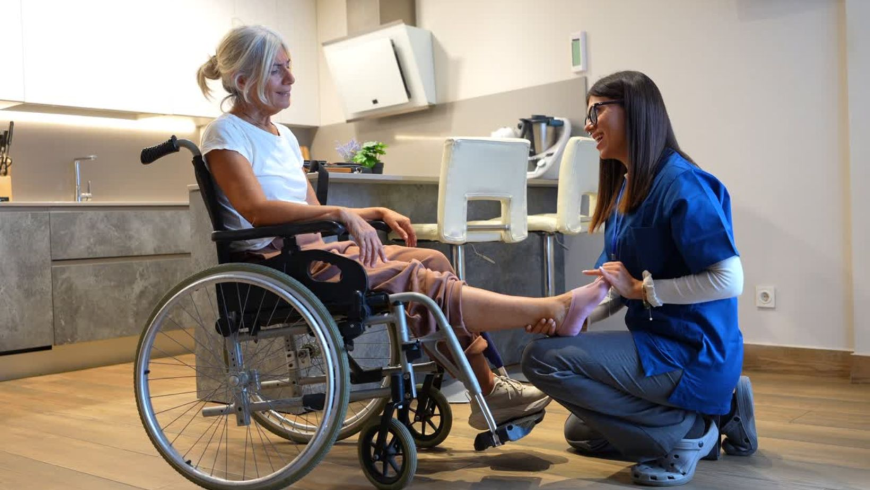
When you or a loved one are managing a complex health condition under the National Disability Insurance Scheme (NDIS), finding the right balance of disability home care means managing two distinct layers of support. There is the practical, daily assistance required to keep your home running smoothly, and there is the clinical oversight needed to manage ongoing health vulnerabilities safely.
Many NDIS participants make the mistake of looking at these two services as entirely separate paths. They might hire a support worker from one agency for domestic tasks, and then try to source an independent clinical nurse for medical tasks. However, the most successful independent living outcomes occur when these two layers are seamlessly integrated under a single, cohesive framework.
The Core Breakdown: Support Workers vs. Community Nurses
To understand how these services blend together, it helps to look at the distinct professional boundaries of the people who will be supporting you inside your home:
-
Disability Support Workers: These professionals focus on your lifestyle, environmental safety, and personal autonomy. They assist with showering, dressing, preparing meals, household cleaning, grocery shopping, and escorting you to social activities.
-
Community Nurses (RNs or ENs): These are university-qualified medical professionals. They do not typically manage your grocery shopping or household cleaning. Instead, they are responsible for advanced clinical procedures, health monitoring, wound management, and medication administration that require formal medical training.
When these two professionals work in isolation, details can slip through the cracks. When they work as an integrated team, they form a protective barrier around your health and independence.
What Does Integrated Care Look Like for Complex Needs?
For participants with high-intensity daily personal activities, the intersection of clinical skill and lifestyle support is where safety is maintained. Instead of waiting for a health issue to escalate into a medical emergency, an integrated model ensures that daily observations by your support worker are reviewed directly by a clinical nurse.
To give you a clear picture of what this looks like in practice, here is a breakdown of the specific, high-intensity clinical interventions that an integrated nurse and support worker team can safely manage in your home:
-
Complex Bowel and Bladder Management: Clinical oversight for catheter changes, stoma care, and the implementation of customized bowel management regimes.
-
Tracheostomy and Ventilator Support: Around-the-clock management of airway clearance, suctioning, and respiratory equipment monitoring.
-
Enteral Nutrition (PEG Feeding): Managing formulas, flushing lines, maintaining feeding pumps, and monitoring skin integrity around the PEG site.
-
Advanced Wound Care: Regular assessment, cleaning, and dressing of chronic wounds, pressure injuries, or post-surgical sites by a registered nurse.
-
Subcutaneous Injections and Medication Oversight: Ensuring complex medication schedules are adhered to safely, including managing specialized injections.
Unique Perspectives: The Proactive Early Warning System
A unique perspective that many families overlook is that traditional disability home care models often face gaps when complex clinical needs arise. A standard support worker, while highly capable and compassionate, does not have the diagnostic training to spot the early, subtle signs of clinical deterioration—such as a budding urinary tract infection (UTI), early skin breakdown, or subtle respiratory changes.
When community nursing is integrated directly into the care team, the nurse acts as a clinical supervisor. They train the daily support workers on exactly what warning signs to look for regarding your specific condition. If a support worker notices a minor shift in your vital signs or behavior, they don't have to tell you to wait for a GP appointment; they immediately report it to the internal clinical nursing team. This proactive communication serves as an early warning system, drastically reducing unnecessary hospital admissions and keeping you safe in your own environment.
The NDIS Funding Puzzle: Core vs. Capacity Building
Navigating how to pay for these integrated services is a common middle-of-the-funnel hurdle. It is important to know that the NDIS splits these costs across different budget categories based on who is delivering the care:
-
Core Supports (Assistance with Daily Life): This budget pays for your daily support workers to assist with cleaning, cooking, and standard personal care.
-
Capacity Building (Improved Daily Living): This is typically where complex community nursing hours are funded, specifically under the line item Delivery of Health Supports by a Nurse.
During your NDIS plan review, proving that you require integrated care requires a combined approach. You will need clinical evidence from your doctors showing your medical vulnerability, alongside a Functional Capacity Assessment (FCA) showing how these health challenges impact your daily living tasks.
Building a Seamless Care Ecosystem with P Homecare
At P Homecare, our integrated framework ensures your disability home care plan is supervised by qualified clinical professionals who understand both the medical and lifestyle elements of your journey. We don't believe in piecemeal support. We build small, dedicated teams containing both expert support workers and registered community nurses who communicate constantly about your well-being.
Ultimately, we specialize in crafting customized disability home care schedules that blend everyday lifestyle support with advanced clinical nursing. This dual approach ensures your safety is never compromised while you pursue your personal independence goals. Reach out to our professional Australian clinical intake team today to discuss how we can integrate your complex care needs seamlessly!