How Choice-Based Credit System Improves Student Performance and Learning Flexibility?
Explore how Choice-Based Credit System boosts academic performance and flexibility with Management Information System and School Portal.
 VIdyalaya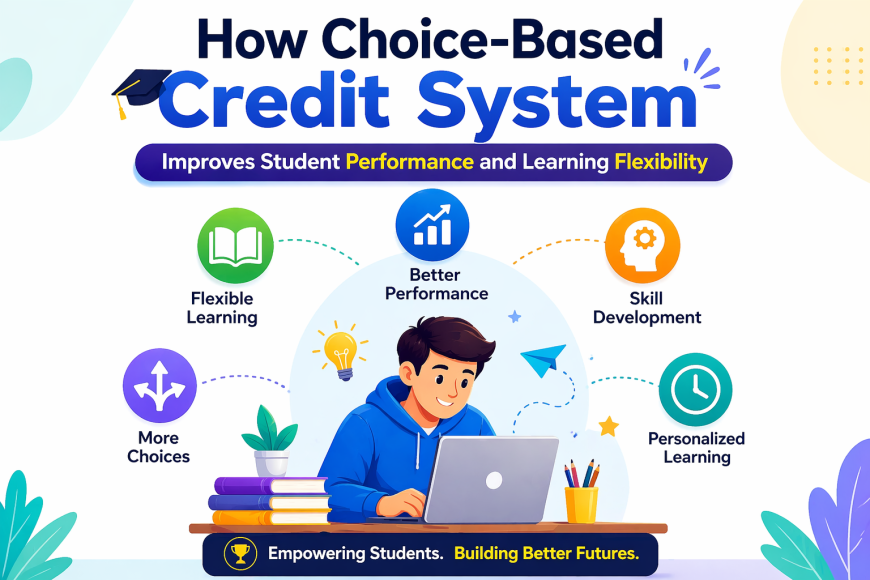
The modern education system is evolving rapidly to meet the dynamic needs of students and industries. One of the most impactful reforms in higher education is the Choice-Based Credit System. Designed to offer flexibility, personalization, and skill-oriented learning, the Choice-Based Credit System is transforming how students learn, perform, and grow academically. When combined with advanced digital solutions like a Student ERP System, Management Information System, and School Portal, CBCS becomes even more powerful and efficient.
What is the Choice-Based Credit System?
The Choice-Based Credit System is an academic framework that allows students to choose courses from a prescribed list of core, elective, and skill-based subjects. Each course is assigned a certain number of credits, and students earn these credits upon successful completion. Unlike traditional rigid systems, CBCS empowers students to design their academic journey based on their interests, career goals, and pace of learning.
Enhancing Student Performance Through Flexibility
One of the key advantages of the Choice-Based Credit System is its ability to improve student performance by offering flexibility in course selection. Students are no longer forced to study subjects that may not align with their interests. Instead, they can select courses they are passionate about, leading to better engagement, understanding, and ultimately, higher academic performance.
When students have control over their learning paths, they tend to be more motivated. This increased motivation directly impacts their ability to grasp concepts effectively, participate actively in class, and perform well in assessments. Additionally, CBCS reduces academic pressure by allowing students to distribute their workload more efficiently across semesters.
Personalized Learning Experience
The Choice-Based Credit System promotes a personalized learning environment. Every student has unique strengths, weaknesses, and aspirations. Choice-Based Credit System acknowledges this diversity by allowing students to tailor their education accordingly.
For instance, a student interested in technology can choose more skill-based and technical electives, while another inclined toward management can opt for business-oriented subjects. This customization ensures that students build expertise in their chosen fields, improving both academic outcomes and career readiness.
A well-integrated Student ERP System plays a crucial role here by enabling seamless course selection, tracking credits, and managing academic records. It simplifies the entire process, ensuring students can focus more on learning rather than administrative tasks.
Improved Learning Flexibility
Flexibility is at the core of the Choice-Based Credit System. Students can learn at their own pace, choose interdisciplinary subjects, and even switch courses if needed. This adaptability allows them to explore different fields before finalizing their career paths.
Moreover, Choice-Based Credit System supports continuous assessment rather than relying solely on final exams. This approach helps students learn consistently and reduces the stress associated with one-time evaluations. It also encourages regular participation, assignments, and practical learning.
A robust Management Information System helps institutions monitor student progress, analyze performance trends, and provide timely feedback. This data-driven approach ensures that students receive the support they need to excel.
Encouraging Skill Development
The Choice-Based Credit System goes beyond theoretical knowledge by emphasizing skill development. It includes elective and ability-enhancement courses that focus on practical skills, industry exposure, and real-world applications.
Students can enroll in courses such as communication skills, entrepreneurship, data analysis, or digital marketing, depending on their interests. This holistic approach prepares them for the job market and enhances their employability.
With the help of a digital School Portal, students can easily access course materials, submit assignments, and stay updated with academic schedules. This seamless access to resources further enhances the learning experience and supports skill development.
Promoting Interdisciplinary Learning
Another significant benefit of CBCS is its support for interdisciplinary learning. Students are not restricted to a single field of study. They can explore subjects from different disciplines, broadening their knowledge and perspective.
For example, an engineering student can take courses in management or humanities, while a commerce student can explore data science or technology-related subjects. This cross-disciplinary exposure fosters creativity, critical thinking, and innovation.
Such flexibility is particularly beneficial in today’s interconnected world, where industries demand professionals with diverse skill sets and knowledge bases.
Continuous Evaluation and Feedback
Traditional education systems often rely heavily on final examinations, which may not accurately reflect a student’s overall performance. The Choice-Based Credit System, however, incorporates continuous evaluation through assignments, quizzes, presentations, and projects.
This ongoing assessment provides a more comprehensive understanding of a student’s capabilities. It also allows educators to identify areas where students may need improvement and provide timely support.
Digital tools like a Student ERP System and Management Information System streamline the evaluation process, ensuring transparency and accuracy in grading.
Better Academic Planning and Time Management
CBCS enables students to plan their academic journey more effectively. They can choose the number of credits they want to take each semester based on their capacity and schedule. This flexibility helps them balance academics with extracurricular activities, internships, or part-time jobs.
Effective time management leads to reduced stress and improved productivity. Students can focus on quality learning rather than merely completing a fixed curriculum.
A centralized School Portal helps students stay organized by providing access to timetables, course details, deadlines, and academic updates in one place.
Increased Student Engagement
Engagement is a critical factor in academic success. The Choice-Based Credit System enhances student engagement by making learning more interactive and relevant. When students study subjects they are genuinely interested in, they are more likely to participate actively in discussions, projects, and collaborative activities.
This active involvement not only improves academic performance but also helps in developing essential soft skills such as communication, teamwork, and problem-solving.
Conclusion
The Choice-Based Credit System is a revolutionary approach that significantly improves student performance and learning flexibility. By offering personalized education, promoting skill development, and encouraging interdisciplinary learning, CBCS prepares students for both academic success and professional growth.
When integrated with advanced technologies like a Student ERP System, Management Information System, and School Portal, the effectiveness of CBCS is further enhanced. These digital tools streamline academic processes, provide valuable insights, and create a seamless learning environment.
In a world where adaptability and continuous learning are key to success, the Choice-Based Credit System stands out as a powerful framework that empowers students to take control of their education and achieve their full potential.