The Shift Towards Compact Intelligence
Today’s digital ecosystem demands smarter, faster, and more compact computing solutions. From edge AI devices to innovative industrial automation systems, engineers require platforms that combine performance with adaptability. This is where Single Board Computers (SBCs) and Computer On Module (COM) technologies step in. These platforms are revolutionising embedded design, offering tailored solutions to meet growing computational needs in space-constrained environments.
What Are Single Board Computers (SBCs) and Computer On Module (COM) Systems?
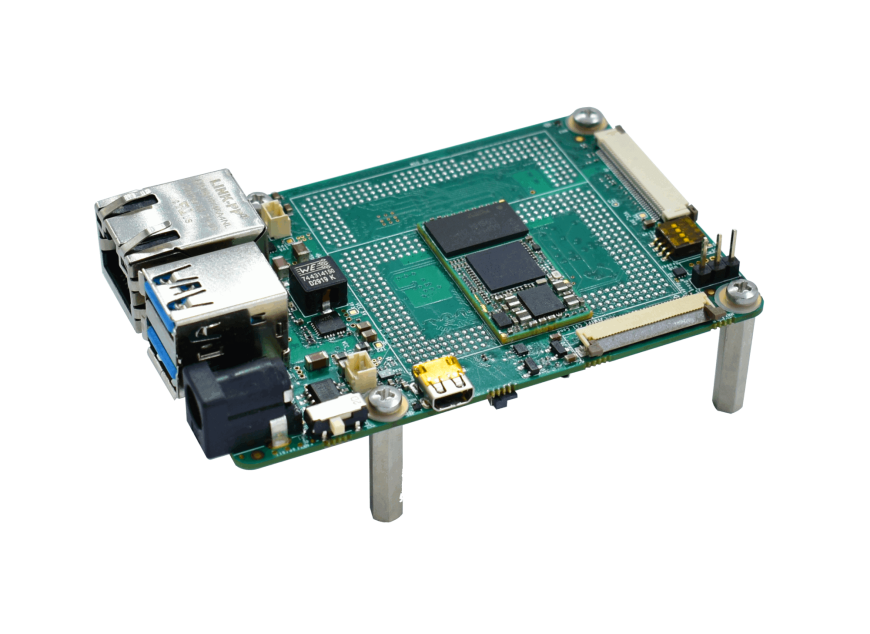
Single Board Computers (SBCs), Computer On Module (COM) solutions are embedded computing systems engineered for high efficiency and reliability. They power the brains of various machines, systems, and devices used across industrial, medical, consumer, and commercial applications.
- SBCs integrate essential components, processor, memory, I/O ports, and storage into a single board that operates as a complete computing unit.
- COMs house only the core computing elements such as the CPU and memory. These modules rely on a carrier board to provide external connectivity and system-specific interfaces.
The choice between the two often depends on the need for immediate deployment versus custom-tailored designs that offer long-term scalability.
What Advantages Make These Platforms So Valuable?
SBCs and COMs provide developers with significant engineering and commercial benefits, enabling fast-paced innovation without starting from scratch for each new project.
- Compact and lightweight form factors
- Reduced development effort and cost
- Support for both general-purpose and specialised applications
- Strong hardware abstraction, allowing seamless performance upgrades
- Support for real-time systems and industrial-grade environments
These features help companies move from concept to product in significantly less time compared to traditional PCB design approaches.
Where Are SBCs and COMs Being Used Today?
The adoption of modular embedded platforms spans a wide range of sectors, helping bring intelligence to applications once considered purely mechanical.
Smart Manufacturing
- Real-time controller units for industrial robots
- Predictive maintenance systems using edge analytics
- Machine vision applications for automated inspection
Energy and Utilities
- Smart metering and grid monitoring systems
- Renewable energy management platforms
- Battery and power backup control units
Healthcare Technologies
- Embedded systems in diagnostic tools
- Imaging processors in ultrasound and X-ray machines
- Wearable monitors for patient tracking
Retail and Public Services
- Interactive digital signage and POS terminals
- Ticketing kiosks with touchscreen interfaces
- Self-service checkout systems
Transportation and Infrastructure
- Train control and monitoring systems
- Telematics devices in fleet management
- Embedded control in electric vehicle chargers
Their versatility allows these platforms to serve both high-volume commercial devices and low-volume industrial applications.
How Do You Choose the Right Platform?
Choosing between SBC and COM platforms depends on the project’s complexity, hardware customisation requirements, and expected product lifecycle.
SBCs Are Suitable For:
- Applications that need minimal customisation
- Rapid prototyping and development
- Projects with budget constraints
- Educational tools and small-scale IoT devices
COMs Are Suitable For:
- Systems that require specialised hardware integration
- Long-term production with upgrade paths
- Projects where space, thermal design, or certification is critical
- Environments where hardware abstraction adds value to future updates
Understanding these trade-offs helps development teams align hardware choices with technical and business goals.
What Technical Capabilities Should Developers Expect?
Modern SBCs and COMs offer a wide range of features to support embedded workloads, graphical interfaces, and real-time operations.
- Processor choices from entry-level ARM chips to multi-core x86 CPUs
- Memory support ranging from 512MB to 32GB
- eMMC, SD, and SATA storage options for flexible memory solutions
- I/O connectivity including USB, Ethernet, CAN, I²C, and GPIO
- Display outputs such as HDMI, DisplayPort, and MIPI-DSI
- Wireless modules including Wi-Fi, Bluetooth, and cellular
- Ruggedization options for temperature, shock, and vibration tolerance
These features allow engineers to design systems capable of handling both compute-heavy applications and real-time control logic.
How Do These Platforms Accelerate Development?
The pre-integrated nature of SBCs and COMs simplifies development by eliminating the need to build a full custom computing solution from the ground up.
- Developer kits offer immediate testing and validation environments
- Reference schematics and carrier board layouts accelerate custom integration
- Open-source support and community tools reduce learning curves
- Compatible operating systems such as Linux, Android, and Windows IoT
- Firmware support and BSPs for seamless hardware-to-software integration
This reduces the engineering burden and helps development teams focus on product-specific features and software.
What Design Challenges Can Arise?
Despite their advantages, SBCs and COMs are not without design considerations, especially in professional or high-reliability systems.
- Thermal constraints in compact enclosures may require advanced heat management
- Limited I/O on SBCs can restrict peripheral expansion
- Design dependency on carrier board layout in COM-based systems
- Vendor lifecycle management must be monitored for long-term availability
- Security implementation may require additional hardware modules
Careful planning and thorough validation help ensure robust system performance and lifecycle stability.
What Is the Future Outlook for These Platforms?
As industries embrace edge intelligence, autonomous devices, and AI-powered applications, SBC and COM platforms are advancing in capabilities.
- Integrated AI/ML processing for on-device analytics
- Real-time decision-making with low latency
- 5G-ready modules for fast, reliable connectivity
- Improved energy efficiency for battery-powered applications
- Expanded modular ecosystems for flexible system architecture
These trends indicate that modular computing will remain at the forefront of embedded systems development for years to come.
Final Overview
Single Board Computers (SBCs), Computer On Module (COM) platforms are shaping the future of embedded technology by offering powerful computing in scalable, space-saving formats. Their adaptability, ease of use, and performance capabilities make them ideal for applications ranging from industrial machinery to smart city devices. As embedded systems continue to grow in complexity and intelligence, these platforms will remain the cornerstone of efficient, future-ready hardware design.

 joddie25