Exploring the Global Brand Licensing Market: Trends, Challenges, and Opportunities
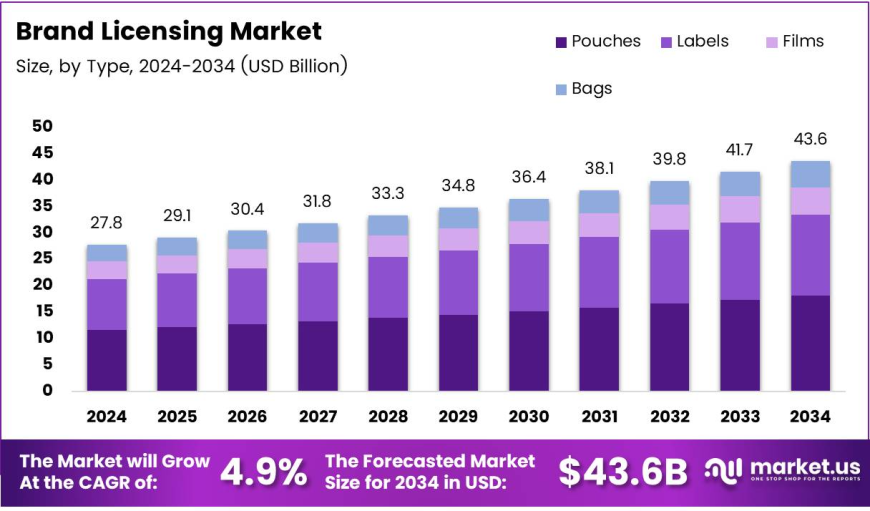
The Global Brand Licensing Market size is expected to be worth around USD 43.6 Billion by 2034, from USD 27.8 Billion in 2024, growing at a CAGR of 4.9% during the forecast period from 2025 to 2034.
 Tinu56
Introduction to the Brand Licensing Market
The Brand Licensing Market has developed into a sophisticated commercial framework that enables businesses to monetize established intellectual property through carefully structured partnerships. Under a licensing arrangement, a brand owner permits another organization to use its trademark, character, logo, design, name, or other proprietary asset under predetermined conditions.
The underlying principle is remarkably efficient: one organization provides brand equity, while another contributes manufacturing, distribution, marketing, or category expertise.
This arrangement allows recognized brands to enter unfamiliar product categories without constructing an entirely new operational ecosystem. It also gives manufacturers and retailers an opportunity to associate their products with identities that already possess consumer recognition.
Modern licensing extends far beyond conventional merchandise. Fashion collections, sports products, entertainment goods, food packaging, home accessories, digital assets, gaming products, and experiential concepts can all be built around licensed intellectual property.
As consumers increasingly seek products with narrative and cultural significance, licensing has become an important instrument for transforming recognition into commercial momentum.
Major Growth Drivers Shaping the Market
Rising Brand Recognition and Consumer Loyalty
Brand familiarity exerts a powerful influence on purchasing behavior. Consumers are often more receptive to products associated with names, characters, or organizations they already know.
Licensing capitalizes on this familiarity.
A recognizable property can provide an immediate emotional or symbolic dimension to a product. Instead of competing solely through functional attributes, a licensed product may appeal through nostalgia, fandom, aspiration, prestige, or personal identity.
This is particularly important in saturated consumer markets, where functional differentiation can be difficult to sustain.
Expansion of Media and Entertainment Franchises
The proliferation of streaming services, gaming platforms, digital content, and international entertainment franchises has created an expansive reservoir of licensable intellectual property.
Successful characters and fictional universes can migrate across multiple categories. Apparel, toys, accessories, publishing, collectibles, home products, and food items can all become extensions of an entertainment property.
The commercial life of a franchise can therefore extend well beyond its original screen appearance.
Growth of Collaborative Product Development
Strategic collaborations have become an increasingly visible component of modern licensing. Companies are combining established brands with manufacturers, designers, retailers, celebrities, athletes, and technology companies to produce distinctive offerings.
Limited-edition collections are particularly effective at generating urgency. Scarcity can encourage consumers to purchase quickly, while the collaboration itself provides additional publicity.
Such partnerships can create a commercial alchemy in which two established identities amplify one another.
Role of Brand Licensing Across Key Industries
Fashion and Apparel
Fashion remains one of the most prominent environments for brand licensing. Apparel companies can use licensed intellectual property to develop collections that capitalize on cultural moments, entertainment launches, sporting events, or nostalgic properties.
Licensed designs can appear on clothing, footwear, handbags, accessories, and other fashion-related products.
The model also provides fashion retailers with an opportunity to attract highly specific consumer communities. A collection built around a beloved franchise may appeal to an audience that would otherwise have limited interest in the retailer.
Entertainment and Media
Entertainment licensing encompasses characters, films, television programs, streaming properties, animated franchises, publishing assets, and gaming intellectual property.
Its strength lies in the emotional relationship consumers develop with fictional worlds and characters.
A successful entertainment property can become a commercial ecosystem. Merchandise, collectibles, apparel, toys, digital products, and themed experiences can all reinforce the same intellectual property.
Sports and Lifestyle
Sports licensing connects commercial products with affiliation and community. Team logos, league identities, tournament branding, athlete imagery, and sporting symbols can appear across apparel, memorabilia, accessories, collectibles, and lifestyle products.
Consumers frequently purchase sports merchandise as an expression of allegiance rather than purely for functional use.
This makes sports licensing particularly resilient when supported by strong fan engagement.
Food, Beverages, and Consumer Products
Brand licensing has also expanded into food, beverages, household products, personal accessories, and everyday consumer goods.
A familiar brand or character can increase product visibility and create differentiation on crowded retail shelves.
Packaging is especially important in this segment. Licensed visual assets can transform an ordinary package into a recognizable brand experience, potentially increasing attention at the point of purchase.
Digital Commerce Reshaping Brand Licensing
Expansion of Online Retail
E-commerce has removed many of the geographical constraints traditionally associated with licensing.
Consumers can discover and purchase licensed products through digital storefronts, specialized marketplaces, social commerce platforms, and direct-to-consumer websites.
For licensees, this creates additional distribution flexibility. Niche products can reach targeted audiences without requiring extensive physical shelf space.
Digital commerce also facilitates rapid product launches and geographically targeted campaigns.
Social Media and Influencer Ecosystems
Social media has become an important catalyst for licensed merchandise.
Influencers, fan communities, creators, and online personalities can introduce products to highly engaged audiences. A single collaboration may generate substantial visibility through short-form content, livestreams, reviews, and community discussions.
This has changed the promotional architecture of licensing.
Rather than relying exclusively on conventional advertising, companies can build campaigns around participation, conversation, and shareability.
Digital and Virtual Licensing Opportunities
The definition of a licensed product is expanding.
Virtual clothing, gaming assets, digital collectibles, branded avatars, and immersive experiences are creating additional avenues for intellectual property commercialization.
Digital licensing can also facilitate experimentation. Companies can introduce virtual concepts, observe audience response, and use the resulting insights to inform physical product development.
The boundary between merchandise and digital experience is consequently becoming increasingly porous.
Benefits of Strategic Brand Licensing Partnerships
Revenue Diversification
Licensing enables brand owners to monetize intellectual property without directly producing every associated product.
Royalty arrangements can generate additional income while allowing licensees to handle manufacturing and distribution.
This can make licensing an attractive complement to traditional business models.
Faster Category Expansion
Entering a new product category organically can require considerable investment.
Licensing provides an alternative route. A suitable licensee may already possess specialized production capabilities, regulatory knowledge, supplier relationships, retail connections, and market expertise.
The brand can therefore enter a new category with greater operational efficiency.
Access to New Consumer Segments
A strategic licensing partnership can introduce a brand to consumers who were previously outside its core audience.
For example, a lifestyle brand entering gaming or entertainment licensing may reach younger digital audiences. Conversely, an entertainment franchise entering fashion may attract consumers interested in contemporary apparel.
The right partnership can therefore broaden both commercial reach and cultural relevance.
Challenges and Risk Factors
Intellectual Property Infringement
Counterfeiting and unauthorized intellectual property use remain persistent concerns.
Unlicensed products can reduce legitimate sales while simultaneously creating quality-control problems. If consumers associate poor-quality counterfeit merchandise with the original brand, reputational damage may follow.
Licensors therefore need robust monitoring, enforcement, and contractual safeguards.
Brand Dilution
Not every licensing opportunity is strategically suitable.
Excessive licensing can make a brand appear ubiquitous, reducing its perceived exclusivity. Poorly designed products can also weaken consumer perceptions.
Maintaining a coherent licensing architecture is therefore essential.
Every product extension should reinforce the brand rather than merely exploit its recognition.
Licensee Management and Contractual Complexity
Licensing relationships involve multiple commercial variables, including royalties, territories, exclusivity, minimum guarantees, product approvals, distribution rights, quality requirements, and contract duration.
Misaligned expectations can produce operational friction.
Strong governance and transparent communication are consequently essential to maintaining productive long-term partnerships.
Emerging Opportunities in the Brand Licensing Market
Limited-Edition Collaborations
Scarcity can be a powerful commercial instrument.
Limited-edition licensed products often generate heightened consumer interest because they combine brand recognition with perceived exclusivity.
Collaborations involving fashion designers, artists, athletes, entertainment properties, and lifestyle brands can create significant attention while testing new market segments.
Sustainable Licensing Initiatives
Sustainability is becoming increasingly relevant to product development and brand positioning.
Licensing programs can incorporate recycled materials, reduced packaging, reusable formats, responsible manufacturing, and environmentally conscious product concepts.
This approach can help brands align commercial expansion with changing consumer expectations.
Regional and International Market Expansion
International licensing provides an avenue for established intellectual property to enter new territories through local partners.
Regional licensees often understand consumer behavior, retail structures, cultural preferences, and regulatory requirements more deeply than foreign companies entering independently.
Localization can therefore become a competitive advantage.
A globally recognizable brand does not necessarily require identical products everywhere. Regional adaptation can preserve the core identity while improving local resonance.
Future Trends and Market Outlook
Experiential Licensing
The next phase of licensing is likely to move further beyond physical merchandise.
Branded attractions, pop-up experiences, exhibitions, hospitality concepts, interactive events, and immersive entertainment can turn intellectual property into a physical experience.
This approach can deepen consumer engagement while creating new monetization opportunities.
Personalization and Data-Driven Strategies
Consumer data is becoming increasingly valuable for licensing decisions.
Behavioral insights can help companies identify high-performing categories, understand regional preferences, optimize product assortments, and refine promotional strategies.
Personalized merchandise may become increasingly important as consumers expect products to reflect individual interests.
Integration of Physical and Digital Experiences
The future licensing ecosystem is likely to combine physical products with digital engagement.
A purchased product could provide access to exclusive digital content, virtual experiences, online communities, or interactive features. Conversely, a digital franchise may stimulate demand for physical merchandise.
This reciprocal relationship creates a more continuous consumer journey.
Get Your Free Sample Copy of the Latest Market Research Report: https://market.us/report/brand-licensing-market/request-sample/
Conclusion
The Brand Licensing Market is evolving from a conventional merchandising mechanism into a multifaceted strategy for brand expansion, intellectual property monetization, and consumer engagement.
Its growth is being supported by the proliferation of entertainment franchises, expanding e-commerce, powerful fan communities, cross-industry collaborations, and the increasing value of recognizable brand identities.
Yet opportunity must be balanced with discipline. Intellectual property protection, quality assurance, contractual clarity, and brand stewardship remain indispensable.
The companies best positioned for long-term success will be those that treat licensing as an integrated brand strategy rather than a simple royalty-generating exercise. Through carefully selected partnerships, innovative products, digital experiences, and culturally resonant collaborations, licensing can transform established intellectual property into a durable engine of commercial growth.