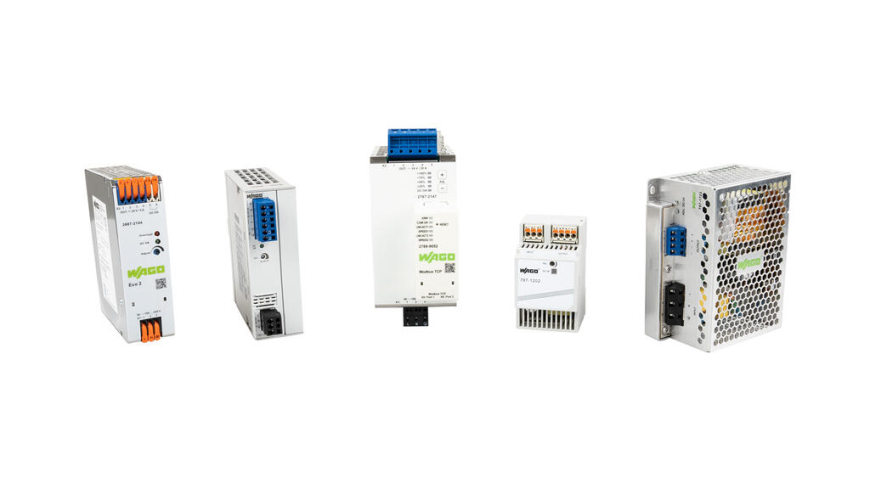
DIN Rail Power Supplies: What the Selection Criteria Actually Are

The selection criteria for DIN rail power supplies are well-established in theory and frequently misapplied in practice, particularly when cabinet designers focus primarily on output current ratings and price while underweighting the efficiency, reliability, and diagnostic capability factors that determine long-term system performance.

DIN Rail Power Supplies: What the Selection Criteria Actually Are
DIN rail power supplies

DIN rail power supplies are a fundamental component in control cabinet design, converting AC mains supply to the regulated 24 VDC (or other voltages) that power PLCs, sensors, relays, and communication modules. The selection criteria for DIN rail power supplies are well-established in theory and frequently misapplied in practice, particularly when cabinet designers focus primarily on output current ratings and price while underweighting the efficiency, reliability, and diagnostic capability factors that determine long-term system performance.

Output power and current rating: the most fundamental specification. The rated output current of the power supply must accommodate the total current demand of all connected loads, with a design margin (typically 20 to 30 percent) to prevent continuous operation at maximum rated output, which reduces component stress and extends service life. A power supply selected at exactly its maximum rated output for the calculated load has no headroom for load current peaks or future load additions.

Input voltage range: industrial environments frequently experience supply voltage variations from nominal. DIN rail power supplies with wide input voltage acceptance ranges (typically 85 to 264 VAC) maintain regulated output through supply disturbances that would cause narrower-range devices to drop out, improving system availability in environments with variable power quality.

Efficiency and heat dissipation: according to SEMI S23 Environmental Health and Safety Guidelines, power conversion efficiency directly affects heat generation in control cabinets. High-efficiency DIN rail power supplies (Class II energy efficiency, typically above 90 percent) generate significantly less heat than lower-efficiency equivalents at the same output power level. This heat reduction effect is amplified in cabinets with multiple power supplies or in high-ambient-temperature environments where thermal management is a design constraint.


MTBF and reliability rating: for control systems in production environments, power supply failure is a significant source of unplanned downtime. Manufacturer-published MTBF (Mean Time Between Failures) figures enable comparison of expected reliability, though the rating methodology should be confirmed (MTBF calculated by IEC 62380 or MIL-HDBK-217 produces different values for the same physical design).

Diagnostic and signaling outputs: modern DIN rail power supplies provide output status signaling (DC OK relay contacts or signal outputs) that can be integrated with system monitoring logic to detect power supply failure or output voltage deviation before it causes a system fault. This diagnostic capability reduces troubleshooting time and enables condition monitoring integration with PLC or SCADA systems.

Parallel and series capability: applications requiring higher output current than a single power supply can provide, or requiring redundant supply for critical circuits, need power supplies designed for current sharing in parallel configurations. Not all power supplies are designed for active current sharing in parallel; verify this capability before specifying a parallel configuration.