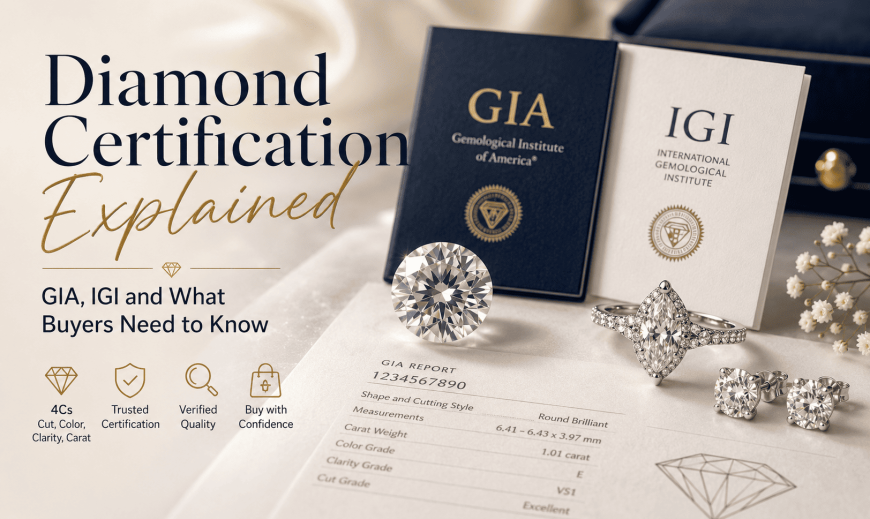
Diamond Certification Explained: GIA, IGI and What Buyers Need to Know
Learn diamond certification explained in simple terms. Understand GIA vs IGI, grading reports, and how to choose certified diamonds confidently.
 Akshat Patel
Introduction: Understanding the Value Behind Diamond Certification
Upon completion of this section, students will be able to recognize the significance of diamond certification.
While purchasing a diamond is more often an emotional choice, there is also a need to understand the diamond quality and authenticity. When they see different certificates and grading reports attached to their diamonds, many buyers are confused, particularly if the price difference is huge between similar-looking stones. Diamond certification is then significant as it works as a trusted identity card for the stone, and gives buyers an understanding of what they are buying.
A Certificate guarantees transparency of quality, grading and value. From casual to formal occasions, certification can eliminate uncertainty and boost confidence. Today, the word of certified jewellery is the key element of trust between the buyer and the seller, particularly when dealing with reliable stores, such as ErayaSparkle.
Understands the meaning of diamond certification
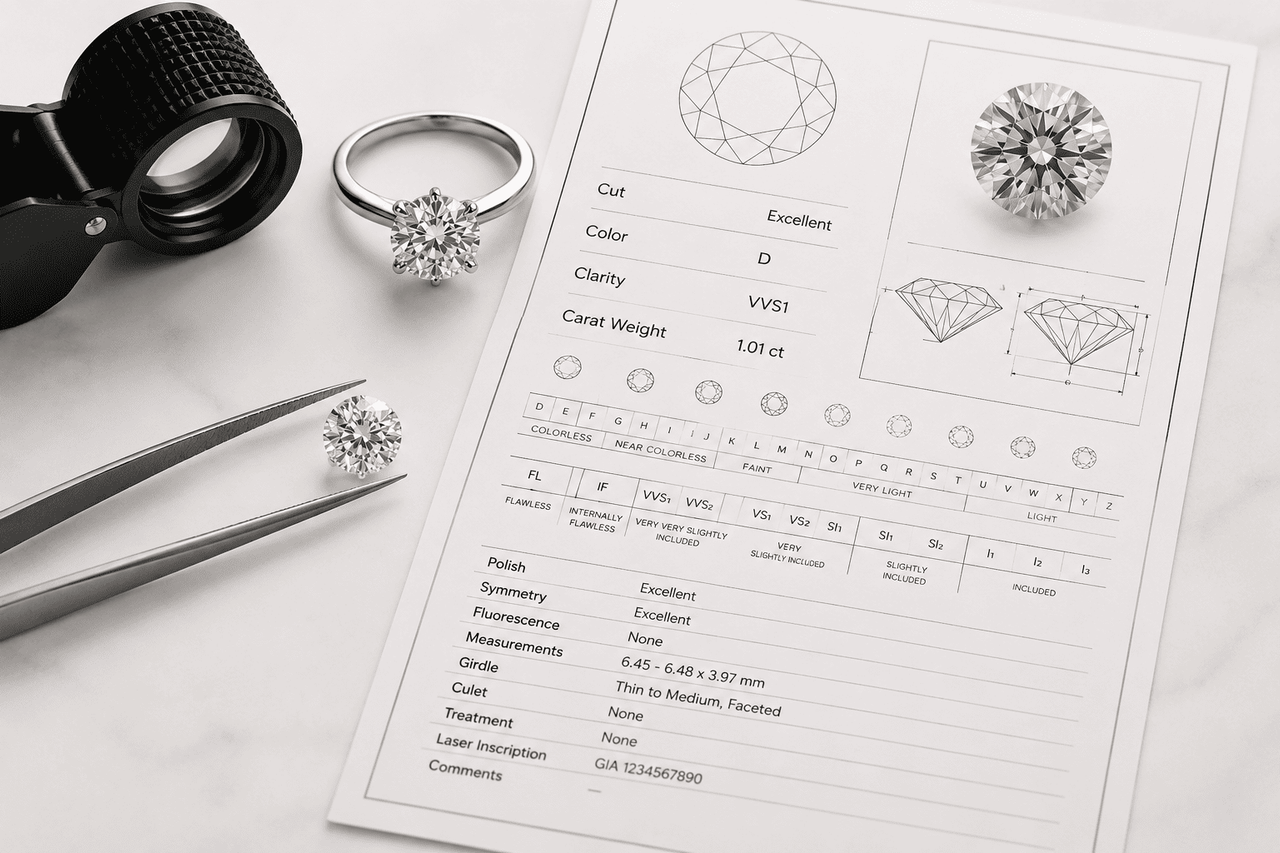
A detailed grading report by a professional gemological laboratory is called a diamond certification, determining a diamond's quality based on the 4Cs—cut, color, clarity and carat weight. This report serves as a technical document that provides a clear and consistent explanation of the quality of the diamond, allowing the buyer to make a fair comparison of diamonds.
A certified diamond is a diamond that has been evaluated by someone other than the diamond seller, in contrast to a non-certified diamond, which has only been assessed by the diamond seller. This minimises the risk of inaccurate information and makes the buyer know exactly what he or she is getting. It also has a significant impact on the resale value and long-term trust in the stone.
GIA Certification Explained in Simple Terms
GIA is one of the most reputed names in the field of diamond grading. This institute has a rigorous and consistent grading system which is renowned globally. Evaluated by GIA, the diamond is assessed with extremely strict requirements and there is little room for variations, making it one of the most trusted certifications in the jewellery market.
The rigorous grading of clarity and color is a specialty of the GIA. A diamond graded by GIA is more likely to be fairly evaluated than other systems. This certification is often required for high-value natural diamonds in the international market, as it provides a strong guarantee of authenticity and quality, making it an attractive option for potential buyers.
In the digital age, IGI Certificate is becoming more popular.
Another popular source that is widely known is IGI which has gained popularity, particularly in recent years, with the upsurge of lab grown diamonds. IGI provides rapid and easy certificates, and many modern jewellery companies utilise the IGI system due to its efficiency and worldwide availability.
IGI grading is applicable to any diamond, whether it is a natural one or lab-created, making it a versatile choice for the modern jewellery market. Its grading is slightly more moderate than GIA in some areas, but it's still highly trusted, particularly in the case of modern jewellery collections where lab-grown gems are sought after. This means that IGI plays a crucial role in the contemporary diamond industry infrastructure.
GIA vs IGI: What's the true difference?
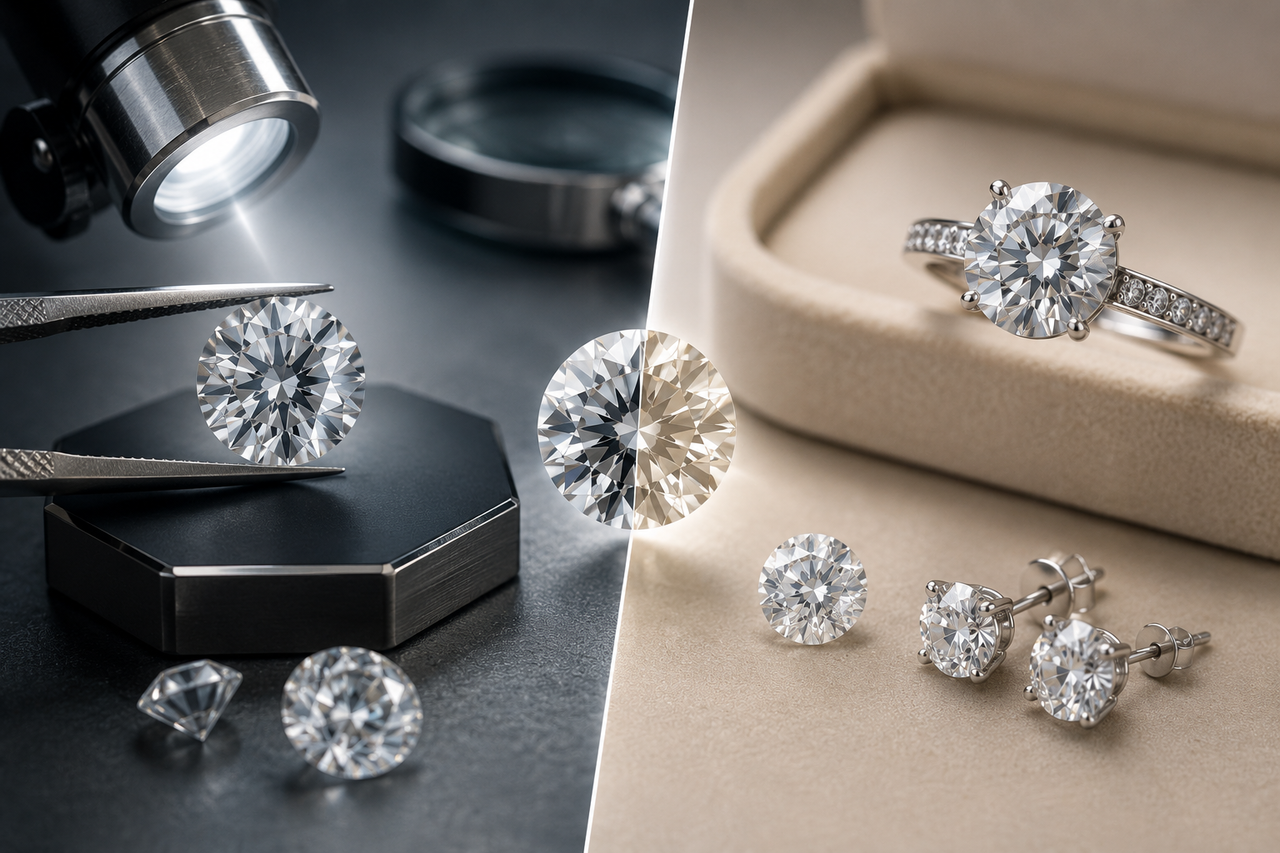
The key difference between GIA and IGI is that their grading is strict as compared to IGI and the perception of the market. GIA has a conservative and very strict grading standards, that can sometimes lead to a slightly lower clarity or colour grade for this diamond than other labs do. IGI, on the other hand, has been regarded as more flexible and is much adapted to the retail and lab-grown diamond industry.
The two major differences in value perception are that a GIA certified diamond is considered high quality in the natural diamond market, and IGI certified diamonds are considered high-quality in lab grown collections. Nowadays, many jewellery buyers look for a purpose – not only for prestige but for transparency and practicality in the purchase of jewels.
Please read the following to make sure you are in possession of a copy of your Diamond Certificate.
Thanks to online verification systems, the process of verifying the authenticity of a diamond certificate is now easier. GIA maintains a secure website to enter the report number, and instantly confirm all the information. This means that the diamond will be the same as the grading report and won't be misrepresented or mismatched.
IGI also has a digital certificate verification system, where the details of the certificate can be verified online by the customer. This transparency is crucial for instilling buyer confidence and security during diamond purchases, particularly when buying online or through a curated jewellery platform where trust is paramount.
Top 10 Shopping Errors to Steer Clear Of
A frequent error customers make when purchasing a new HVAC system is not considering certification and only looking at the look or the cost. Two diamonds appear identical to the naked eye, but can be vastly different in terms of quality, and this is only discovered through certification. A common error is failing to check the certificate online and sometimes this can cause confusion or misrepresentation.
Another common misconception is that buyers think all certifications are the same, even though there are differences between labs. This can cause faulty value comparisons and bad buying decisions. Knowing how each certification operates will prevent these mistakes and make more informed purchasing decisions.
Here are some tips on how to purchase a certified diamond:
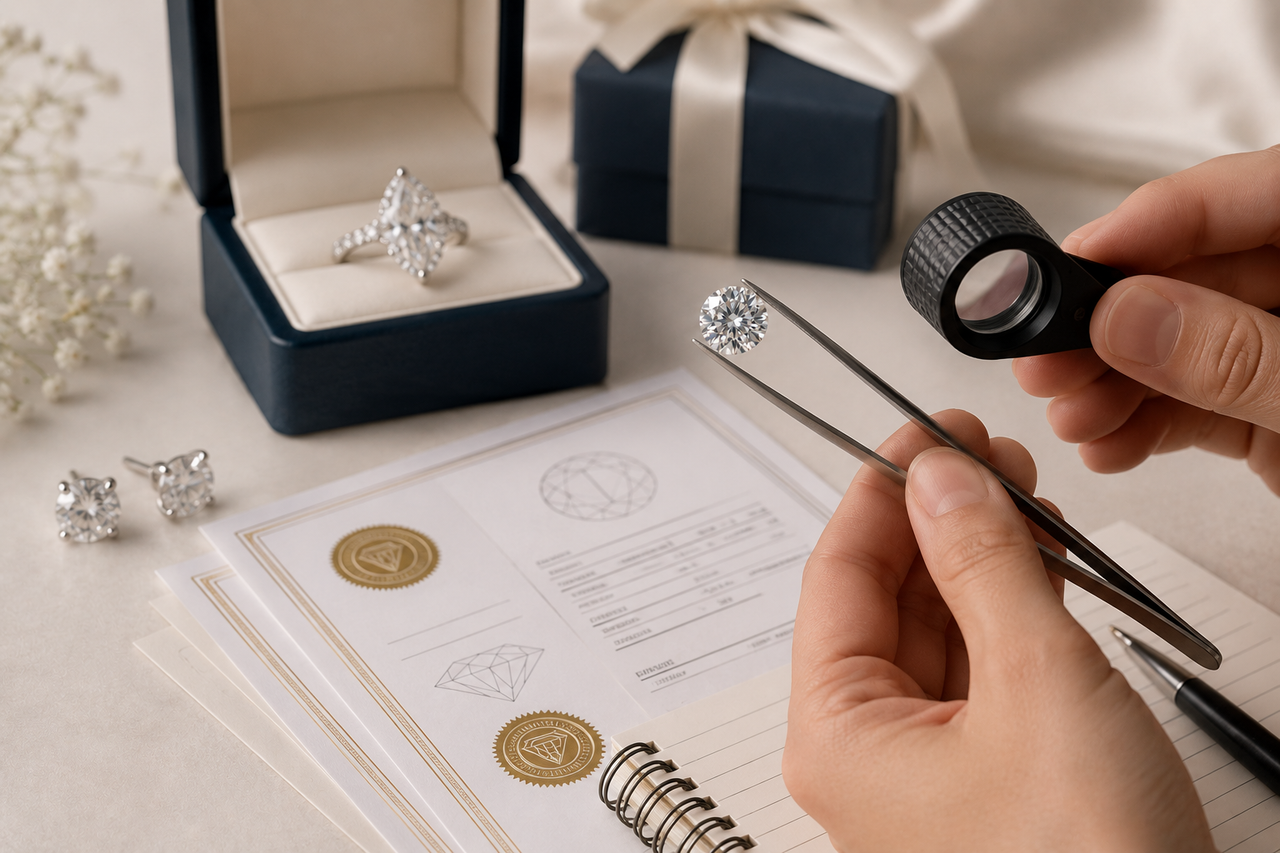
It is always better to buy certified diamond than non-certified ones as they are transparent and trustworthy in the long run. It is always important to check the certificate number and know the 4C's before buying a diamond. This all contributes to selecting the best diamond for both price and expectations.
In fact, there are modern designs that are new, like lab grown marquise diamond ring , that many people choose to purchase because of the high level of IGI certification in the lab grown market. Another example of everyday elegance is often choosing a pair of ladies diamond stud earrings , often a choice that is made based on the certification clarity ensuring that they sparkle consistently and have the same quality for a long time. With a company such as ErayaSparkle, it's evident that they embrace this strategy with a design that centers on certification.