Creating a Culture of Safety: Key Health & Safety Practices for Childcare Centres
Create a strong culture of safety in your childcare centre with practical health, hygiene, supervision and family-engagement practices.
 Estimate Lift
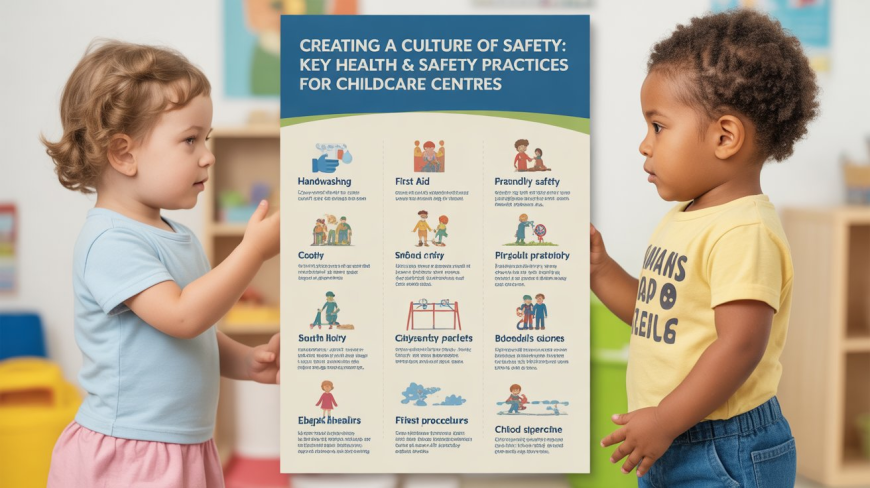
In any early-years setting, the sense of safety is more than the absence of harm—it’s the presence of trust, clarity and well-being. Imagine a bright room where children play, explore and learn, confident that their world is safe; where staff and families share the same language about “what safe means” and are committed together. In today’s childcare landscape, embedding this culture isn’t optional—it’s essential. Whether you’ve ever enrolled in a Child Behaviour course Online or are simply seeking to elevate your centre’s quality, this narrative guides you through building strong health and safety practices that shape a positive culture from the ground up.
Why culture matters more than just rules
It’s tempting to think “we have the safety checklist, we’re covered,” but culture works at a deeper layer. A culture of safety means that everyone—leadership, educators, families, children—feels empowered to voice concerns, follow consistent practices, learn from incidents, and trust each other. Rules alone don’t build that trust; shared practices and honest communication do.
1. Active supervision and hazard-free environments
One of the strongest foundations of safety is active, intentional supervision: keeping children within sight and sound, scanning the room, positioning staff strategically and eliminating blind spots. A well-supervised room reduces risk of injuries or incidents. Alongside this, the physical environment must be designed with safety in mind: uncluttered floors, secure gates, age-appropriate equipment, clear pathways and safe outdoor surfaces. When the furniture, toys and space are arranged for visibility and access, children can engage freely without unnecessary risk.
2. Hygiene, health screening and illness prevention
Safe settings protect children not only from accidents but from illness and infection. Regular hand-washing routines, proper diapering and toileting practices, daily health checks, and clear policies for when children must stay home are key. Clean toys and surfaces, proper ventilation and attention to food-handling all contribute to fewer sick days and stronger wellness overall. When illness patterns are broken by proactive hygiene and screening, the centre becomes a place of stable participation and flourishing.
3. Emergency readiness and clear procedures
Emergencies—whether fire, severe weather, medical crisis or intruder threat—cannot be ignored. A centre committed to safety has well-practised plans: evacuation routes, shelter-in-place procedures, staff roles clearly defined, regular drills and parental communication. More than a signed sheet, it means staff know what to do even when adrenaline is high. A culture of safety embraces calm preparedness, recognizing that children model adult responses. When they see adults confident and clear in a crisis, their own sense of safety strengthens.
4. Staff training, qualifications and ongoing learning
Even the best environment fails if staff aren’t equipped. Training in first aid, CPR, safe sleep, behaviour strategies, hygiene practices and emergency procedures ensures that every adult in the room can act—and act confidently. Beyond initial certification, there’s value in ongoing reflection and professional development: staff coaching, peer observations, debriefing incidents and revisiting practices. A centre that invests in its people invests in genuine safety culture, not just compliance.
5. Family engagement and consistent partnerships
Safety doesn’t stop at the door when the child leaves for home; it begins well before and continues through the family-centre loop. Inviting families into conversations about health and safety—sharing policies, reporting illness, communicating about incidents, explaining routines—creates alignment. When families and centre staff use the same language, expectations, and routines, children feel stability and trust across environments. Maintaining open channels of communication with families builds a shared culture of safety.
6. Monitoring, reflection and continuous improvement
Nothing stays static in children’s services. Every term or year you’ll discover new patterns, new challenges, new children with unique needs. A centre serious about safety builds in regular review: data on incidents, near-misses, illness rates, outdoor play injuries, equipment faults, supervision lapses. It holds a staff meeting to review what worked, what didn’t, and then adapts routines, revises layouts, updates policies. When safety is treated as living and evolving, the culture stays vibrant rather than stagnant.
Bringing it all together: an example scene
Picture this: At 8:30 am, children arrive and are greeted at a secure entrance where only authorised adults enter. Staff on morning duty scan transitions as children self-check into the build-your-name block area. At hand-washing stations, children pause for routines, with visual cues and teacher modelling. In one corner, the sand-and-water table has clear sight-lines and staff supervise from a vantage point that covers both inside and outdoor flows. A staff member holds a tablet to note a spill on the floor and alerts maintenance immediately; children are directed to wipe it up together. Later in the day, during outdoor play, two staff members position themselves opposite each other with a clear view of climbing equipment, while the sand-pit is emptied and replaced to reduce hidden hazards. Meanwhile, the family app sends a midday update: “We did our fire-evacuation drill this morning—everyone did well waiting quietly and gathering at our safe spot.” In the afternoon, three staff reflect: find that afternoon transitions see more pushing and tag-play injuries; they decide to stagger free-play to reduce number of children in movement areas, and will trial an additional transition song next week. That evening, a short bulletin is sent home: “Reminder: please keep your child home for 24 hours if they’ve had a fever.” The next day, a new arrival is given a welcome orientation where the child is shown safety zones, hand sanitizer station, and the “help” card for when they’re worried.
In this story you see a culture built through many small, consistent actions—not just one big safety plan. It’s the way routine, design, communication and reflection come together.
Final thoughts
Creating a culture of safety in a childcare centre is more than ticking boxes—it’s about building trust, relationships, consistent routines and habits that support every child’s right to learn in security. When environments are designed, staff are trained, families are engaged and systems evolve, safety becomes woven into the very fabric of the setting. For programme leaders, this means making health and safety as much a part of the day-to-day narrative as learning and play. For educators, it means noticing the detail, communicating the why, modelling calm and confidence. For families, it means being partners and contributors in the safety story. The result? A place where children thrive—because they are safe, seen, and supported.