Can You Switch Careers with an MBA for Working Professionals?
Discover the best MBA specializations to accelerate your career. A complete guide on choosing the right MBA for working professionals in India.
 mayadevi3r
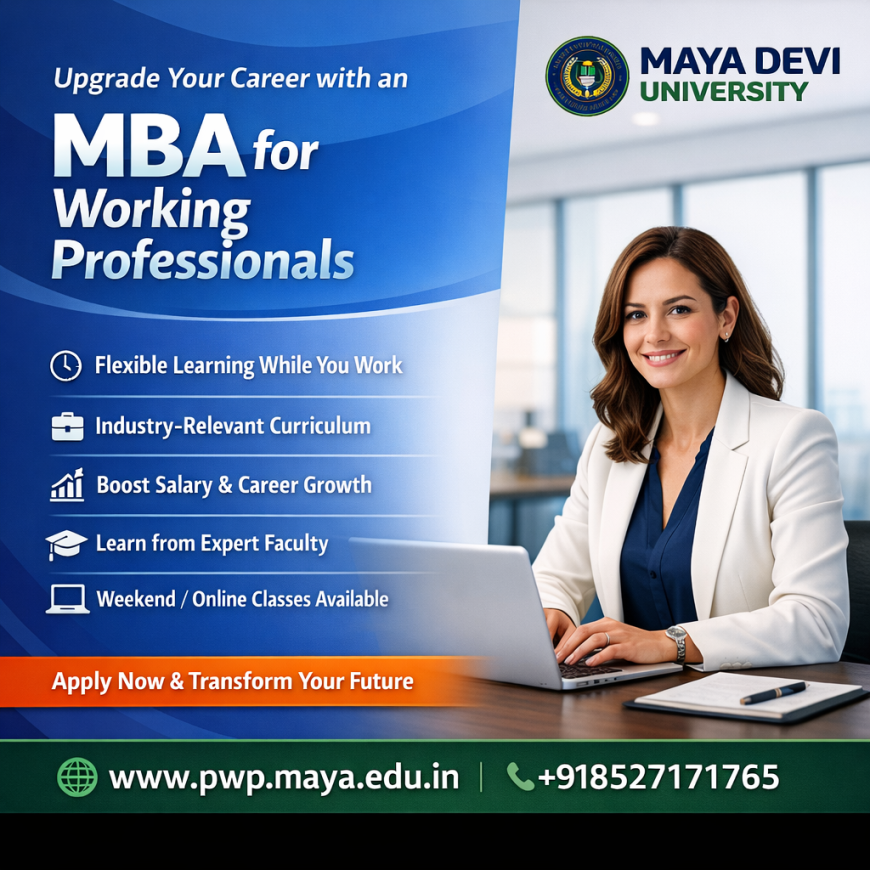
Are you feeling stuck in your current job role? Many diploma holders and experienced employees reach a point where upward mobility stalls, or their current industry simply loses its appeal. If you want to pivot to a new field or secure a leadership position, you might wonder about the right educational step to take next. Pursuing an MBA for working professional pathways is one of the most effective strategies to change your career trajectory without putting your life on hold.
Switching careers can feel daunting, especially when you have already invested years into a specific industry. However, the modern business landscape values adaptable professionals who bring diverse experiences to the table. This guide will explore how advancing your education helps you seamlessly transition into a new industry, the skills you will acquire, and how to choose the right path for your future.
Why Consider a Career Switch?
Professionals decide to change careers for various reasons. For some, it is about finding better growth opportunities or a higher salary. For others, it is about aligning their daily work with their evolving passions. Diploma holders, in particular, often find that while their technical skills are strong, moving into managerial or executive roles requires a broader understanding of business strategy.
Whatever your reason, making a shift requires more than just updating your resume. Employers look for candidates who understand business fundamentals, strategic thinking, and leadership. This is where advanced business education becomes a crucial tool. It bridges the gap between your past experience and your future goals, providing the credentials and knowledge needed to open new doors.
How Advanced Education Facilitates a Smooth Transition
When you decide to transition to a new field, you face a common challenge: you lack direct experience in that specific industry. An MBA acts as a powerful equalizer. Here is how it helps you navigate a career change.
Developing Transferable Leadership Skills
Technical skills often vary by industry, but leadership, communication, and strategic thinking are universally valued. Business programs focus heavily on these transferable skills. You learn how to manage teams, analyze financial data, and develop marketing strategies. When you interview for a role in a new field, you can highlight these competencies to prove your capability, regardless of your previous job title.
Expanding Your Professional Network
One of the most significant advantages of business school is the network you build. You will study alongside peers from various industries, learning from their experiences and perspectives. This network becomes invaluable when you are looking to switch careers. Classmates, professors, and alumni can provide insights into different fields, offer mentorship, and even connect you with job opportunities.
Gaining Credibility in the Market
Having a recognized credential on your resume immediately signals to employers that you are serious about your career and possess a high level of business acumen. When exploring an MBA program in India, you will find that employers highly respect the dedication required to balance work and rigorous studies. It shows resilience, time management, and a commitment to continuous improvement.
Choosing the Right Path: Top MBA Specialisation Options
To successfully switch careers, you must choose a focus area that aligns with your new goals. Selecting the right MBA specialisation is a critical step in signaling your new direction to potential employers. Here are some of the best MBA courses to consider, depending on where you want to go.
Marketing and Digital Marketing
If you want to move into a creative yet data-driven field, marketing is an excellent choice. Traditional marketing provides a solid foundation in consumer behavior, brand management, and market research. However, specializing in Digital Marketing equips you with high-demand skills in search engine optimization, content strategy, and data analytics. These skills are essential across nearly every industry today, making it a highly versatile choice for career switchers.
Human Resources
For those who excel in interpersonal communication and want to focus on organizational development, a specialization in Human Resources is ideal. You will learn about talent acquisition, employee relations, performance management, and organizational behavior. Every company needs strong HR leadership, providing ample opportunities to enter a new industry.
FinTech (Financial Technology)
The financial sector is rapidly evolving, merging traditional finance with innovative technology. A FinTech specialization prepares you for roles at the intersection of these two fields. You will explore topics like blockchain, digital banking, and financial data analysis. If you have a background in IT or traditional finance and want to pivot to a cutting-edge industry, this is one of the most strategic paths available.
Travel & Tourism
If you are passionate about global business and customer experience, the Travel & Tourism sector offers dynamic career opportunities. This specialization focuses on hospitality management, international business strategies, and sustainable tourism. It is a fantastic option for professionals looking to transition into a vibrant, service-oriented industry.
Navigating the Job Market with Working Professional Degrees India
The educational landscape has evolved significantly to accommodate adult learners. Institutions now offer flexible formats, such as weekend classes and executive modules, allowing you to study while maintaining your current employment. These Working Professional Degrees India are designed specifically for individuals who need to balance their jobs, families, and education.
By choosing a program tailored for working adults, you benefit from a curriculum that integrates practical, real-world applications. You can often apply what you learn in class directly to your current job, creating immediate value for your employer while building the skills you need for your future career switch.
read more: Is B Tech in Civil Engineering Worth It for Working Professionals in 2026?
Steps to Successfully Pivot Your Career
Getting your degree is only one part of the equation. To truly succeed in changing careers, you need a strategic approach.
1. Identify Your Target Industry Early
Do not wait until graduation to decide where you want to go. Research industries that interest you and align with your chosen specialization. Understand the specific challenges those industries face and think about how your unique background, combined with your new business skills, can help solve them.
2. Tailor Your Resume
Translate your past experience into the language of your new target industry. Focus on achievements rather than just listing daily duties. Highlight the leadership, project management, and strategic initiatives you undertook, emphasizing how these skills apply to the roles you are pursuing.
3. Leverage Your Academic Projects
Use your coursework to build a portfolio relevant to your new career. Choose case studies, group projects, and assignments that focus on your target industry. This allows you to gain practical knowledge and gives you concrete examples of your work to discuss during job interviews.
4. Engage in Informational Interviews
Reach out to professionals working in the roles you want. Ask them for 15 minutes to discuss their career path and the realities of their industry. These conversations provide valuable insights and help you build relationships that may lead to job opportunities.
Conclusion: Your Next Step Forward
Switching careers is entirely possible with the right preparation and credentials. By pursuing an MBA for working professional advancement, you gain the strategic knowledge, leadership skills, and network necessary to pivot successfully. Whether you are a diploma holder looking to break into management or an experienced employee seeking a fresh start, advanced business education provides the bridge to your new future.
Choosing the right specialization—whether that is Marketing, Digital Marketing, Human Resources, FinTech, or Travel & Tourism—allows you to target your desired industry with precision.
At maya devi university, we understand the unique challenges faced by adult learners. Our business programs are meticulously designed to provide flexible, high-impact education that empowers you to achieve your career goals. With specialized tracks in Travel & Tourism, Marketing, Digital Marketing, Human Resources, and FinTech, we equip you with the industry-relevant skills needed to transition confidently into your next big role. Take the leap and invest in your future today.
Frequently Asked Questions
Can I switch to an entirely different industry after getting my business degree?
Yes, it is very common. The core skills taught in these programs—such as leadership, strategic planning, and financial analysis—are highly transferable. Employers often value candidates who bring fresh perspectives from different industries.
Is it difficult to balance work and studies?
It requires excellent time management and dedication, but programs designed for working adults offer flexible schedules, such as weekend or evening classes. Setting a clear routine and communicating with your employer about your educational commitments can help manage the workload.
Do employers value degrees earned while working as much as full-time programs?
Absolutely. Many employers highly respect professionals who complete their studies while maintaining employment. It demonstrates strong work ethic, time management, and a high level of motivation.
How do I choose the right specialization for a career change?
Consider your long-term career goals and the industries that interest you most. Research the skills in highest demand within those fields. Informational interviews with professionals in your target industry can also provide clarity on which specialization will be most beneficial.
Will my previous work experience still matter if I change fields?
Yes, your past experience is a valuable asset. Soft skills like communication, problem-solving, and team management are crucial in any field. The key is learning how to articulate how your past experiences make you a stronger candidate for your new chosen path.