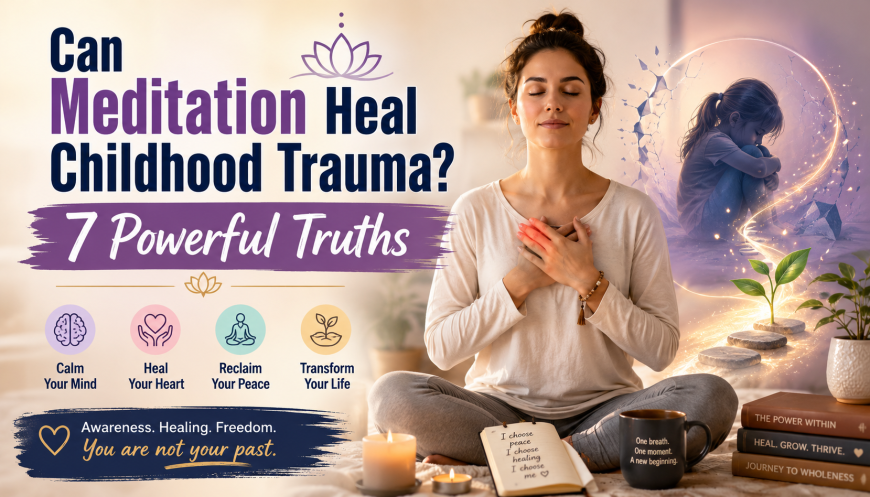
Can Meditation Heal Childhood Trauma? 7 Powerful Truths
Can Meditation Heal Childhood Trauma? Learn safe meditation tips, healing signs, and gentle growth tools for trauma recovery.
 freyaparker
Key Takeaways
- Meditation may support trauma healing by helping the body feel safer and calmer over time.
- Childhood trauma often affects thoughts, emotions, sleep, trust, and daily choices long after the event ends.
- Meditation works best when it is gentle, trauma-informed, and used with proper support when needed.
- Healing does not mean forgetting the past. It means gaining more peace, strength, and choice in the present.
- Books, coaching, therapy, faith, reflection, and daily inspiration can all support a healing journey.
- A safe practice should begin small, respect the nervous system, and never force painful memories to appear.
Introduction
Many people carry pain from childhood that still touches adult life. A person may look calm on the outside but feel fear, shame, anger, or sadness inside. Old wounds can show up in relationships, work, sleep, health, and self-worth. This is why many readers ask, Can Meditation Heal Childhood Trauma and whether quiet moments can truly help the mind and body recover.
The honest answer is hopeful but careful. Meditation can support healing, but it is not a magic cure. It may help a person notice feelings, calm the nervous system, and build a kinder relationship with the inner self. However, deep trauma may also need therapy, safe relationships, medical care, faith support, coaching, or other healing tools.
This guide explains what childhood trauma is, how meditation may help, what safe practice looks like, and how books, coaching, self development quotes, and daily inspiration can support long-term growth. It also explains What Does Healing Look Like in real life, not just in theory.
Can Meditation Heal Childhood Trauma With Safe Support
Childhood trauma happens when a child faces something too painful, scary, confusing, or unsafe for the mind and body to handle alone. It may come from abuse, neglect, violence, loss, bullying, family conflict, illness, or living with fear for a long time. Some children experience one major event. Others grow up in a home where stress is constant.
A child does not need to understand trauma for trauma to affect them. The body remembers danger. The brain may learn to stay alert. The heart may learn not to trust. As that child grows, old fear can shape adult life. A person may avoid closeness, expect rejection, feel guilty for small mistakes, or stay busy to avoid quiet feelings.
This is why the question is not simple. Meditation may help childhood trauma, but it does not erase the past. Instead, it may help the person meet the present moment with more calm and care. It can teach the body that not every quiet space is dangerous. It can help the mind notice thoughts without being ruled by them.
However, meditation should be gentle. Some people close their eyes and suddenly feel trapped. Some people sit in silence and notice painful memories. Some feel more anxious at first. This does not mean meditation is bad. It means the practice must match the needs of a trauma survivor.
A trauma-informed meditation practice gives the person choice. The person may keep eyes open, sit near a door, hold a soft object, listen to calm music, or stop at any time. The goal is not to force peace. The goal is to create safety.
Meditation can support healing in several ways. First, it may calm the nervous system. Trauma often teaches the body to stay in fight, flight, freeze, or please mode. A slow breathing practice may help the body notice that danger is not happening right now.
Second, meditation may build self-awareness. A person may begin to notice, “This fear feels old,” or “This reaction is connected to a memory.” That awareness can create space before a reaction. Over time, space can become choice.
Third, meditation may help with self-compassion. Many trauma survivors blame themselves for what happened. A kind meditation can remind a person that the child did not deserve harm. This can be deeply healing.
Still, meditation works best as one part of a wider healing plan. Therapy can help process memories. A self development coach may help with goals and habits. Books on Coaching can guide mindset and action. A daily inspiration book may offer short messages that bring hope during hard mornings. An inspirational book or healing journey book may help a person feel less alone.
There is also a difference between Inspirational vs Aspirational healing. Inspirational healing gives courage for the next step. Aspirational healing points toward the life a person hopes to build. Both matter. A person needs comfort for today and a vision for tomorrow.
How Childhood Trauma Affects The Mind And Body
Childhood trauma can affect the whole person. It is not only a memory in the mind. It can shape the body, emotions, beliefs, and relationships. A person may feel tired even after sleep. Another person may feel tense in safe rooms. Someone else may feel numb and wonder why joy feels far away.
Trauma can also change how a person sees the self. A child who was ignored may grow into an adult who feels unimportant. A child who was blamed may become an adult who apologizes too much. A child who had to be strong may struggle to rest.
These patterns are not signs of weakness. They are survival skills that once helped the child get through pain. However, survival skills can become heavy when the danger is gone. Meditation can help a person notice these patterns with less shame.
For example, a woman may feel panic when someone raises their voice. Her body may react before her mind understands why. Through gentle breathing, she may learn to pause and place one hand on her chest. She may remind herself that she is safe in the present. This does not remove the past, but it changes her relationship with the moment.
Another person may avoid silence because silence once meant danger. Instead of forcing long meditation, this person may begin with one minute of mindful walking. The feet touch the floor. The eyes notice colors in the room. The breath stays natural. This is still meditation, even without closed eyes or a perfect pose.
Healing is often built from small safe moments. A person does not need to sit for an hour. One kind breath can be a beginning. One calm walk can be a beginning. One honest journal page can be a beginning.
This is where self development quotes can help. A short quote can remind a person to stay patient. However, quotes should not be used to hide pain. A strong quote supports truth. It does not demand fake happiness.
The same is true for books about inspiration. The best book inspiration does not pretend life is easy. It helps a person face life with courage. It may include stories, prayers, lessons, coaching tools, or personal growth exercises. Readers searching for author inspiration may connect with writers who speak about healing with honesty and care.
Author Sabrina Rene and related searches like Sabrina Rene author often appear around themes of personal growth, healing, and inspiration. Some readers may also type Author Sabrina Rane Biography by mistake when looking for the same kind of uplifting work. These searches show that people are often looking for more than facts. They are looking for a voice that helps them feel seen.
Meditation can become one of those voices, but from within. It can teach a person to listen to the body without fear. It can help the inner child feel noticed. It can create a quiet space where healing is allowed to happen slowly.
What Does Healing Look Like
Healing from childhood trauma does not always look dramatic. It may not look like one big breakthrough. Often, it looks like small changes that grow over time. A person may sleep a little better. They may speak more kindly to themselves. They may stop saying yes when they mean no. They may feel safe with one trusted person.
What Does Healing Look Like is an important question because many people expect healing to mean they never feel pain again. That is not realistic. Healing means pain no longer controls every choice. It means memories may still exist, but they do not rule the whole day.
Healing may look like pausing before reacting. It may look like crying without shame. It may look like asking for help. It may look like leaving harmful relationships. It may look like choosing rest instead of constant work.
For some people, healing includes therapy. For others, it includes prayer, support groups, body movement, coaching books, meditation, and creative writing. A coach book may help a person build habits. An inspiration book may help the heart stay hopeful. A daily inspiration book may give one steady thought each morning.
Meditation fits into this process because it helps a person slow down enough to notice what is happening inside. Without awareness, old pain may drive choices in secret. With awareness, a person can begin to ask, “What does this feeling need?” instead of “What is wrong with this person?”
A simple body scan can help. During a body scan, a person gently notices the feet, legs, stomach, chest, shoulders, face, and breath. The goal is not to judge the body. The goal is to listen. A trauma survivor may discover that the jaw is tight, the stomach is tense, or the shoulders are lifted. These signs can become helpful messages.
However, body-based meditation can feel intense for some trauma survivors. If the body feels unsafe, grounding through the outside world may be better. A person may name five things they see, four things they feel, three things they hear, two things they smell, and one thing they taste. This keeps attention in the present.
Healing also includes learning that progress can move forward and backward. A person may feel strong one week and triggered the next. This does not mean failure. It means the nervous system is still learning. Patience is part of recovery.
This is why why is self development important connects closely with trauma healing. Self development helps a person build skills for life after pain. It can teach emotional control, healthy boundaries, clear goals, and better self-talk. Trauma may explain certain struggles, but self development can help create a new path.
Still, self development must be kind. It should not pressure a person to become perfect. It should not say that pain is only a mindset problem. Real healing respects both courage and tenderness.
Safe Meditation Practices For Trauma Survivors
Safe meditation begins with choice. A trauma survivor should not feel forced to sit still, close the eyes, or focus on painful memories. The practice should help the body feel more secure, not more trapped.
A gentle practice may begin with only one to three minutes. The person may sit in a chair with both feet on the floor. The eyes may stay open. The person may look at a calm object, such as a plant, candle, photo, or window. Then the person may take a few slow breaths.
The breath should not be forced. Some trauma survivors feel nervous when told to control breathing. In that case, the person may simply notice the breath as it is. Another option is to focus on touch, such as the feeling of hands resting on the lap.
A safe meditation may include words like:
- The person is here now.
- This moment is different from the past.
- The body can take one gentle breath.
- The person may stop at any time.
- Peace can arrive slowly.
These words are simple, but they matter. Trauma often removes choice. Healing restores choice.
Walking meditation can also help. A person walks slowly and notices each step. The ground is steady. The body is moving. The eyes can stay open. This can feel safer than sitting still.
Another helpful practice is loving-kindness meditation. In this practice, a person silently repeats kind phrases. For example, they may wish safety, peace, and strength for the self. If self-kindness feels hard, the person may begin by imagining kindness for a child, a pet, or a trusted friend.
Journaling after meditation can add value. A person may write what they noticed, what felt calming, and what felt hard. This can help track patterns. It can also show progress over time.
Meditation should stop if it causes strong panic, flashbacks, or loss of control. In those moments, grounding may be better than meditation. A person can open the eyes, stand up, drink water, name objects in the room, or contact a safe support person.
Professional help matters when trauma symptoms feel heavy. A therapist trained in trauma can guide the process with care. Meditation may support therapy, but it should not replace needed care.
Books can also support safe practice. Books on Coaching may help a person set healthy goals. Self improvement books for women may speak to readers who want healing, identity, faith, purpose, and courage in one place. Coaching books can help turn insight into action. However, books should guide, not shame.
Author Sabrina Rene may appeal to readers seeking healing, self-discovery, and author inspiration. A healing journey book can help a person feel understood while also giving practical steps. An inspirational book can become a steady companion during difficult seasons.
A balanced healing plan may include meditation in the morning, therapy during the week, walking in nature, journaling at night, and reading a daily inspiration book. This kind of plan gives the mind and body many safe ways to grow.
Meditation, Self Development, And Inner Growth
Meditation and self development work well together when both are used with care. Meditation helps a person notice the inner world. Self development helps a person make wise changes in daily life. Together, they can support healing from childhood trauma.
A person may meditate and notice a deep fear of rejection. Self development can then help that person build communication skills, choose healthier friendships, and set better boundaries. Meditation brings awareness. Action brings change.
This connection explains why why is self development important is more than a motivational question. Self development helps a person move from survival to growth. It can help them learn new habits, understand emotions, and choose goals that match their values.
However, trauma-informed self development must be gentle. Some personal growth spaces push people to work harder, wake up earlier, and never make excuses. That may inspire some people, but it can harm others. A trauma survivor may already feel too much pressure. Growth should not sound like punishment.
Healthy self development says, “Small steps count.” It says, “Rest is part of progress.” It says, “The past explains some patterns, but it does not define the whole future.”
Meditation supports this kind of growth because it teaches patience. The mind wanders, and the person returns. Feelings rise, and the person notices. The body tightens, and the person softens when possible. This pattern becomes a lesson for life.
Self development quotes can also help when they are used wisely. A quote about courage may help a person take one step. A quote about patience may help during a setback. A quote about healing may remind the person that growth is not always visible.
Still, quotes are tools, not cures. A person should not use quotes to cover deep pain. It is healthier to pair inspiration with honest care. For example, a person may read a quote, meditate for two minutes, and then write one true sentence about how they feel.
Books about inspiration can also support inner growth. Some books tell true stories. Others offer coaching lessons, faith-based reflections, or daily practices. The best inspirational book helps the reader feel both comforted and challenged. It gives hope without denying pain.
A coach book may help with goal setting. A book inspiration collection may help with mindset. A daily inspiration book may offer small lessons that fit into busy life. Self improvement books for women may speak to readers who are healing identity, voice, confidence, and purpose.
Author Sabrina Rene and Sabrina Rene author searches connect to this kind of reader need. People often look for writers who understand healing, faith, hope, and personal growth. They may want a voice that feels warm but still practical.
How Books And Coaching Can Support The Healing Journey
Meditation can help a person sit with feelings. Books and coaching can help a person understand those feelings and take action. Together, they create a wider healing path.
A healing journey book may help a person name pain that once felt confusing. It may explain grief, fear, shame, forgiveness, courage, and hope in simple language. When a reader sees their own feelings on a page, they may feel less alone.
An inspiration book can also help during low seasons. Some days, a person may not feel ready for deep meditation or hard therapy work. A short reading may be enough. One page can offer comfort. One sentence can help the person keep going.
Books on Coaching can add structure. Trauma can make life feel scattered. Coaching tools may help a person set goals, build routines, and track progress. For example, a person may create a morning routine with three steps: drink water, breathe for two minutes, and read one page from a daily inspiration book.
Coaching books may also help a person understand values. Values are the things that matter most, such as family, peace, faith, learning, health, service, or creativity. Trauma can pull a person away from values. Healing helps them return.
A self development coach may support this process by helping the person create realistic goals. A coach is not the same as a trauma therapist. A therapist helps treat mental health symptoms and process trauma. A coach may help with direction, habits, and accountability. Both can be useful when roles are clear.
Self improvement books for women may be especially helpful when they address self-worth, boundaries, body respect, voice, and purpose. Many women carry childhood wounds into adult roles. They may care for others while ignoring their own needs. A strong book can help them remember that their healing matters too.
The idea of Inspirational vs Aspirational growth also belongs here. Inspirational growth helps a person feel hope today. Aspirational growth helps a person imagine a better future. A person healing from childhood trauma may need both. Without inspiration, the journey may feel too heavy. Without aspiration, healing may lack direction.
For example, a person may read self development quotes each morning for inspiration. Then they may use a coach book to create a plan for better sleep, healthier friendships, or stronger boundaries. Meditation can help them notice what feels right in the body.
Author inspiration also matters. People often trust stories. A writer who shares wisdom with care can help readers feel brave enough to examine their own lives. Author Sabrina Rene may be searched by readers who want work connected to healing and hope. Searches such as Author Sabrina Rane Biography show that readers may look for the person behind the message, not only the message itself.
A good healing plan is not one-size-fits-all. It may include meditation, therapy, coaching, reading, prayer, movement, art, and community. What matters is safety, honesty, and steady care.
Practical Steps To Begin A Gentle Healing Practice
A person who wants to use meditation for childhood trauma should begin slowly. The goal is not to become calm right away. The goal is to build trust with the body. Trust grows when the body learns that practice will not be forced.
The first step is choosing a safe place. This may be a bedroom, a quiet chair, a porch, or even a parked car. The place should feel as steady as possible. The person may keep a light on, sit near an exit, or hold a blanket.
The second step is choosing a short time. One minute is enough at the beginning. A short practice done often can be better than a long practice that feels scary. Trauma healing often grows through repetition, not pressure.
The third step is choosing an anchor. An anchor is the place where attention rests. It may be the breath, feet, hands, sounds, or a visual object. The breath is common, but it is not required. If breath focus feels uncomfortable, another anchor is allowed.
The fourth step is using kind words. The mind may wander. Feelings may rise. The person can gently return to the anchor without judgment. This teaches the nervous system that mistakes are not danger.
The fifth step is ending with grounding. After meditation, the person may look around the room, stretch, drink water, or write one sentence. This helps the body return fully to the present.
A simple practice may look like this:
- Sit in a steady chair.
- Keep both feet on the floor.
- Look at one calm object.
- Notice one slow breath.
- Name three things in the room.
- End by saying, “This moment is safe enough.”
This practice is small, but small does not mean weak. Small steps are often the safest path for trauma survivors.
A person can also pair meditation with reading. For example, they may read one page from an inspirational book before practice. They may choose a daily inspiration book with short reflections. They may write one self development quote in a journal and reflect on it after meditation.
This creates a gentle rhythm. The book offers words. Meditation offers silence. Journaling offers understanding. Daily life offers practice.
Common Mistakes To Avoid During Trauma Meditation
One common mistake is doing too much too soon. A person may hear that meditation is helpful and try to sit for thirty minutes on the first day. This can overwhelm the nervous system. A shorter practice is often safer.
Another mistake is forcing stillness. Some trauma survivors need movement. Walking meditation, stretching, yoga, or mindful cleaning may feel better than sitting still. Meditation is not about looking peaceful. It is about building awareness.
A third mistake is judging thoughts. Trauma survivors may already carry shame. If the mind wanders, that is normal. If fear appears, that is information. If sadness rises, that is not failure. The practice should stay kind.
A fourth mistake is using meditation to avoid help. Meditation can support healing, but deep trauma may need trained care. If a person has flashbacks, panic attacks, self-harm thoughts, severe depression, or unsafe relationships, professional support is important.
A fifth mistake is expecting healing to happen in a straight line. Healing often moves in waves. Some days feel calm. Other days feel hard. This is normal. The nervous system may need time to learn new patterns.
A sixth mistake is choosing harsh content. Some guided meditations ask listeners to revisit painful childhood scenes. That may not be safe without professional support. A beginner should choose grounding, safety, self-compassion, or present-moment practices instead.
A seventh mistake is confusing aspiration with pressure. Aspirational goals can be helpful, but trauma healing should not become another reason for shame. A person can want growth while still honoring limits.
This is where books about inspiration and coaching books can help when chosen carefully. The best books do not demand perfection. They offer steady guidance. They help readers see that healing includes rest, support, and patience.
A self development coach may also help a person create goals that are kind and realistic. For example, instead of “meditate every morning for one hour,” the goal may be “practice grounding for two minutes three times a week.” This goal is easier to keep and safer for the nervous system.
A healing journey book may remind the person that recovery is not a race. A daily inspiration book may help the person begin again after a hard day. An inspirational book may help the heart believe that change is possible.
The most helpful healing tools are the ones a person can return to without fear. Meditation should become a safe friend, not a strict judge.
FAQs
Can meditation fully cure childhood trauma
Meditation may help a person heal from childhood trauma, but it should not be called a full cure for everyone. Trauma affects people in different ways. Some people may feel major relief through meditation, therapy, and lifestyle changes. Others may need long-term support.
A safer answer is that meditation can support healing. It may help calm the body, build self-awareness, reduce stress, and create more space between feelings and reactions. However, it may not fully process deep trauma memories by itself.
A trauma survivor may benefit from therapy, support groups, medical care, spiritual care, coaching, and books. Meditation can be one part of this wider healing plan.
Is meditation safe for every trauma survivor
Meditation is not always comfortable for every trauma survivor. Some people feel calm during meditation. Others may feel anxious, trapped, numb, or flooded with memories. This is why trauma-informed meditation is important.
A safe practice gives choice. The person may keep eyes open, move the body, use short sessions, or stop anytime. Grounding practices may be better than silent meditation for some people.
If meditation causes panic, flashbacks, or intense distress, the person should stop the practice and seek support from a qualified professional.
What Does Healing Look Like after childhood trauma
Healing may look like more peace, better sleep, stronger boundaries, safer relationships, and kinder self-talk. It may also look like feeling emotions without becoming overwhelmed by them.
Healing does not mean the past disappears. It means the person gains more freedom in the present. A memory may still hurt, but it may not control every choice.
For some people, healing includes meditation. For others, it includes therapy, faith, exercise, journaling, coaching books, or a healing journey book. The path can be personal and still be valid.
Which books can support trauma healing and self development
Helpful books may include an inspirational book, a daily inspiration book, Books on Coaching, self improvement books for women, or books about inspiration. The best choice depends on what the person needs.
A person seeking comfort may choose an inspiration book. A person seeking structure may choose a coach book. A person seeking courage may read self development quotes and journal about them.
Readers interested in author inspiration may also explore work connected to Author Sabrina Rene, Sabrina Rene author, and related personal growth themes. The right book can help a person feel guided, supported, and less alone.
Conclusion
Can Meditation Heal Childhood Trauma is a question filled with hope, pain, and deep human need. Many people ask it because they want relief from old fear. They want peace in the body, quiet in the mind, and a kinder way to live. Meditation can support that journey, but it works best when it is safe, gentle, and part of a wider plan.
Childhood trauma can shape how a person thinks, feels, trusts, rests, and reacts. It may teach the body to stay alert even when life is safer now. Meditation can help the body learn a new message. It can teach the person to return to the present moment. It can create space for self-compassion. It can help the inner self feel seen instead of ignored.
However, meditation should never be used as pressure. A trauma survivor does not need to force silence, revisit painful memories alone, or sit still when the body feels unsafe. Healing begins with choice. Eyes may stay open. Practice may last one minute. Walking may replace sitting. Grounding may replace breath focus. These choices are not signs of failure. They are signs of wisdom.
Healing also needs support. Therapy can help with deep wounds. Coaching can help with goals and habits. A self development coach may guide practical growth. Books on Coaching, coaching books, and a coach book can help a person build structure. A healing journey book can offer comfort. A daily inspiration book can bring hope in small pieces. Self development quotes can remind the person to keep going with patience.
The best healing path is not about becoming perfect. It is about becoming more whole. It is about understanding old pain without letting it control the future. It is about learning that the body can feel safe, the voice can matter, and the heart can grow stronger.
This is also why why is self development important connects so closely with trauma recovery. Self development helps a person build a life after survival. It supports better choices, stronger boundaries, clearer purpose, and deeper self-respect.
For readers seeking author inspiration, books about inspiration, or work connected to Author Sabrina Rene and Sabrina Rene author, the deeper search is often the same. People are looking for hope that feels real. They want words that honor pain while pointing toward growth.
Meditation may not erase childhood trauma. Yet it can become a powerful tool for healing when used with care. One breath can become one safe moment. One safe moment can become one better choice. Over time, those choices can become a new way of living.